Workers Manually Clear Stagnant Water from Delhi-Dehradun Corridor Ahead of Inauguration
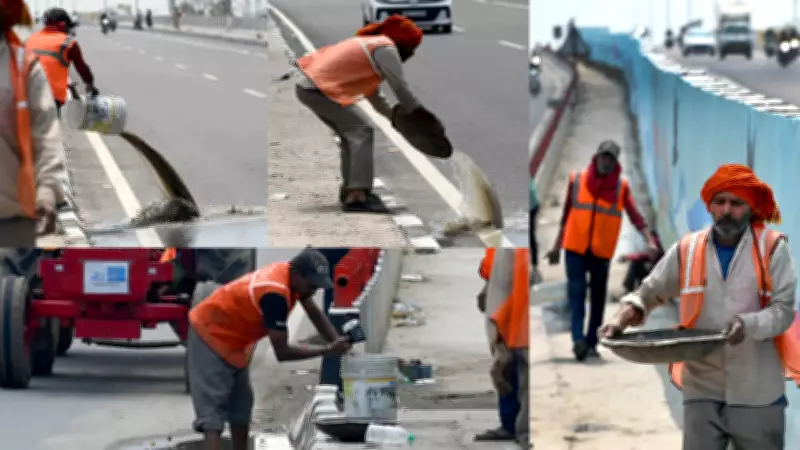
In a last-minute effort to prepare the Delhi-Dehradun Economic Corridor for its scheduled inauguration, workers were observed manually clearing stagnant water from the carriageway just days before the event. This manual intervention underscores the race against time as authorities work to ensure the expressway is ready for its expected opening by Prime Minister Narendra Modi on April 14.
Manual Labor in Action
At the site, four workers were seen using plastic containers to scoop up water and discard it on the opposite side of the road. A tractor bearing the National Highways Authority of India (NHAI) logo was also present nearby, indicating official involvement in the cleanup operation. One worker at the location explained the necessity of this approach, stating, "The drain was completely choked. We have no choice but to collect the stagnant water in containers and throw it away to clear the stretch."
This scene highlights the challenges faced in infrastructure projects, where unexpected issues like clogged drains can lead to improvised solutions. The use of manual labor for such tasks, despite the presence of machinery, points to urgent deadlines and resource constraints.

Context and Implications
The Delhi-Dehradun Economic Corridor is a significant infrastructure project aimed at enhancing connectivity and boosting economic growth in the region. Its inauguration is a highly anticipated event, with preparations being closely monitored. The manual water clearance effort raises questions about the readiness of the corridor and the efficiency of pre-inauguration checks.
Authorities are likely under pressure to meet the deadline, leading to such hands-on measures. While this may ensure the corridor is operational for the inauguration, it also brings attention to potential maintenance and drainage issues that could affect long-term functionality.
As the countdown to April 14 continues, all eyes are on the completion of final touches, with workers playing a crucial role in overcoming last-minute hurdles to deliver the project on time.