Mumbai-Pune Expressway Gridlock: Tanker Crash Triggers 12-Hour Traffic Paralysis
For two consecutive days, the Mumbai-Pune Expressway witnessed unprecedented traffic chaos, leaving thousands of commuters stranded for up to twelve hours in the picturesque yet problematic ghat sections near Lonavala and Khandala. This disruption has once again spotlighted the critical vulnerabilities of India's busiest intercity highway and underscored the pressing need for its long-awaited expansion.
The Incident That Brought Traffic to a Standstill
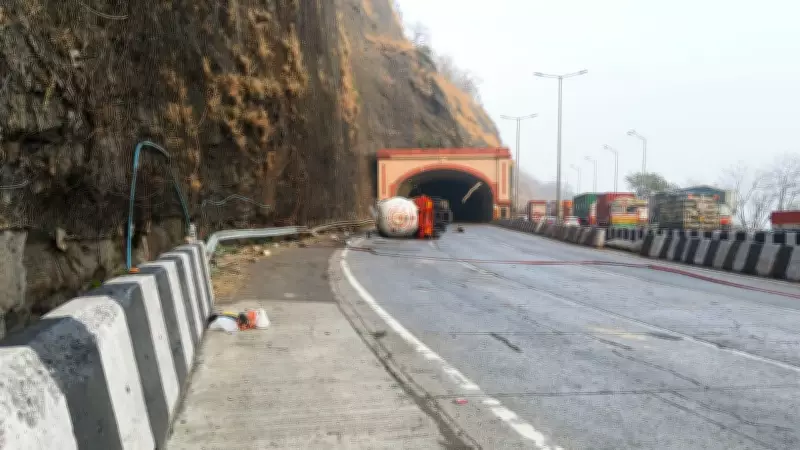
The massive traffic jam originated from a serious accident involving a tanker carrying highly flammable propylene gas. The vehicle overturned near the Adoshi tunnel in the Khandala ghat section around 5 PM on Tuesday, creating immediate safety concerns due to gas leakage and potential explosion risks.
Authorities implemented emergency safety measures, diverting Mumbai-bound vehicles toward Pune while maintaining only a single lane for traffic heading to Mumbai. This forced many vehicles onto the older Mumbai-Pune Highway, part of NH48, which quickly became overwhelmed. The accident's location in a steep, curving ghat stretch significantly complicated recovery operations, prolonging the disruption despite efforts by the Maharashtra State Road Development Corporation to control the leak and upright the tanker.

Why This Stretch Remains So Vulnerable
The Khandala ghat section represents the expressway's most vulnerable segment due to several interconnected factors:
- Challenging Terrain: Sharp curves and steep gradients make navigation difficult
- Mixed Traffic: Heavy tourist vehicles bound for Lonavala and Khandala share space with fuel tankers and hazardous chemical carriers
- Safety Protocols: Accidents involving hazardous materials require complete traffic stoppage
- Lack of Alternatives: No parallel high-capacity routes exist, causing rapid vehicle accumulation
This combination creates a perfect storm where even minor incidents can escalate into hours-long traffic paralysis affecting both the expressway and the older highway simultaneously.
Historical Context and Growing Pressures
When the Mumbai-Pune Expressway opened in the early 2000s as India's first six-lane, access-controlled concrete expressway, it revolutionized travel between Maharashtra's two largest cities, reducing journey times from nearly five hours to approximately two and a half hours. The infrastructure boost significantly enhanced trade, industry, and tourism while spurring development in surrounding areas like Khopoli, Lonavala, and Talegaon.
However, the ghat section between Khopoli and Kusgaon has remained problematic since inception due to its winding alignment through the Western Ghats. Current traffic volumes have far exceeded the expressway's original design capacity from two decades ago, with weekend tourist traffic, container trucks, and hazardous material carriers all converging on this single vulnerable stretch.
The Missing Link Project: A Long-Awaited Solution
To address these structural weaknesses, planners developed the Mumbai-Pune Expressway Missing Link project—a comprehensive solution that bypasses the problematic ghat section entirely rather than attempting to widen or straighten the existing route.
Project Specifications:
- New Alignment: 13.3 km route replacing the existing 19.8 km ghat stretch
- Key Features: Tunnels, viaducts, and a cable-stayed bridge cutting through hills and across deep valleys
- Major Components: 1.64 km tunnel from Khopoli side, 650-meter cable-stayed bridge across Tiger Valley, and 8.9 km tunnel toward Kusgaon
Originally scheduled for completion in 2022, the project faced delays due to the COVID-19 pandemic and complex engineering challenges. Current projections indicate an opening around May 2026.
Expected Benefits and Safety Enhancements
The Missing Link promises substantial improvements for commuters and transportation efficiency:

- Reduced Distance: Shortening the Mumbai-Pune route by approximately 6 kilometers
- Time Savings: Cutting travel time by roughly 30 minutes
- Accident Reduction: Diverting traffic from winding ghat roads to lower accident risks
- Congestion Prevention: Minimizing traffic jams caused by breakdowns or crashes in hill sections
Complementary infrastructure improvements include widening the Mumbai-side approach road from six to eight lanes to better manage traffic volume. Authorities anticipate that most long-distance traffic will shift to the Missing Link, with exceptions primarily for local vehicles and certain hazardous cargo carriers.
Advanced Safety and Technology Integration
The new alignment incorporates state-of-the-art safety features designed to enhance emergency response and reduce accident fatalities:
- Fire Control Systems: Water misting technology in tunnels
- Traffic Monitoring: Automated systems with variable speed limits
- Surveillance: Automatic number plate recognition cameras
- Emergency Communication: Voice evacuation systems
- Improved Design: Elimination of sharp curves and steep slopes for steadier vehicle speeds
Broader Implications and Future Outlook
The recent tanker accident has starkly revealed the Mumbai-Pune corridor's dependence on a single vulnerable ghat stretch. Until the Missing Link becomes operational, any significant accident in this section can halt traffic for hours, leaving commuters stranded without basic facilities.
Once completed, the new alignment is expected to dramatically reduce the frequency of such large-scale disruptions, offering commuters a faster, safer, and more reliable journey between Maharashtra's economic powerhouses. The project represents not just infrastructure improvement but a critical enhancement to regional connectivity that supports economic growth, tourism, and daily commuter needs.
The ongoing challenges on the Mumbai-Pune Expressway highlight the complex balance between maintaining existing infrastructure and implementing transformative projects that address fundamental design limitations.