

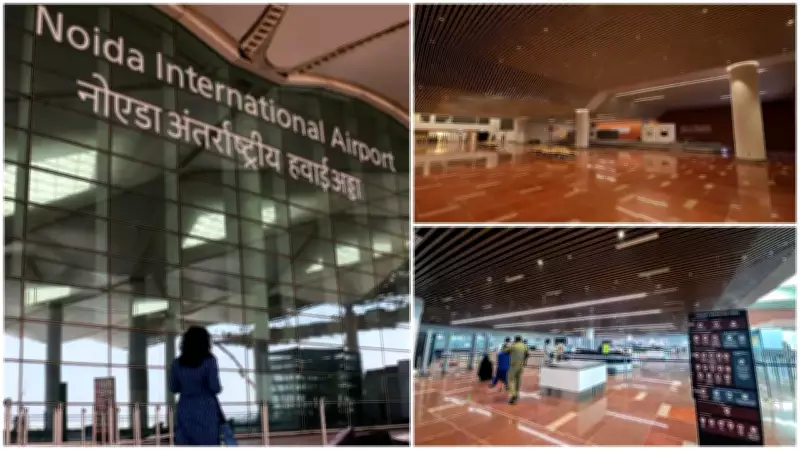
Noida International Airport Inaugurated: A New Era for Delhi-NCR Aviation
Prime Minister Narendra Modi has officially inaugurated the Noida International Airport at Jewar, marking a significant milestone as Delhi-NCR's second international airport. This state-of-the-art facility is designed to alleviate congestion at Indira Gandhi International Airport and boost regional connectivity with world-class infrastructure.
Top 10 Facts About Noida International Airport
- Phase 1 Investment and Cost: The first phase of the airport was constructed at a cost of Rs 11,282 crore, with the broader project estimated at Rs 29,560 crore across subsequent phases. The concessionaire invested Rs 6,876 crore, while the state government allocated Rs 4,406 crore for land acquisition.
- Passenger Capacity: Initially, the airport can handle 12 million passengers annually, with plans to expand to 70 million passengers per year in the future, positioning it as one of India's largest greenfield airport developments.
- Key Features: Spanning 1,334 hectares in Phase 1, the airport includes two entry gates, 48 check-in counters (20 for self-baggage drop), 10 boarding gates with aerobridges, separate immigration counters for arrivals and departures, and baggage handling with two domestic and one international carousel.
- Easing Delhi Airport Congestion: As a second international facility for Delhi-NCR, it will operate alongside Indira Gandhi International Airport to reduce congestion, increase passenger capacity, and enhance the region's global aviation standing.
- Runway and Terminal Details: The airport features a single runway and passenger terminal, capable of handling 30 flights per hour and 1.2 crore passengers annually. The 3,900-metre runway supports wide-body aircraft with modern navigation systems for all-weather operations.
- Sustainable Design: Planned as a net-zero emissions facility, it incorporates energy-efficient technologies and sustainable practices. The design blends Indian architectural influences from traditional ghats and havelis with modern infrastructure.
- Flight Operations: Commercial flights are expected to commence from May, pending regulatory clearances. Airlines like IndiGo, Akasa Air, and Air India Express have confirmed domestic services, with initial routes likely connecting to Mumbai, Bengaluru, Hyderabad, Chennai, Lucknow, and Dehradun.
- Location and Connectivity: Situated along the Yamuna Expressway, it is developed as an integrated multi-modal transport hub for road, rail, metro, and regional transit. Partnerships with UP Roadways, Mahindra Mobility, Uber, and Rapido aim to improve last-mile connectivity.
- Multi-Phase Expansion: The airport will expand in phases: Phase 2 by 2030 to 3 crore passengers annually with a second runway, Phase 3 by 2034 to 5 crore passengers with a second terminal, and Phase 4 by 2036 to 7 crore passengers with cargo and aerospace hubs.
- Cargo Terminal: A comprehensive cargo infrastructure includes a Multi-Modal Cargo Hub and Integrated Cargo Terminal, initially handling 2.5 lakh metric tonnes of freight annually, expandable to 18 lakh metric tonnes.
Impact and Future Prospects
The inauguration of Noida International Airport represents a transformative step in India's aviation sector. By easing congestion at Delhi's primary airport and offering enhanced passenger amenities, it is set to become a key aviation hub in northern India. The phased expansion plans ensure scalability to meet growing demand, while sustainable design principles align with global environmental standards. As flight operations begin, this airport is poised to significantly boost domestic and international connectivity, fostering economic growth and regional development.






