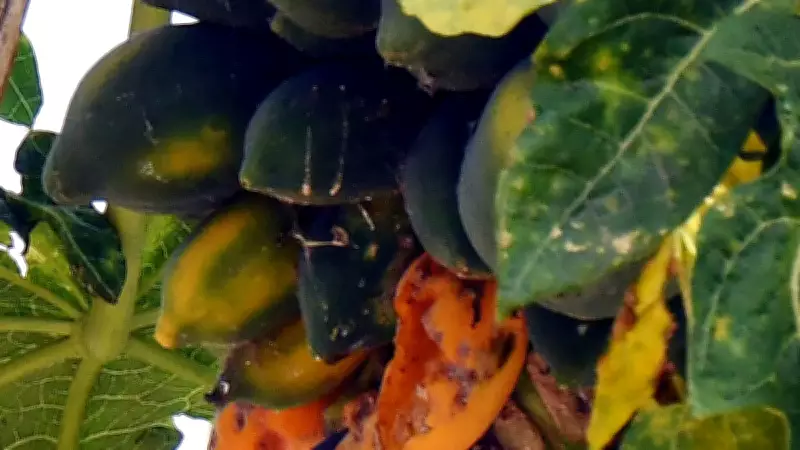
Papaya has emerged as a resilient crop in Kerala, showing an upward trend in cultivation and demand even as other popular crops in the state face a decline. The fruit's rising popularity is attributed to its medicinal properties, profitability for farmers, suitability to Kerala's climate, and various support schemes from the state government.
Growing Popularity Among Farmers
According to the Kerala State Planning Board's Economic Review 2025, the area under papaya cultivation increased by 12% over the past five years, reaching 8,500 hectares in 2025. This contrasts with the declining acreage of crops like paddy, tapioca, and banana. Farmers are increasingly turning to papaya due to its shorter gestation period and higher returns per unit area.
"Papaya cultivation requires less land and gives quick returns. Many small and marginal farmers are shifting to papaya because of its consistent demand and low input costs," said K. J. Saji, a farmer from Thrissur district.

Medicinal and Nutritional Value
The rising demand for papaya is driven by its recognized health benefits. The fruit is rich in vitamins A, C, and E, and the enzyme papain, which aids digestion. Papaya leaves are also used in traditional medicine to treat dengue fever and other ailments. The state government's Ayush department has promoted papaya-based products, further boosting consumption.
"The medicinal value of papaya has created a steady market. Processed products like papaya pulp and dried leaves are in high demand both domestically and for export," noted Dr. S. R. Sreelatha, a researcher at Kerala Agricultural University.
Government Support and Infrastructure
The Kerala government has implemented several schemes to support papaya cultivation, including subsidies for planting material, drip irrigation, and organic certification. The Vegetable and Fruit Promotion Council Kerala (VFPCK) provides technical assistance and market linkages. Additionally, the state's agro-climatic conditions—warm and humid—are ideal for papaya cultivation, allowing year-round production.
"Our 'Mission Papaya' program has trained over 2,000 farmers in best practices and provided low-interest loans. We aim to increase papaya production by 15% annually," said Agriculture Minister P. Prasad.
Economic Impact and Future Prospects
The average yield of papaya in Kerala is 40 tonnes per hectare, fetching farmers an average price of Rs 30 per kilogram. This translates to a net income of approximately Rs 8 lakh per hectare per year, making it more profitable than many traditional crops. The fruit is primarily consumed fresh, but processing units are emerging to produce value-added products.
However, challenges remain, including susceptibility to pests like the papaya mealybug and price fluctuations. The state's agricultural department is promoting integrated pest management and contract farming to mitigate these risks.
"Papaya's success story shows that with proper support, horticulture can thrive even as traditional crops decline. The key is to focus on high-value, climate-resilient crops," concluded Dr. Sreelatha.