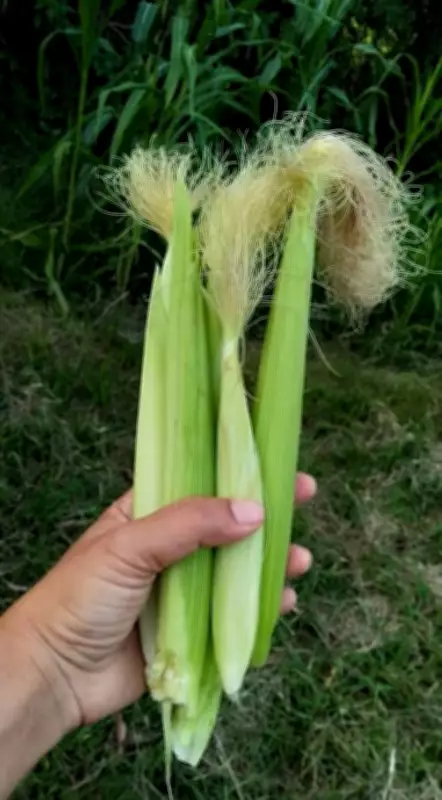
Experts at Punjab Agricultural University (PAU) in Ludhiana are advocating for baby corn as a viable and profitable alternative for farmers seeking to diversify away from traditional crops like paddy and wheat. The recommendation comes amid growing urgency to shift Punjab's agricultural landscape toward more sustainable and economically rewarding options.
Baby Corn: A Short-Duration, High-Demand Crop
Baby corn, the tender immature ear of maize harvested within two to three days of silk emergence, offers several advantages. According to Mahesh Kumar, principal agronomist (maize) at PAU, “Owing to its short duration, good market demand and multiple uses, baby corn has emerged as an attractive crop for increasing income. The crop is harvested within 60 to 65 days, and the remaining biomass can be used as fodder for livestock, making it even more attractive for dairy farmers. Since the young ear remains covered with husk, it is naturally protected from a host of insects and diseases, and remains comparatively free from pesticide residue. These features make baby corn highly acceptable in domestic as well as export markets.”
Flexibility in Cropping Systems
Baby corn can be easily integrated into existing cropping patterns. Tosh Garg, maize breeder at PAU, explained that the crop can be raised between wheat and basmati rice rotations, and two to three crops can be harvested from April to September in place of a single rice crop. This flexibility allows better use of land and time, offering farmers improved crop planning options.

Cultivation Guidelines and Recommended Hybrid
For successful cultivation, sowing can be done from April to the first week of August. The crop should be planted in rows spaced 30 cm apart, with 20 cm between plants. Rumesh Ranjan, another PAU maize breeder, advised farmers to adopt staggered sowing at short intervals to ensure a continuous supply of fresh baby corn to the market. The university recommends the single-cross baby corn hybrid Punjab Baby Corn 1, which yields 8.4 quintals (dehusked) per acre with uniform ear size.
Harvesting and Quality Considerations
The crop is ready for harvesting within two to three days of silk emergence but before fertilization. Ears picked late become pithy and less crispy, making them unfit for consumption as salad or vegetable. Typically, two to three ears should be harvested from each plant, and later-appearing ears should be avoided due to quality concerns. The ears should be picked along with the husk.
Nutritional and Market Potential
Baby corn is nutritionally comparable or superior to many seasonal vegetables, providing protein, vitamins, calcium, iron, and being one of the richest sources of phosphorus. It is a low-carbohydrate, high-fiber, fat-free vegetable. Experts note excellent marketing and export potential. Once largely imported from Thailand and limited to fine dining, baby corn is now increasingly cultivated in India. Demand from hotels, airlines, shipping companies, and European markets indicates strong prospects, and companies are promoting commercial cultivation through contract farming.