

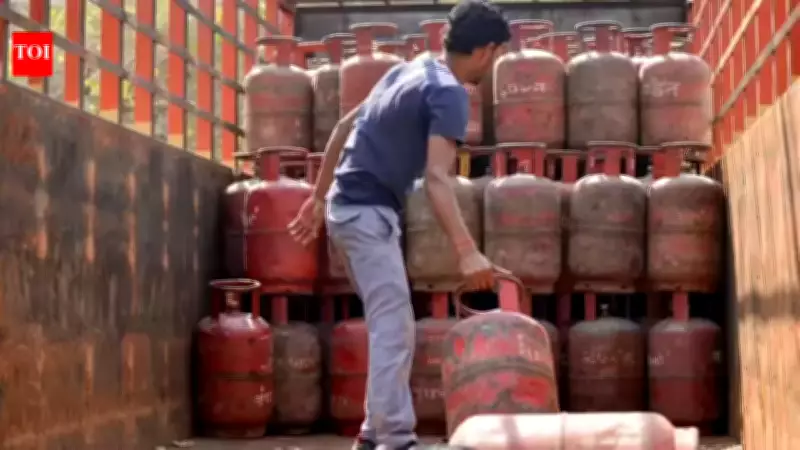
India's Petroleum Sector Urges Ethanol as Clean Cooking Fuel to Cut LPG Imports
The Federation of Indian Petroleum Industry (FIPI) has made a significant appeal to industry stakeholders, urging them to explore ethanol as a clean cooking fuel for households across India. This initiative forms a crucial part of broader national efforts to reduce the country's heavy dependence on imported liquefied petroleum gas (LPG) while simultaneously expanding the domestic biofuel ecosystem.
Call to Action at Distillers' Conference
R S Ravi, Director (Downstream) at FIPI, presented this compelling proposal while addressing the All India Distillers' Association (AIDA) conference. According to PTI reports, Ravi highlighted ongoing research and development activities focused on creating efficient ethanol-based cooking stoves. He specifically mentioned that institutions such as the LPG Equipment Research Centre and several Indian Institutes of Technology (IITs) are actively working on designing these innovative stoves, with functional prototypes expected to be available in the near future.
"A lot of work is happening at research institutions to develop efficient ethanol-compatible stoves," Ravi stated during his address. "We anticipate that prototypes will be ready soon, marking a significant step forward in our clean energy transition."

Transforming Supply Chains and Industry Collaboration
Ravi issued a direct call to the distillery industry, asking them to actively support this groundbreaking initiative through two primary mechanisms. First, he encouraged partnerships with manufacturers to scale up production of ethanol-compatible cooking stoves. Second, he emphasized the critical need for developing an effective supply chain capable of delivering ethanol directly to households throughout the country.
"This represents a completely different operational model," Ravi explained. "Currently, the distillery industry supports the oil sector through bulk supply arrangements. This approach needs fundamental transformation to accommodate household distribution."
He further elaborated on the logistical challenges, stating: "Developing this new supply chain, determining the appropriate delivery format, and establishing the correct form factor are absolutely critical considerations. We invite AIDA to come forward with innovative ideas about how we can make ethanol as a cooking fuel a practical reality across India."
Building on Existing Ethanol Success
This proposal emerges at a particularly opportune moment, coinciding with India's successful implementation of 20 percent ethanol blending in petrol nationwide. Ravi specifically credited the distillery sector for enabling this ambitious program, acknowledging their crucial role in achieving this milestone.
The director also referenced a recent government notification that mandates the sale of E20 petrol with a minimum Research Octane Number of 95, effective from April 1, 2026. This move toward higher-octane E20 fuel is expected to deliver multiple benefits, including improved vehicle performance, enhanced fuel efficiency, and resolution of concerns associated with lower-octane fuel blends.
Expanding Ethanol Applications and Priorities
While discussing broader ethanol applications, Ravi encouraged the ethanol industry to accelerate production of isobutanol for potential diesel blending and to prepare for ethanol-to-sustainable aviation fuel conversion pathways. However, he made it clear that the cooking fuel initiative should receive priority attention and resources due to its immediate potential impact on household energy security.
Research organizations across India are already examining ethanol stoves as a cleaner alternative that could complement or partially replace LPG, particularly in rural and semi-urban regions where energy access remains a challenge. Ravi noted that transitioning ethanol from bulk industrial supply to household distribution would require developing entirely new logistics models, creating suitable packaging formats, and establishing reliable last-mile delivery systems.

National Energy Security Implications
India has been aggressively promoting ethanol blending as a strategic initiative to achieve multiple national objectives: reducing crude oil imports, conserving valuable foreign exchange, lowering harmful emissions, and providing additional income streams for farmers. Expanding ethanol utilization to include cooking fuel could further diversify demand, create new market opportunities, and significantly strengthen the country's overall energy security framework.
Ravi concluded his address by emphasizing the necessity for coordinated, collaborative efforts between the petroleum industry and distillers to transform ethanol-based cooking into a viable, accessible option for households throughout India. This partnership represents a crucial step toward achieving greater energy independence and environmental sustainability.





