In a significant move aimed at reducing the cost of natural gas for consumers and industries, India's Petroleum and Natural Gas Regulatory Board (PNGRB) has proposed two key reforms: bringing regasification charges under regulatory oversight and including natural gas under the Goods and Services Tax (GST) regime.
Addressing High Infrastructure Costs and Taxes
The proposals were detailed in a discussion paper published on the regulator's website on 24 December 2024. The PNGRB highlighted that high and unregulated infrastructure costs, combined with state-level taxes, are keeping the delivered price of gas elevated. This is happening despite substantial investments in regasification capacity across the country.
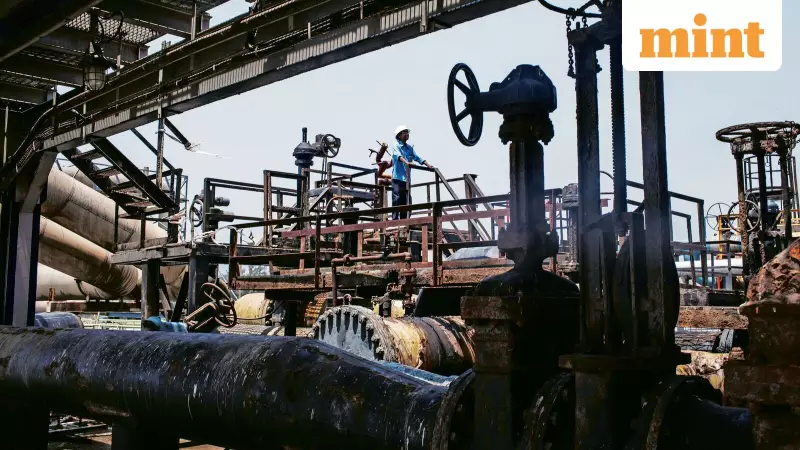
Currently, the PNGRB regulates the national gas pipeline grid and its transportation tariffs. However, it lacks authority over the charges levied by LNG regasification terminals, which convert imported liquefied natural gas back into its gaseous form. These unregulated regasification charges currently make up 5-6% of the final cost paid by end consumers.

The regulator argued that for effective oversight across the entire gas value chain, statutory changes are needed to bring these charges under its purview.
Low Terminal Utilization and Financial Strain
The PNGRB's paper sheds light on the underutilization of India's LNG import infrastructure. As of November 2024, the country has an operational regasification capacity of roughly 47.7 million metric tonnes per annum (MMTPA), built with a total investment of around ₹37,000 crore.
However, the average capacity utilization for the financial year 2023-24 was only about 51%. This figure is skewed by the high utilization of the Dahej terminal, which operated at 95%. Excluding Dahej, the utilization of other terminals ranged from a mere 15% to 45%, averaging just 25%.
"It may be inferred that based on these utilization levels most of the LNG regasification terminals may not be able to even financially break-even for a long time," the regulator stated. Major players in this sector include Petronet LNG, Shell, Indian Oil Corporation, and Adani Total Gas.
The Push for GST Inclusion to Remove Tax Anomaly
The second major proposal involves bringing natural gas under the GST framework. Currently, natural gas is outside the GST net, leading to a patchwork of state-level Value Added Tax (VAT) and the denial of input tax credit benefits for gas companies.
The PNGRB pointed out an ironic tax disparity: while natural gas faces a central excise duty of 14% plus state VAT, auto-LPG—a more carbon-intensive and less safe fuel—attracts a GST of only 18%. "Mainly because of this anomaly, particularly in southern India, CNG is not gaining traction vis a vis auto LPG," the report noted.
Union Petroleum Minister Hardeep Singh Puri had earlier indicated a growing consensus on this issue in January 2024. However, states like Gujarat and Andhra Pradesh have expressed concerns about potential revenue losses.
Expected Impact on Prices and Consumption
If implemented, these reforms are expected to significantly reduce the overall cost of natural gas in India. Prashant Vashisht, Senior Vice-President at ICRA Ltd., noted that India's regasification charges are around 70 cents per mmBtu, compared to about 50 cents in major gas-based economies like Japan. Lowering these costs and rationalizing taxation would directly benefit consumers.
This move is critical for India's energy transition goals. The country aims to raise the share of natural gas in its primary energy mix to 15% by 2030, up from the current level of approximately 6.2%. However, consumption has been weak, declining by 6.7% year-on-year to 46,239 million standard cubic meters (mmscm) in the April-November period of FY26, after a 6% rise in FY25.
The proposals follow another recent reform by the PNGRB: simplifying the gas transportation tariff structure under its 'One Nation, One Grid, One Tariff' vision. By reducing tariff zones and lowering slabs, the regulator has already made CNG and piped natural gas (PNG) cheaper for city gas distribution networks.

The success of these regulatory interventions will be key to making natural gas a more competitive and widely adopted cleaner fuel in India's energy basket.