

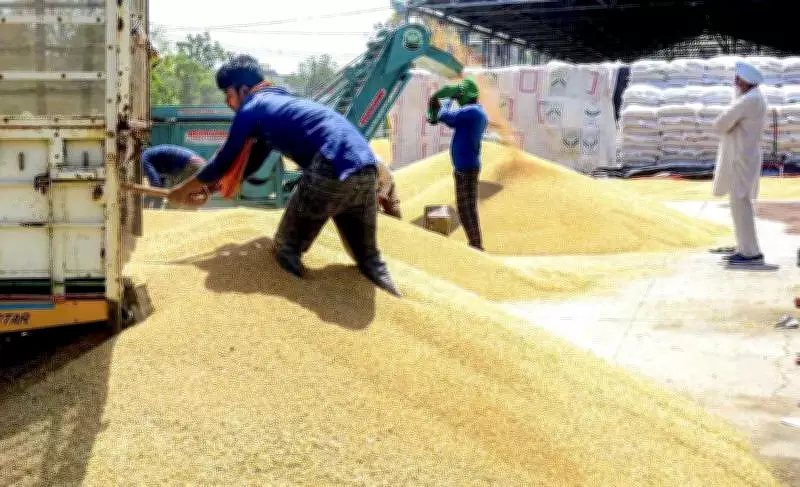
Punjab Wheat Procurement Falls Behind Arrivals, Reaches Just 38%
In a concerning development for Punjab's agricultural sector, only 38% of the wheat crop arriving at purchase centers across the state had been procured by the evening of Wednesday, April 15. This significant gap between arrivals and procurement highlights potential challenges in the state's grain management system during the ongoing harvest season.
Detailed Arrival and Procurement Data Reveals Substantial Discrepancy
According to official data meticulously prepared by the Punjab State Food Civil Supplies and Consumer Affairs Department, a total of 6,53,275 metric tonnes (MT) of wheat had arrived in various mandis by April 15. Notably, April 15 alone saw substantial arrivals of 2,51,543 MT, indicating a peak in harvesting activity.
However, procurement figures tell a different story. By the same evening, only 2,47,934 MT had been procured from these mandis, with 1,67,107 MT of that total being purchased specifically on April 15. This translates to a procurement rate of just 38% against total arrivals, leaving over 62% of the wheat that arrived at purchase centers still awaiting official procurement.

Procurement Performance Shows Decline Compared to Previous Year
The current procurement numbers reveal a noticeable decline when compared to the same period last year. During the previous agricultural season, by April 15, a total of 3,23,121 MT of wheat had been procured. This year's figure of 2,47,934 MT represents a substantial decrease, though direct year-on-year comparison is complicated by the fact that last year's arrival data for the same period was not made publicly available.
Out of the procured grains, only 20,002 MT have been physically lifted from the grain markets, suggesting additional logistical challenges in the supply chain beyond the initial procurement process.
Implications for Punjab's Agricultural Economy
The significant gap between wheat arrivals and procurement raises important questions about:
- Storage capacity and infrastructure at purchase centers
- Processing efficiency of procurement agencies
- Potential financial implications for farmers awaiting payment
- Overall management of the state's food grain supply system
As the harvest season progresses, stakeholders will be closely monitoring whether procurement rates improve to match the steady flow of arrivals into Punjab's mandis. The data from Bathinda and other purchase centers across the state will continue to provide crucial insights into the health of Punjab's agricultural procurement mechanisms during this critical period.






