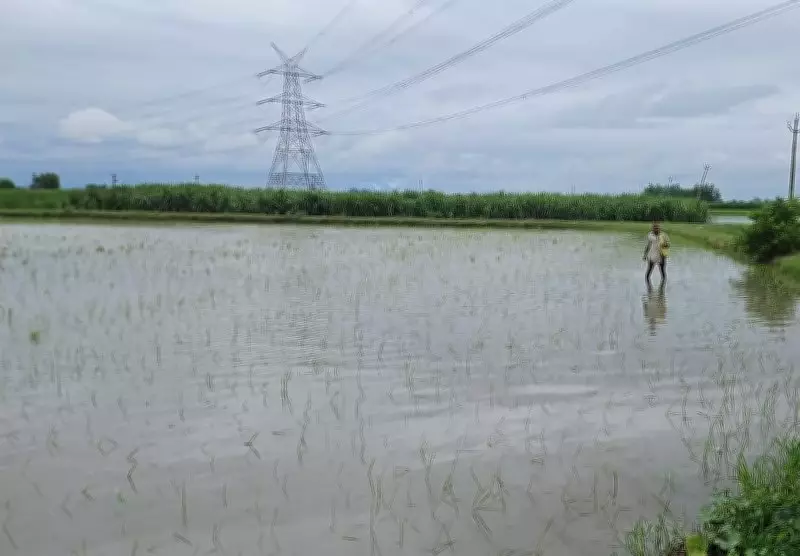
Rainfall Accelerates Paddy Transplantation After Slow June
Continuous rainfall over the past three days has brought significant relief to paddy farmers across Haryana, accelerating transplantation after a slow start in June caused by deficient rainfall and fears of the Southern Rice Black-streaked Dwarf Virus (SRBSDV), commonly known as the Fiji or dwarf virus.
According to officials from the Agriculture and Farmers Welfare Department, around 15 percent more paddy transplantation has been completed during the last three days due to favourable weather. As a result, approximately 85 percent of the targeted paddy area in Karnal district has now been covered.
Farmers Express Relief as Showers Reduce Costs
Dr Wazir Singh, Deputy Director Agriculture (DDA), Karnal, said: “This rainfall has encouraged farmers who were waiting for adequate water to begin transplanting paddy. The showers have proved to be a boon for the crop as they have reduced the immediate requirement for urea, which will reduce cultivation costs for farmers.”

Farmers also expressed happiness. Inderjeet Singh, a farmer from the Nilokheri block, said: “The rainfall was much required at this time. It has come at the right time. We were waiting for sufficient water to transplant paddy, and with this rainfall we have transplanted paddy.” He noted that poor rainfall in June forced them to delay transplantation.
Aman, another farmer from the Indri block, added: “The weather in June was a worry for farmers, but this continuous showers have eased our concerns and irrigated the fields.” Kewal, a farmer from Nagla village, stated: “This rain is a blessing for paddy growers. It has provided sufficient water for transplantation of paddy.”
Targets and District-Wise Breakdown
This year, the department has set a target of bringing 15.60 lakh hectares under paddy cultivation across Haryana. Karnal has been assigned the highest cultivation target of 1.85 lakh hectares, followed by Kaithal (1.65 lakh hectares), Jind (1.50 lakh hectares), Sirsa (1.45 lakh hectares), Fatehabad (1.35 lakh hectares), Kurukshetra (1.20 lakh hectares), and Hisar (1.05 lakh hectares). Yamunanagar, Ambala, and Sonepat have each been assigned a target of 90,000 hectares.
Record Rainfall in Karnal
According to data from the Agriculture Department, Karnal district recorded a total rainfall of 197.4 mm in the past 24 hours, the highest of this season. The district has six rainfall gauge points at the block level. Nilokheri block received the highest rainfall at 84.4 mm, followed by Indri (60 mm), Karnal block (44 mm), Munak (5 mm), and Gharaunda (4 mm).
Data released by the IMD Chandigarh indicates that Ambala received 67.8 mm of rainfall, Bhiwani (1 mm), Sirsa (13 mm), Gurugram (8 mm), Kaithal (24.5 mm), Mewat (3.5 mm), Palwal (38.5 mm), Sonepat (41.5 mm), and Yamunanagar (64 mm).