

In a significant move to bolster India's domestic energy storage capabilities, Waaree Energy Storage Services Pvt. Ltd has secured a major funding round. The subsidiary of Waaree Energies Ltd announced on Monday that it has raised ₹1,003 crore as part of a larger ₹10,000-crore capital expenditure plan.
Building a Domestic Battery Powerhouse
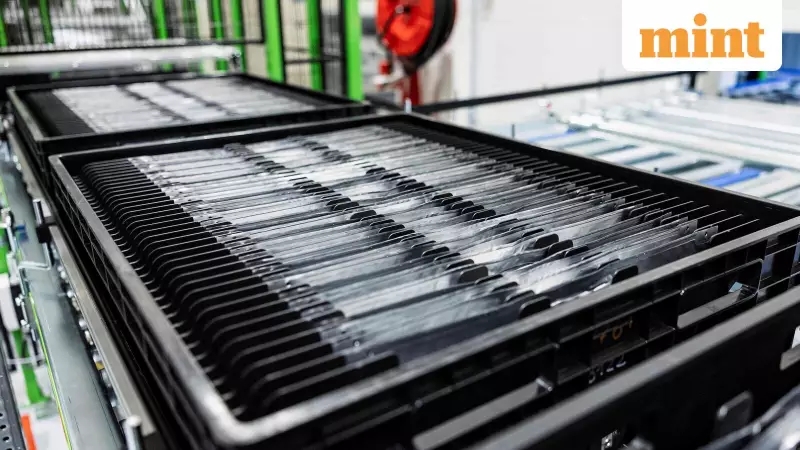
The primary objective of this massive investment is to establish a state-of-the-art 20-gigawatt-hour (GWh) lithium-ion battery and battery pack manufacturing facility. This plant is poised to produce critical components for a wide range of applications, from large grid-scale storage systems to batteries for electric vehicles (EVs).
Ankit Doshi, Director of Waaree Energy Storage Services, stated that the strategic resources will help fast-track the commissioning of the facility. He emphasized that the initiative will strengthen domestic supply chains and significantly contribute to expanding India's energy storage capacity. Doshi highlighted the broader impact, noting support for national sustainable energy goals, enhancement of local manufacturing, job creation, and technological innovation in the storage sector.

This investment marks Waaree Group's evolution into a fully integrated energy transition player, with a portfolio spanning solar modules, inverters, batteries, energy storage systems, and other clean energy technologies.
Addressing India's Soaring Storage Demand
The push for local battery manufacturing comes against the backdrop of India's heavy reliance on imports. The country's imports of Li-ion cells have surged from $1.8 billion in 2021-22 to $3 billion in 2024-25, underscoring a critical need for domestic production.
Demand for energy storage is projected to skyrocket. According to a report from November 27, India's energy storage demand is expected to rise exponentially to nearly three terawatt-hours (over 3,000 GWh) by 2047, up from a current capacity of about 490 MWh.
The tendering activity for Battery Energy Storage Systems (BESS) reflects this urgency. As per the India Energy Storage Alliance's (IESA) 2025 annual report, tendered BESS capacity has jumped dramatically from 4 GWh in 2023 to 60 GWh in 2025. At least ten states, including Assam, Maharashtra, Andhra Pradesh, and Madhya Pradesh, have now introduced policy interventions or specific targets for BESS capacity.
Grid Stability and Investment Momentum
The rapid growth in the BESS sector is vital for India's renewable energy future. A September 2025 FICCI-EY report on critical technologies noted that the integration of BESS with renewable projects is crucial for grid stability and reliability as renewable energy penetration increases. The report revealed that energy storage investments have grown from just 1% of deal volume in 2017 to 9% by 2024, with lithium-ion batteries dominating the landscape.
BESS supports the grid by enabling frequency regulation, voltage support, peak shaving, and renewable energy time-shifting, effectively managing the intermittency of solar and wind power.
This sectoral advancement continues even as the government's plan to incentivize 10 GWh of ESS capacity under the ₹18,100-crore Production-Linked Incentive (PLI) scheme for advanced chemistry cells remains unawarded. Under the 2021 version of the scheme, a total of 40 GWh of capacity has already been awarded to three battery makers: Ola Electric, Reliance Industries, and Rajesh Exports.
Waaree's new facility represents a substantial private sector step towards achieving energy security and meeting the nation's ambitious clean energy and storage targets.






