Western Dedicated Freight Corridor's Final Leg Set for Completion This Month
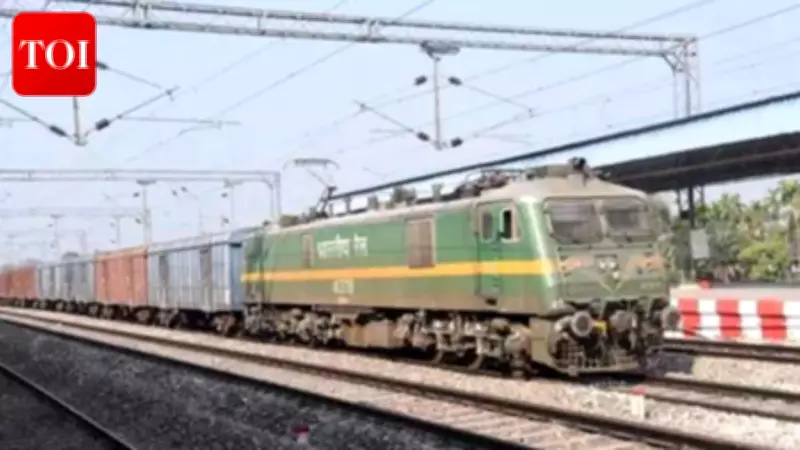
Railway officials have announced that the last segment of the Western Dedicated Freight Corridor (WDFC) – a 102-kilometer stretch from Vaitarna to JNPT in Maharashtra – is scheduled for completion, with train operations expected to commence by the end of this month. This milestone will render the entire 1,506-kilometer WDFC fully functional, marking a significant advancement in India's freight transportation infrastructure.
Current Status of Dedicated Freight Corridors
The entire 1,337-kilometer Eastern Dedicated Freight Corridor (EDFC), which connects Sonnagar in West Bengal to Sahnewal in Punjab, is already operational. Collectively, approximately 96.4% of both the Western and Eastern Dedicated Freight Corridors have been completed. A notable achievement is the average freight train speed on these dedicated corridors, which exceeds 50 kilometers per hour. This represents a doubling of the speed compared to cargo trains operating on the conventional railway network, thereby enhancing efficiency and reducing transit times.
Plans for a New Dedicated Freight Corridor
With the impending completion of the WDFC and EDFC, Indian Railways has initiated the fine-tuning of plans for a new 2,150-kilometer Dedicated Freight Corridor. This ambitious project will link Dankuni in West Bengal to Surat in Gujarat, traversing six states – Gujarat, Chhattisgarh, Jharkhand, Odisha, Maharashtra, and West Bengal – and 32 districts. The initiative, aimed at facilitating high-capacity bulk corridor trains, was announced in the recent Union Budget.

Key features of the new corridor include:
- Integration with the existing Indian Railways network at 29 stations.
- A maximum design speed of 100 kilometers per hour, which is expected to further accelerate freight movement.
The development of these dedicated freight corridors is poised to revolutionize logistics in India, offering faster, more reliable, and cost-effective transportation for goods. This infrastructure boost aligns with broader economic goals to strengthen supply chains and support industrial growth across the country.