

West Asia Conflict Reverberates in Indian Restaurant Hubs
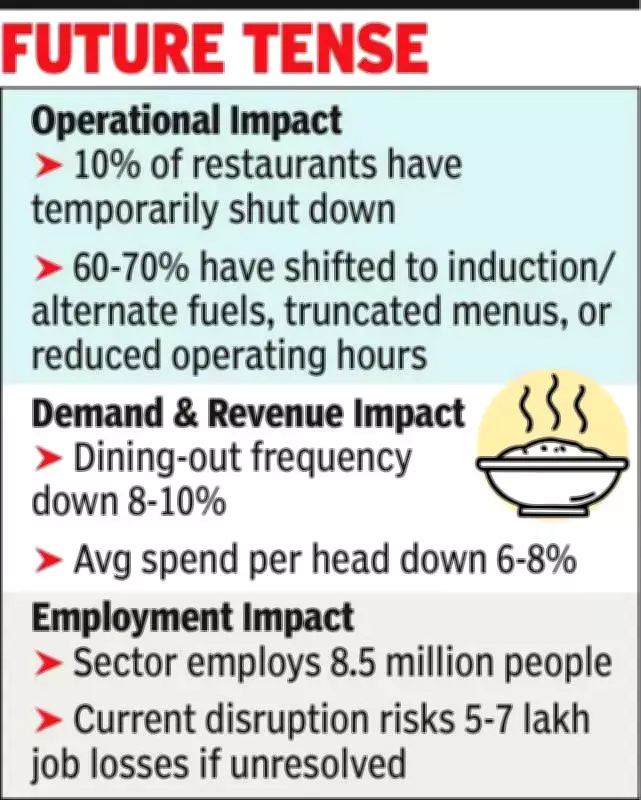
The ongoing war in West Asia, with its targets thousands of kilometers away, is sending shockwaves through India's restaurant industry. From Park Street and Purna Das Road in Kolkata to Kasba Connector and Salt Lake's First Avenue, eateries are feeling the pinch. A recent survey by the National Restaurant Association of India (NRAI), representing over 5 lakh restaurants, reveals startling data: dining-out frequency has dropped by 8-10%, and average billing is down 6-8% nationwide.
Consumer Spending Takes a Hit
NRAI president Sagar Daryani noted that consumer behavior has been significantly impacted. "Restaurants are recording lower visit frequency, lower discretionary spending, and reduced repeat dining," he said. Anjan Chatterjee, founder of Speciality Restaurants with 120 outlets, acknowledged the dip in footfall and billing, attributing it to pressure on consumers' pockets. "Though the numbers aren't drastic yet, we expect a further impact when diesel and petrol prices go up," he added.
LPG Crisis Forces Operational Changes
The conflict has triggered an LPG crisis in the Gulf region, affecting nearly one in 10 restaurants in India, forcing temporary shutdowns. In Kolkata, the situation is relatively better due to better commercial LPG availability compared to states like Maharashtra, Karnataka, and Tamil Nadu. However, restaurants have adapted by shifting 60-70% of cooking to alternative fuels:

- Induction and infrared cookers are widely adopted.
- Biryani sellers and pice hotels have turned to coal- and wood-fired chullahs.
Despite these efforts, the industry faces challenges like inconsistent service, menu cuts, delays, and reduced hours. More than three out of five restaurants have truncated menus or reduced operating hours, with many small establishments shutting down due to inflated black-market LPG prices.
Financial and Employment Fallout
Debaditya Chaudhury of Chowman, with 57 restaurants, reported a 5-7% drop in billing in cities like Bengaluru, Hyderabad, and Chennai. "Many delivery platforms and restaurants have removed offers to save costs, contributing to the dip in sales," he explained. The overall industry throughput is down 15-20%, with an average daily loss of Rs 2,650 crore across the country. In March alone, losses could reach Rs 79,000 crore, against a daily turnover of Rs 17,700 crore and an annual turnover of Rs 6.46 lakh crore.
Job security is also a concern, with the survey indicating that 5-7 lakh jobs out of 85 lakh in the industry may be at risk if the conflict persists. This highlights the far-reaching economic impact of the West Asia war on India's food and beverage sector.






