

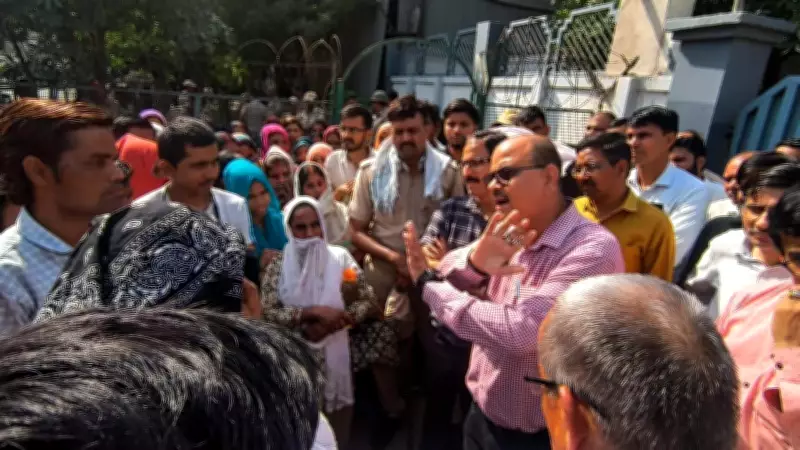
Worker Unrest Spreads to Rajasthan's Bhiwadi Industrial Belt
The wave of industrial worker protests that originated in the manufacturing hubs of Uttar Pradesh and Haryana has now extended its reach to the neighboring industrial region of Bhiwadi in Rajasthan. On Thursday, fresh demonstrations erupted at multiple factories, highlighting growing discontent over wage disparities within the National Capital Region (NCR).
Protests Disrupt Key Industrial Units
Hundreds of workers gathered at the premises of several major factories, including Nippon in Kahrani, Kumi Industries Pvt Ltd in Khushkhera, Relaxo Footwear in Bhiwadi, and Suprajit Engineering in the Pathredi-Chopanki belt. The primary grievance centers on Rajasthan's comparatively low minimum wage structure, which significantly lags behind the recently revised rates in adjacent states.
Large groups of protestors assembled at factory entry points, with some blocking approach roads, thereby disrupting the movement of goods and employees. These demonstrations, which have occurred in phases for over two weeks, have necessitated police deployment at sensitive industrial clusters to maintain law and order.

Core Demands and Worker Testimonies
Workers are demanding a monthly salary of Rs 20,000 for an eight-hour workday, along with increased overtime pay. At Nippon Company, Manisha Sharma, a worker from Allahabad, articulated the frustrations: "Other companies are paying Rs 20,000 for an 8-hour duty, but here we receive only Rs 7,000. There is no provision for bonuses during festivals like Holi or Diwali. Moreover, double the amount is deducted for taking leave, which is completely unjust."
Another protestor, Sandhya, echoed similar concerns, stating, "Leave is not granted when needed, and no bonuses are provided either." Yogendra Sen, a fellow worker, emphasized broader salary standards: "According to new central government rules, salaries should be increased. We should be receiving Rs 20,000 for an 8-hour workday; instead, we are only getting between Rs 7,000 and Rs 9,000. The management is at fault."
Sen further alleged that workers are forced to work extra hours after completing their shifts and are denied leave or gate passes when ill.
Administrative and Industry Response
In response to the escalating situation, senior district officials convened a meeting on Thursday with representatives from labor unions and the Bhiwadi Industrial Association. The objective is to prevent further escalation and ensure that production activities are not severely impacted.
Jasbir Singh Rana, President of the Bhiwadi Manufacturers Association, acknowledged the wage disparities within the NCR but highlighted the challenges faced by Micro, Small, and Medium Enterprises (MSMEs). "While wage disparities within the National Capital Region cannot be ignored, industrial harmony is crucial. The industry is prepared to pay wages comparable to those in neighboring states. However, MSMEs cannot afford large, uniform wage revisions," Rana stated.
Root Causes and Recent Resolutions
The current protests are believed to have been triggered by earlier agitations at industrial units in Noida, particularly at Motherson India, which subsequently spread to parts of Haryana before reaching Bhiwadi. These movements gained momentum following significant wage hikes in neighboring states: Haryana recently increased wages by 35%, while Uttar Pradesh implemented a 21% raise for factory workers in Noida and Ghaziabad after similar unrest.
Amid ongoing tensions, a resolution was achieved at Motherson Sumi Wiring India Limited in Pathrhedi on Wednesday. After a day-long standoff at the factory gate and three rounds of negotiations facilitated by police and administrative intervention, workers and management reached an agreement late at night. The settlement included a wage increase of ₹3,370, and the protest concluded after workers received written assurance.
At the protest sites, company HR representatives, such as Vipin Kumar, addressed workers, assuring that inquiries would be conducted into any inappropriate conduct by employees or officials, and aggrieved parties would have the right to file FIRs.

As discussions between companies and workers continue, some firms have agreed to incremental wage increases. The situation remains fluid, with authorities closely monitoring developments to balance worker demands with industrial sustainability in Rajasthan's key manufacturing zones.





