

US Navy Families Report Food Shortages on Warships Enforcing Iran Blockade
Families of American service members deployed on warships in the Middle East are raising alarming concerns about their loved ones going hungry due to limited food supplies and substandard meals aboard vessels enforcing the US naval blockade of Iranian ports. The situation has sparked distress among relatives who describe meager rations and deteriorating morale.
Photographic Evidence Reveals Meager Portions
Photographs shared by service members aboard the USS Tripoli and USS Abraham Lincoln, obtained by USA Today, provide stark visual evidence of the food crisis. Images show a lunch tray containing just one small scoop of shredded meat alongside a single folded tortilla. Another dinner plate displays a handful of boiled carrots, a dry meat patty, and an unappetizing gray slab of processed meat.
"The food is tasteless and there's not nearly enough, and they're hungry all the time," said Karen Erskine-Valentine, a West Virginia pastor who has been sending care packages to a sailor aboard the Abraham Lincoln. "That kind of breaks your heart."

Families Describe Rationing and Supply Issues
Dan F., whose daughter serves as a Marine aboard the USS Tripoli, reported that she communicated through sporadic messages about the unavailability of fresh produce and crew members rationing supplies. In a poignant gesture of solidarity, Dan revealed he stopped drinking coffee after learning that a coffee machine on board had broken down.
"We have the strongest military in the world," Dan, a 63-year-old former Marine who requested partial anonymity to protect his daughter from potential retaliation, told USA Today. "You shouldn't be running out of food. The one thing we had over our adversaries was we fed our people."
A sailor aboard the Tripoli wrote to his family describing how crew members "eat when they can" and divide portions evenly when one person receives more than others. In a March 11 message, he warned: "Supplies are going to get really low. Morale is going to be at an all-time low."
Mail Suspension Blocks Critical Care Packages
Efforts by families and community organizations to send food, hygiene products, and other essential items have been completely thwarted by an indefinite suspension of mail delivery to 27 military ZIP codes across the Middle East. The US Postal Service halted all deliveries at the beginning of April, citing "airspace closures and other logistical impacts from the ongoing conflict," according to Army Major Travis Shaw, a military spokesperson.
The suspension remains "in effect until further notice," Shaw confirmed. Mail already in transit is being held at secure Postal Service or military facilities "for future delivery once service resumes," with no items being returned to senders. Shaw explained that "the resumption of mail service is contingent upon the reopening of airspace by civil authorities, and the area commander's evaluation of regional transportation and distribution stability."
Families Frustrated by Delivery Barriers
A Texas mother whose son serves as a Navy sailor aboard the Tripoli disclosed to USA Today that she has spent at least $2,000 on care packages, none of which have reached her son. Karen Turgeon, organizer of an annual Thanksgiving care package drive in Monson, Massachusetts, rushed to organize an additional drive for four service members from her community deployed to the Middle East, but none of the packages have arrived.
Her group has instead redirected efforts to sending cards and flowers to the families of deployed service members. Dawn Penrod, treasurer of an American Legion Auxiliary chapter in Edgewater, Maryland, spent an hour at her local post office attempting to send a care package to her nephew, an Army Reserve member stationed in Bahrain, only to be informed she could not send anything to the military address.
"They were delivering mail and packages all the time," Penrod said of previous deployments. "I just don't know why they can't now." The package now sits untouched in her living room.

Extended Deployments Strain Crew Resources
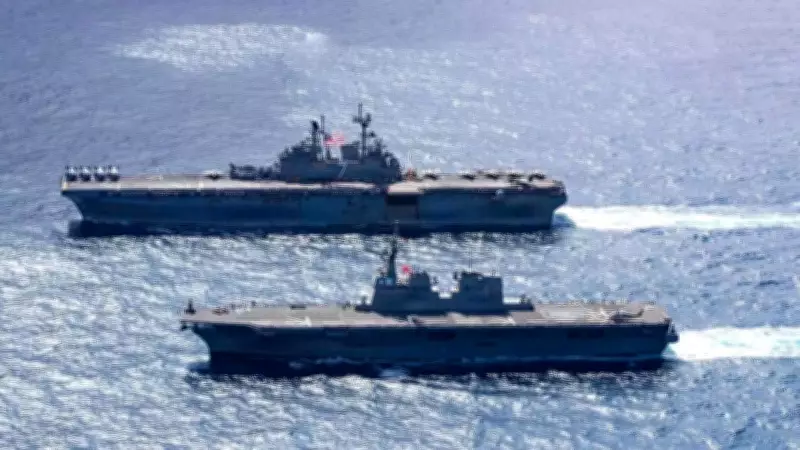
The USS Tripoli has been at sea for more than a month since departing its home port in Japan to join operations related to the Iran conflict. The 3,500 sailors and Marines aboard the Tripoli and its two accompanying warships are currently tasked with enforcing the US blockade of ships leaving Iranian ports, according to US Central Command.
The USS Abraham Lincoln has been deployed even longer, while the USS Gerald Ford recently broke the record for the longest deployment of any aircraft carrier since the Cold War—295 days at sea. The carrier retreated to Naval Support Activity Souda Bay on the island of Crete for maintenance on March 23 following a laundry fire and plumbing problems.
No Resolution in Sight
The Army has stated there is no end date in sight for the mail suspension, despite a ceasefire in the Iran war. USPS spokesperson David Coleman indicated that temporary suspensions can be monitored on the postal service's website, but provided no timeline for restoration of services.
"We're trying to cheer them up at home," Turgeon said of her group's efforts. "We give them an envelope filled with things to send so that when they can, they will." The combination of food shortages, mail disruptions, and extended deployments continues to create significant challenges for both service members and their concerned families back home.
