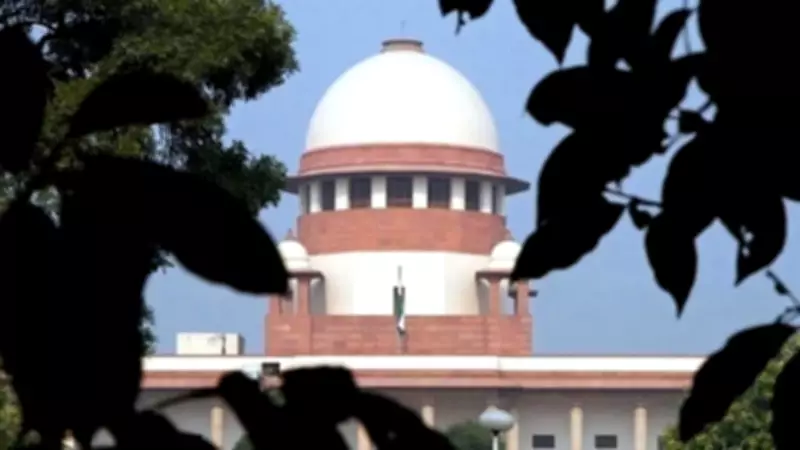
The Supreme Court has set aside the summoning of a man as an additional accused in a 2015 suicide case, ruling that the 'more than prima facie' test was not met. A bench of the apex court emphasized that the power under Section 319 of the Code of Criminal Procedure (CrPC) requires a level of satisfaction stronger than what is needed for framing of charges, but short of the level where unrebutted evidence would inevitably lead to conviction.
Background of the Case
The case pertains to a suicide that occurred in 2015, where the man was later summoned as an additional accused by a lower court. The trial court had invoked Section 319 CrPC, which allows a court to proceed against any person not already accused if it appears from evidence that such person has committed an offense. However, the Supreme Court found that the trial court had not met the required standard of proof.
Supreme Court's Observations
The bench, while quashing the summoning order, noted that the power under Section 319 CrPC is an extraordinary one and must be exercised with caution. The court explained that the satisfaction required for summoning an additional accused is higher than the prima facie standard used for framing charges, but it does not require proof beyond a reasonable doubt. The court stated that the evidence must be such that it would likely lead to conviction if not rebutted.

The Supreme Court further observed that the trial court had acted prematurely without properly assessing the evidence against the man. The bench reiterated that the provision is not meant to be used as a tool for roving inquiries or to fill gaps in the prosecution's case.
Implications of the Judgment
This ruling reinforces the stringent criteria for invoking Section 319 CrPC. Legal experts say the judgment clarifies the threshold for summoning additional accused, ensuring that it is not used arbitrarily. The decision also highlights the need for courts to carefully evaluate evidence before expanding the scope of a criminal trial.
The Supreme Court's order sets aside the summoning, providing relief to the man who had challenged the trial court's decision. The case now returns to the trial court, which will proceed without him as an accused.