

In the competitive landscape of India's financial services sector, Nippon India Mutual Fund has carved a distinctive path to success through innovative marketing strategies. As the fourth largest mutual fund house in the country, managing assets worth over ₹6.54 trillion for more than 20 million investors, the company faces unique challenges in building brand recognition without the extensive bank network that supports its larger rivals.
The Passive Advertising Advantage
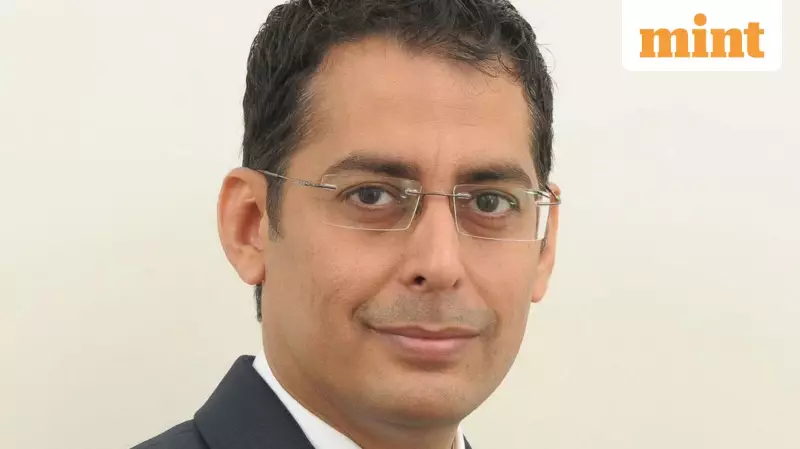
Kaiyomurz Daver, Chief Marketing Officer of Nippon India Mutual Fund, reveals that the company's strategy centers around what he calls 'passive advertising'. Unlike traditional aggressive marketing campaigns, this approach focuses on integrating the brand into consumers' daily lives through strategic placements.
'We have a tough challenge of building a brand,' Daver explains. 'As the fourth largest, we compete with bank-sponsored mutual fund brands that have decades of customer familiarity and visibility behind them.' He emphasizes that while competitors benefit from thousands of physical touchpoints through bank branches and ATMs, Nippon must find creative ways to establish presence.

The company's passive advertising initiatives include laptop branding on major news networks like Times Group channels and Republic TV, along with strategic metro station branding. The Worli Naka station on Mumbai's Aqua Line represents a particularly significant investment, strategically located to capture attention across business districts, affluent markets, and even extending to areas like Dharavi.
Connecting with New Generation Investors
Addressing the challenge of appealing to younger investors, particularly those who began their investment journey during the post-COVID bull run, Nippon has developed targeted communication strategies. The company recognized that many new investors have experienced market stagnation in recent years and has responded by enhancing direct communication efforts.
'We started showing them empirical evidence of long-term investing, and what happens when you stay invested through volatility,' Daver states. This educational approach aims to build investor resilience and understanding of market cycles.
For Gen Z audiences, Nippon has taken particularly innovative steps, becoming the only Asset Management Company (AMC) with a dedicated social media property specifically designed for this demographic. Their Instagram account, InvestBae (Invest Before Anyone Else), represents a bold departure from traditional financial industry communication.
Building Trust in a Young Industry
Despite the noise surrounding flashier investment instruments like stocks, IPOs, and derivatives, Nippon India Mutual Fund has demonstrated remarkable growth. The company claims to be the fastest-growing mutual fund house in the country among non-bank sponsored entities, boasting the largest user base of retail investors outside of EPFO investments.
Daver contextualizes the mutual fund industry's relative youth compared to established financial institutions. 'LIC has been around for 100 years. The banking system is 300-400 years old,' he notes. 'The first mutual fund scheme came in 1964... really, the industry started with privatization in 1991-92, about 30-35 years ago.'
The evidence of growing trust in mutual funds is visible in industry metrics. While markets have remained largely flat over the past year, the Systematic Investment Plan (SIP) book has grown from ₹25,000-26,000 crore six months ago to ₹29,000 crore monthly. This represents significant growth from the ₹3,000-4,000 crore levels when AMFI's 'Mutual Funds Sahi Hai' campaign began.
Daver observes a generational shift in investment behavior: 'For instance, my parents told me to open a recurring deposit account. Now the parent will tell their child to open an SIP account.' This transformation in financial mindset, combined with strategic marketing approaches like passive advertising and Gen Z-focused initiatives, positions Nippon India Mutual Fund for continued growth in India's evolving investment landscape.






