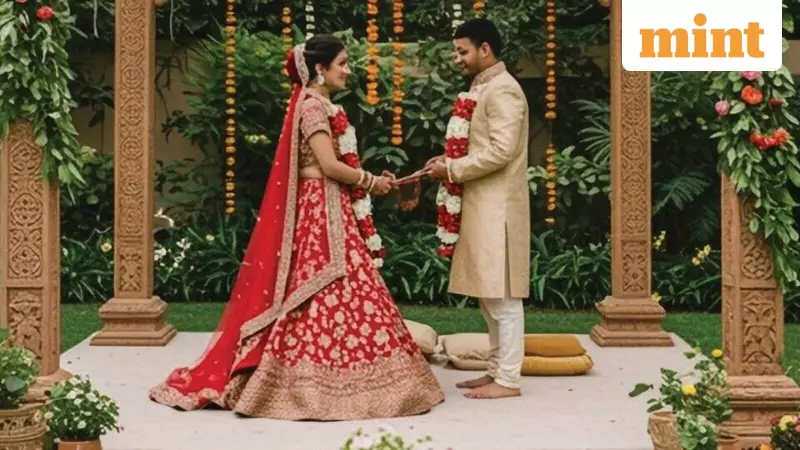
India's wedding industry is a colossal ₹6.5 trillion affair this year, with close to 4.6 million celebrations expected. Yet, amidst the grand stage collapses, flight delays, and logistical nightmares, a crucial financial safety net remains largely ignored: wedding insurance. Financial planners reveal a stark reality—only about one in fifteen clients opts for this cover when suggested.
The High Stakes of Modern Weddings
Today's large-scale Indian weddings are complex operations involving venues, dozens of vendors, travel logistics, and hundreds of guests. This complexity inherently raises the risk of things going wrong. Viral incidents over the years, from stage collapses and roof cave-ins to groom's cars catching fire and recent widespread flight delays disrupting ceremonies, highlight potential mishaps. While most of these can be insured against, awareness and uptake remain critically low.
The reluctance stems from a combination of low awareness, perceived high cost, and a labyrinth of policy exclusions that confuse potential buyers. However, as weddings transform into high-cost, high-stakes events, experts argue that couples need to pay closer attention to this financial product.

What Does Wedding Insurance Actually Cover?
A standard wedding insurance policy in India typically protects against three broad categories of risk: cancellation, accidents, and loss of valuables. This means financial reimbursement for non-refundable expenses if the wedding is cancelled due to listed reasons like extreme weather, natural calamity, or serious illness of an immediate family member. It also covers damages to the venue or trousseau from events like fire, and theft of jewellery or cash under specific conditions.
Amarnath Saxena, Chief Technical Officer-Commercial at Bajaj General Insurance, explains that costs for venue bookings, décor, catering, and essential arrangements are covered to prevent financial burden during unexpected events. Vineet Agarwal, Head of Insurance at PL Capital, notes that while vendor no-shows and cancellations due to airspace closure are covered, not every travel delay is included automatically.
A key nuance involves flight disruptions, like those recently seen with IndiGo. "The couple can make a claim if the wedding is postponed because an essential person like the bride or groom cannot arrive on time due to a travel disruption. But this is not a standard cover and needs to be specifically opted for, as these policies are highly customisable," Agarwal clarifies.
The Crucial Fine Print and Common Exclusions
Understanding what is not covered is perhaps more important. Wedding insurance only covers unforeseen risks. Common exclusions are extensive and often lead to claim rejections.
Cancellations due to cold feet, family disputes, or voluntary decisions are not covered. Other frequent exclusions include damages occurring outside the wedding venue, loss from unattended jewellery, use of unregistered or unorganised vendors, wilful negligence, and losses due to civil unrest.
Ramit Goyal, Chief Distribution Officer at Generali Central Insurance Company, warns that many families assume everything is covered, but in reality, exclusions are extensive. He cites the example of a Bhopal wedding cancelled due to heavy rainfall, where the claim was rejected because the Meteorological Department had issued prior warnings, making the rainfall a seasonal and foreseeable event.
Similarly, if valuables are stolen from an unattended car, the claim may be declined, as jewellery is expected to be guarded or kept in a safe place, explains Chaitanya Sthalekar, a risk management specialist at HNEX. Furthermore, insurance compensates for direct losses incurred, not for escalated costs, as a couple in Udaipur discovered when their postponed wedding incurred higher peak-season vendor charges.
Making Wedding Insurance Work For You
Despite the exclusions, a wedding insurance policy can act as a vital financial backstop. Valance Fernandes, CEO of Wealixir Consulting Group, advises thinking of it as a hedge against a major event lapse that could otherwise force families to liquidate assets.

Choosing the right sum insured is critical. Premiums typically range between 2 to 2.5 percent of the insured sum. For weddings costing ₹35-50 lakh, experts like Rajendra Dhulla, co-founder of Pratham Services Fincorp, recommend a public liability cover of at least ₹1-2 crore.
Documentation is key for a smooth claims process. Insurers advise keeping all contracts, invoices, receipts, and medical certificates ready. Delays in filing claims often trigger greater scrutiny and can derail settlements altogether. The consensus is clear: in an industry as vast and unorganised as India's wedding market, a carefully chosen insurance policy, with its fine print thoroughly understood, can provide much-needed peace of mind.