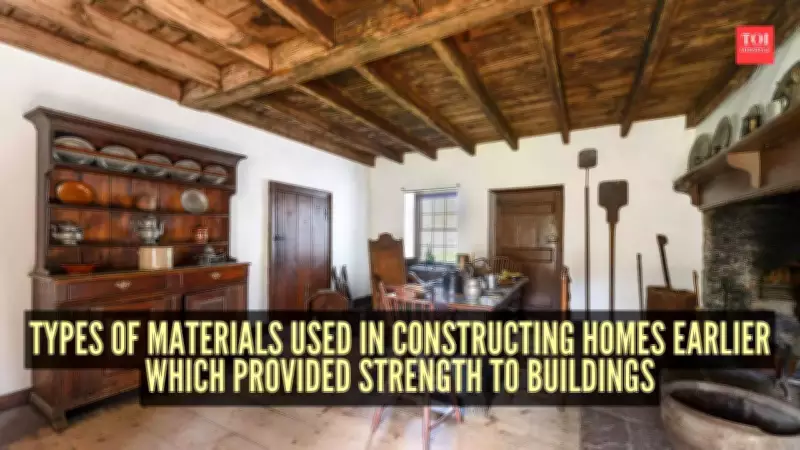
8 Traditional Building Materials That Made Homes Strong and Durable
Traditional homes across the globe were built using locally sourced materials that offered remarkable strength and stability, protecting structures from diverse weather conditions. Before modern construction technology emerged, people relied on resources such as stone, wood, clay, and lime to create robust and enduring buildings. Many ancient houses, temples, and forts constructed from these materials still stand today, a testament to their durability. Not only were these materials strong, but they were also environmentally friendly, providing sustainable solutions that continue to inspire contemporary architecture.
Stone: The Resilient Foundation
Stone stands as one of the earliest and most resilient building materials in history. Varieties like granite, sandstone, and limestone were shaped into large blocks to construct homes. Stone houses are exceptionally long-lasting, which explains why numerous structures from centuries ago remain intact. Their inherent strength makes them resistant to wear and tear, ensuring durability over time.
Mud or Clay: The Insulating Element
Mud and clay were widely used in traditional homes, particularly in rural settings. When combined with straw or other natural fibers, clay formed sturdy walls that provided excellent insulation against both heat and cold. Mud houses were simple to build and repair using readily available local materials. Despite their modest appearance, well-maintained clay structures can endure for many years, showcasing their practical and sustainable nature.

Timber or Wood: The Flexible Framework
Wood has been a fundamental material for home construction, especially in regions where it is abundant. It is strong enough to be used for beams, columns, roofs, and floors. Wood's elasticity allows it to stretch slightly under stress, making it resistant to certain environmental conditions. Additionally, wood houses offer warmth and aesthetic appeal, creating cozy and visually pleasing living spaces.
Brick: The Timeless Building Block
The use of bricks dates back thousands of years, originally crafted by molding clay and baking it to enhance strength. Brick walls are not only robust but also serve as effective insulators. Their uniform shape enabled builders to create solid and reliable structures, contributing to the longevity of many historical buildings.
Lime Mortar: The Durable Binder
Lime mortar, a mixture of lime, sand, and water, was commonly used in past construction for its durability and flexibility. It can adapt to changes in a building's structure without cracking, ensuring long-term stability. This material played a crucial role in binding other elements together, enhancing the overall strength of traditional homes.
Bamboo: The Lightweight Powerhouse
In Asia, bamboo has been a popular building material due to its durability and flexibility. Despite its lightweight nature, bamboo boasts a high strength-to-weight ratio, making it ideal for constructing stable and strong houses, particularly in earthquake-prone areas. Its use highlights the ingenuity of traditional methods in creating resilient structures.
Thatch: The Protective Roofing
Thatch, typically made from dried grass, palm fronds, or reeds, has been widely used for roofing. Although it may seem simple, a thatched roof provides effective insulation, shielding homes from rain and sun. Properly maintained, thatch roofing can last for many years, offering a sustainable and functional solution.
Adobe: The Sun-Dried Insulator
Adobe bricks are composed of a blend of clay, sand, water, and organic materials like straw. Unlike kiln-fired bricks, adobe is dried naturally under the sun. These bricks offer excellent insulation for interior spaces while contributing to the structural strength of homes, making them a versatile and eco-friendly option.
The significance of traditional building materials cannot be overstated, as they were essential in constructing strong and durable houses. Materials such as stone, wood, bricks, and clay were valued for their availability, strength, and ability to withstand various weather conditions. Today, these materials continue to inspire eco-friendly and sustainable architectural practices, proving that ancient wisdom remains relevant in modern times.