

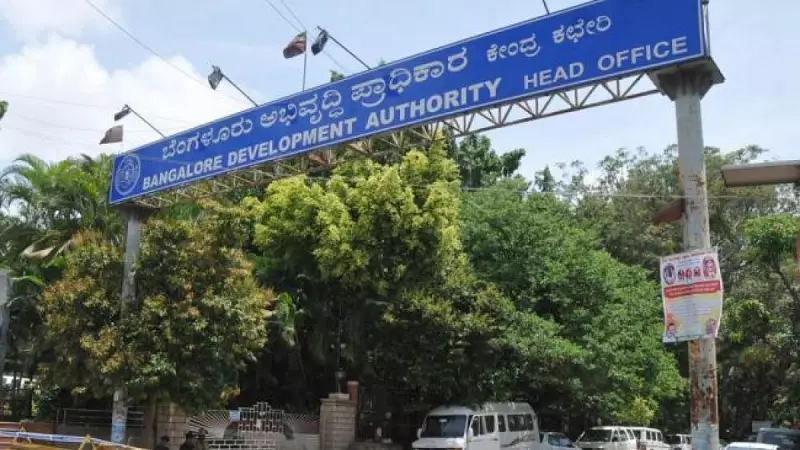
In a significant move to ensure infrastructure quality, the Bangalore Development Authority (BDA) has formally approached the prestigious Indian Institute of Science (IISc) to conduct a thorough technical review of recently completed road works. This request specifically targets the asphalting projects within the expansive Nadaprabhu Kempegowda Layout, a major residential development zone in the city.
Formal Request for Expert Scrutiny
The development authority took official action by dispatching a formal letter to the director of IISc. The correspondence, dated December 23, 2025, clearly outlines the BDA's requirement. In the document, the authority has asked the premier institute to assign a competent team of its technical experts. The sole mission of this team would be to execute a comprehensive quality audit of all the asphalting work that has been finished across the layout. This step underscores a proactive approach to quality control and accountability in public works.
Focus on Nadaprabhu Kempegowda Layout
The audit will concentrate solely on the roads within Nadaprabhu Kempegowda Layout. This large-scale layout is a key project for the BDA, aimed at providing organized urban space and alleviating the city's housing crunch. The quality of its internal roads is paramount for future residents and for the overall functionality of the area. By bringing in an independent and highly respected technical body like IISc, the BDA aims to obtain an unbiased, scientific assessment of the construction work's durability and compliance with specified standards.

Implications for Bengaluru's Infrastructure
This decision to seek an external audit from a reputed institute like IISc is being viewed as a positive step towards greater transparency in civic projects. It signals a potential shift towards involving academic and research expertise in monitoring public infrastructure, moving beyond internal checks. The findings of the IISc audit, once completed, are expected to set a precedent for how other large-scale development projects in Bengaluru and possibly across Karnataka are evaluated for quality assurance. The move addresses growing public concern over the longevity and quality of newly built urban infrastructure.
The outcome of this audit could lead to several scenarios, including certification of satisfactory work or recommendations for corrective measures if deficiencies are found. For citizens and future allottees of the layout, this initiative promises a third-party validation of the road network's quality, potentially boosting confidence in the project. The BDA's action highlights an increasing institutional focus on delivering infrastructure that is not just built, but built to last.






