

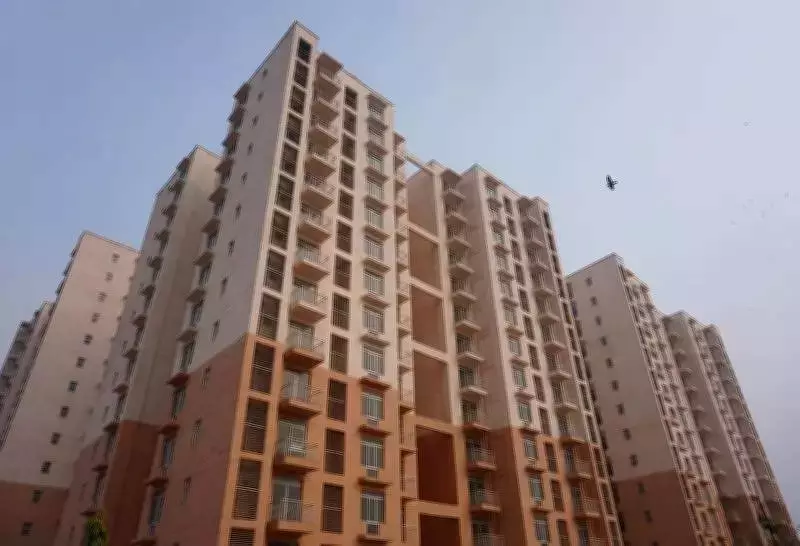
Delhi Development Authority Assumes Maintenance Role for Pre-2021 Housing Complexes
In a strategic initiative designed to enhance the marketability and appeal of its residential properties, the Delhi Development Authority (DDA) has announced a significant policy shift. The authority will now take direct responsibility for the day-to-day upkeep and maintenance of housing complexes, including those constructed prior to 2021. This move is explicitly aimed at stimulating sales of these flats by ensuring consistent and reliable maintenance services.
Comprehensive Maintenance Services and Quarterly Charges
Under the newly approved framework, DDA will implement a structured system to collect quarterly service charges from flat owners. In return, the authority will provide a wide array of essential routine services. These encompass security provisions, sweeping of all common areas, thorough cleaning of roofs, overhead water tanks, and underground water reservoirs, as well as meticulous upkeep of basements.
Furthermore, the maintenance scope includes the regular servicing and repair of electrical installations and elevator systems, alongside the cleaning of garbage chute areas to uphold hygiene standards. The services extend to minor repairs and ongoing maintenance of shared spaces such as staircases, lift lobbies, and corridors. Additionally, DDA will manage the maintenance of sewage treatment plant (STP)-treated water supply lines that are utilized for horticultural purposes within the complexes.

Standard Operating Procedure and Implementation Timeline
A detailed Standard Operating Procedure (SOP), which outlines a clear and organized mechanism to address daily maintenance concerns across various DDA housing pockets, has recently received approval from the competent authority. According to an official notification, this SOP is scheduled to come into full effect starting April 1, 2026.
The implementation will be carried out in a time-bound and coordinated fashion to guarantee efficient delivery of maintenance services. The SOP aims to establish unambiguous roles and enhance accountability among the involved departments. The provisions will specifically apply to housing pockets developed under schemes announced between 2010 and 2021.
Duration of DDA Management and Transition to RWAs
The Delhi Development Authority will continue to oversee day-to-day maintenance operations until one of two conditions is met: either the occupancy rate within a housing pocket reaches 80%, or a Residents' Welfare Association (RWA) is formally registered with the DDA. The authority will maintain control until the later of these two events occurs. For any flats that remain unsold, DDA will pay the requisite service charges to the RWA as determined under its established bylaws.
For flats allotted under housing schemes launched in 2023 and thereafter, the maintenance cost for the initial year was already collected alongside the capital maintenance charge. Consequently, regular service charges will only be levied after the completion of the first year. The SOP clarifies that in cases where this period has already concluded, bills will be generated with the inclusion of any arrears.
Rationale Behind the New Maintenance Mechanism
Officials provided insight into the reasoning behind this decision. At the time of selling flats, DDA collected a one-time capital maintenance charge from allottees. This fund was intended for major repair or renovation projects, such as comprehensive sewerage system improvements, whitewashing, or structural repairs. However, day-to-day maintenance charges were not collected under the schemes introduced up to 2021.
An official explained, "That is precisely why a decision has now been taken to implement a regular maintenance mechanism. This ensures ongoing upkeep and addresses the gap in routine service provisions for these older complexes."
Service Charge Structure and Payment Guidelines
Monthly service charges will be calculated per square metre of the plinth area, with rates varying based on the flat category and the specific building typology. The applicable Goods and Services Tax (GST) will be charged separately. Initial rates have been determined based on estimated inputs received from engineering zones, averaged to ensure uniformity across complexes.

For subsequent financial years, the rates will be assessed pocket-wise, taking into account the actual expenditure incurred during the preceding year, any pending liabilities, and the cost inflation index notified by the Central Board of Direct Taxes. These revised rates will require annual approval from the competent authority or the chief engineer of the concerned zone.
Service charges will be billed on a quarterly basis. Residents will be granted a grace period of 10 calendar days from the billing date to make payments without incurring interest. Payments can be facilitated through digital platforms or at cash deposit counters located within the complex. If payment is not received within the 10-day window, simple interest at a rate of 12% per annum will be levied, calculated from the original billing date.
Enforcement Measures for Non-Payment
In instances of persistent non-payment, the outstanding dues can be recovered as arrears of land revenue. This enforcement action is authorized under Regulation 17 of the Delhi Development Authority (Management and Disposal of Housing Estates) Regulations, 1968, ensuring compliance and financial accountability among residents.





