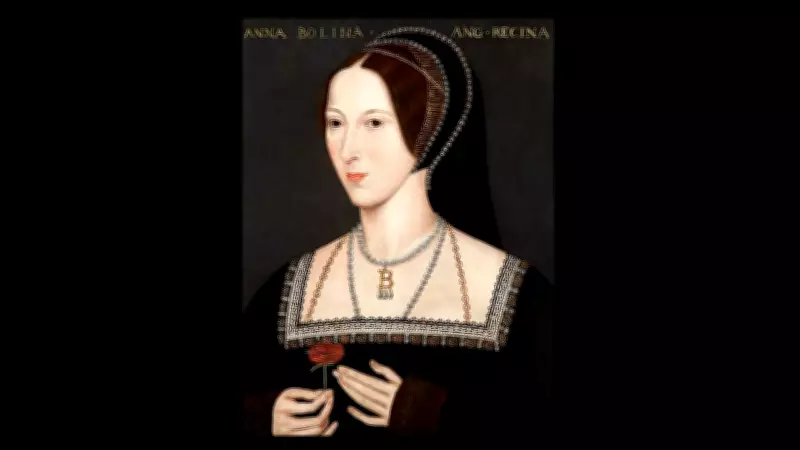
Anne Boleyn Reimagined: Unraveling the Myths of Tudor England's Most Hated Queen
History has often painted Anne Boleyn in the darkest of hues, branding her as a wicked wife, a seductress, and even a witch. Yet, she endures as one of the most controversial and fascinating women in Tudor English history. Beneath this harsh caricature lies a far more nuanced and humanized figure—not merely a woman who disrupted a royal marriage, but a formidable political force whose life and death irrevocably altered the course of English history. Much of what we believe about Anne Boleyn today stems from biased propaganda and misogynistic perspectives, compelling us to look beyond these distortions and delve into what historical evidence truly reveals.
Anne Boleyn’s Reputation: How the ‘Most Hated Woman’ Was Created
Anne Boleyn’s image was not built on factual foundations but on perceptions shaped by political agendas. Historical writings often depict her as dangerous and manipulative. For instance, as noted in research from East Tennessee State University, Cardinal Wolsey, crucial to King Henry VIII in negotiations with Rome, faced consistent pushback that led Anne to suspect a personal vendetta. Wolsey went so far as to label her "a seductress, power-hungry, and even a caw into the king’s private ear."
However, many sources are heavily biased, particularly those authored by individuals who opposed Anne Boleyn. Eustace Chapuys, the Imperial Ambassador and a staunch supporter of Catherine of Aragon, wrote extensively against Anne, with his accounts now recognized as prejudiced. These perceptions and slanted writings gradually solidified into the accepted "truth" about her. What began as propaganda to garner political support evolved into a lasting caricature, reducing a complex personality to a one-dimensional villain.

The Real Anne Boleyn: Intelligent, Influential, and Misunderstood
Stripping away the myths unveils a very different Anne Boleyn. She was widely acknowledged as intelligent, witty, and refined. Early descriptions, such as those in Eric Ives’ definitive biography, portray her as charming and charismatic, with one observer remarking that she was "remarkable, intelligent, quick-witted." In recent years, historians have worked to correct the misconceptions surrounding her. Historian Hayley Nolan asserts, "Everything we’ve been told about Anne is not the truth," highlighting efforts to reassess her role in the religious reforms of the era.
Anne was no mere pawn or temptress; she played a pivotal role in shaping the English Reformation. Her marriage to Henry VIII directly precipitated the split with the Roman Catholic Church, an event that forever changed British history. This underscores her significance as a political and religious influencer, far beyond the simplistic narratives of seduction.
Tudor Politics and Misogyny: Why Anne Was Vilified
To understand the depth of animosity toward Anne Boleyn, one must consider the context of Tudor England, where women seeking power were often met with contempt. Research by historian Susan Bordo reveals that Anne’s reputation fluctuated with the political climate: under Mary I, she was depicted as a 'scheming temptress,' while under Elizabeth I, she was recast as a Protestant icon. This malleability of her image indicates that her life was reinterpreted to serve those in power.
Anne’s ambition, a trait admired in men, was viewed negatively in a woman, reflecting the era’s deep-seated misogyny. As one historical analysis notes, Anne Boleyn was "perhaps a figure to be admired more than liked," suggesting that her drive and intellect were overshadowed by gendered biases.
Execution and Legacy: A Queen Remembered Differently
Anne Boleyn's downfall was swift and brutal. In 1536, she was charged with adultery, incest, and treason, leading to her execution. Modern scholarship largely regards these allegations as false, viewing her death as a testament to political expediency overriding justice and law. Her legacy, however, endured through her daughter, Elizabeth I, who became one of England’s greatest monarchs and gradually shifted perceptions of her mother.

Historian Joanna Denny later wrote, "Few have been so persistently maligned as Anne Boleyn." Today, historians are rewriting this centuries-old story, transforming the "wicked wife" from a villain into a victim of circumstance and propaganda.
Reclaiming the Truth Behind the Myth
The story of Anne Boleyn is not merely one of rise and fall but a narrative about the construction and reconstruction of history. Dubbed the ‘most hated woman of Tudor England,’ she was, in reality, far more than the myths that envelop her. By re-examining evidence and reevaluating long-held beliefs, we can begin to see Anne Boleyn not as a caricature, but as a woman navigating a hostile world. Perhaps now, her story can finally be told with the nuance and fairness denied to her for so long.