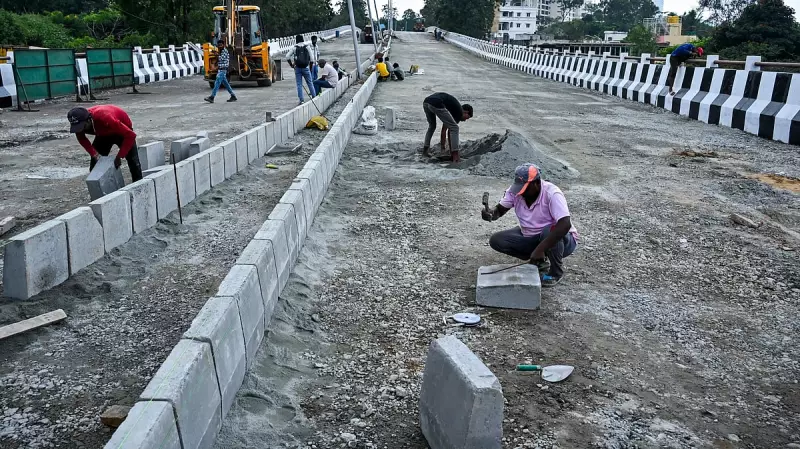
After an agonizing five-year delay that tested the patience of daily commuters, Bengaluru's much-awaited Hosakerehalli flyover has finally opened to the public, marking a significant milestone in the city's infrastructure development. The flyover, which spans the challenging intersection of Outer Ring Road and Hosakerehalli Cross, was inaugurated by Bengaluru Development Minister D K Shivakumar on Tuesday, bringing relief to thousands of travelers who navigate this congested corridor daily.
The Long Road to Completion
The construction journey began in 2019 with an initial deadline of 24 months, but multiple obstacles including the COVID-19 pandemic, design modifications, and technical challenges stretched the timeline to nearly double the original estimate. Built at a cost of approximately ₹92 crore, the 750-meter long flyover features six spans and represents a critical piece of infrastructure for West Bengaluru's transportation network.
Local residents and business owners had been vocal about their frustration with the prolonged construction period, which caused significant traffic disruptions and economic losses in the area. The completion comes as a welcome development ahead of the monsoon season, when the previously waterlogged intersection would typically create nightmarish traffic scenarios.

Technical Specifications and Design Features
The engineering marvel boasts several noteworthy features designed to enhance commuter safety and traffic flow. The flyover includes dedicated service roads on both sides, ensuring that local traffic can access businesses and residences without needing to use the elevated structure. Proper drainage systems have been incorporated to address the chronic waterlogging issues that plagued the intersection during heavy rains.
Construction was handled by the URC Construction Private Limited, with project monitoring and technical supervision provided by the Bangalore Metro Rail Corporation Limited (BMRCL). The collaboration between multiple civic agencies, including the Bruhat Bengaluru Mahanagara Palike (BBMP), was crucial in overcoming the final hurdles to completion.
Impact on Bengaluru's Traffic Patterns
Transportation experts predict significant improvements in travel times for commuters moving between areas like Banashankari, Kengeri, and Nagarbhavi. The flyover is expected to reduce congestion not only at the Hosakerehalli junction but also on alternative routes that commuters had been using to bypass the construction zone.
During the inauguration ceremony, Minister Shivakumar emphasized the government's commitment to completing long-pending infrastructure projects across Bengaluru. He acknowledged the inconvenience caused to citizens during the extended construction period but expressed confidence that the benefits would justify the wait.
The opening of Hosakerehalli flyover represents more than just another infrastructure project—it symbolizes progress in addressing Bengaluru's chronic traffic problems and demonstrates what can be achieved when civic authorities persist through challenges to deliver critical urban amenities.