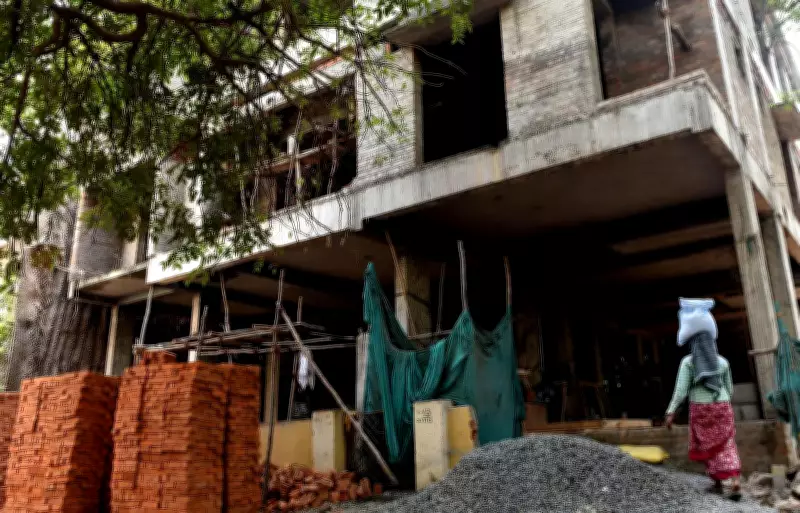
A house priced at ₹1 crore may become 10% costlier as construction material prices have surged by more than 23%. Industry stakeholders attribute the hike to rising costs of gelatin and diesel due to the West Asian conflict, along with a supply crunch following the closure of several unauthorised quarries. They warn that the steep increase in material costs could eventually be passed on to homebuyers.
Price Spikes Across Construction Inputs
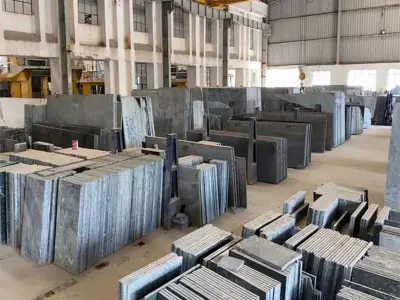
Real estate industry experts report price revisions across a range of construction inputs, including ready mix concrete (RMC), M-sand, P-sand, aggregates, and road-laying materials. The price of RMC has increased by ₹300 to ₹500 per cubic metre, depending on the grade. Widely used grades M20, M25, and M30 have gone up by at least ₹500. Construction aggregates have also seen a price increase of ₹300 to ₹500.
Impact on Housing Industry
While the construction industry has welcomed the government's efforts to curb illegal mining, developers say the sudden reduction in material availability has created severe pressure on supply chains. Members of Credai Chennai noted that the housing industry had already been affected by the West Asian conflict. “Housing sales are down by 30%. Jobs are at stake. People don’t want to invest in houses now. At this juncture, higher input costs would inevitably increase construction costs,” said P Kruthivas, president-elect of Credai Chennai.

Credai will submit a petition to Minister for Natural Resources, Minerals and Mines T K Prabhu, requesting uninterrupted supply of legally sourced construction material, prevention of speculative price increases, and expedited approvals for compliant mining and material supply units to restore market stability.
Vulnerability of Small and Medium Builders
The developers’ body noted that small and medium-sized builders are particularly vulnerable as they face difficulties securing adequate material supply while large infrastructure projects absorb a substantial share of output from compliant quarries. S Ramprabhu, chairman of the DTCP committee at the Builders Association of India, stated that there are more than 400 authorised quarries supplying quality construction materials. “Their production is sufficient. So, the government should step in and regulate the supply at the earliest,” he said.
E Srinivasan, president of the Greater Chennai Civil Engineers Association, welcomed the minister’s crackdown on unauthorised quarries but noted that alternate solutions should have been ready before the closures. “We enter an agreement with the customer, and when the cost escalates, it becomes difficult to convince them to pay more,” he said.
Rama Rao, president of the Greater Chennai Contractor Association, said they had given a representation to the government after the price of bitumen shot up from ₹45,000 to ₹95,000 per ton. “We have to bear the cost increase of other construction material,” he added.
Call for Balanced Action
Meanwhile, Jayaram Venkatesan, convenor of Arappor Iyakkam, said there would be “heavy pressure” on the minister to back out of taking action against illegal mines. “He must stand his ground,” he said. “If supply reduces because of shutting down illegal mines, ban the rough stones and other construction material going to Kerala and use legally mined resources for Tamil Nadu to manage the supply.” Minister Prabhu told TOI that discussions are on to address the issue.