In Mumbai's dynamic property market, a fundamental shift is underway. The city's homebuyers, seasoned by years of delays and unfulfilled promises, are rewriting their priorities. The conversation has moved decisively away from mere aspiration, views, or even price alone. Today, the core anxieties revolve around tangible delivery, the long-term viability of a location, and the fear of being forced to move again.
The Rise of the Pragmatic Homebuyer
Past cycles in Mumbai's housing were dominated by the allure of the right neighbourhood, the prestigious pin code, and the social status a home could confer. While these factors remain, they no longer drive the final decision. The modern buyer's checklist is markedly more practical and risk-averse.
Key questions now include: Can the location adapt to changing work-from-home patterns? Will the home accommodate a growing or shrinking family? Are there multiple access routes to avoid dependency on a single road? Is the project phased realistically, or is it banking on a distant, singular promise? This scrutiny explains why suburbs once considered secondary are now being evaluated with fresh eyes—not for trendiness, but for their scores on adaptability and reduced risk.

Why Scale and Phased Development Build Confidence
Mumbai's market has imparted a hard lesson: the scale of a development significantly impacts its quality of life and longevity. Smaller plots often lead to compromised planning, squeezed amenities, awkward circulation, and a loss of open space. Over time, such projects tend to age poorly.
In contrast, larger land parcels, particularly those conceived as townships, allow for integrated planning. Housing, amenities, movement networks, and green spaces can be sequenced and built cohesively. This approach doesn't guarantee perfection, but it substantially improves the odds of creating a sustainable community. This logic is fueling a renewed interest in township-led developments within established city corridors, rather than far-flung extensions.
Rising City: A Case Study in Modern Demand
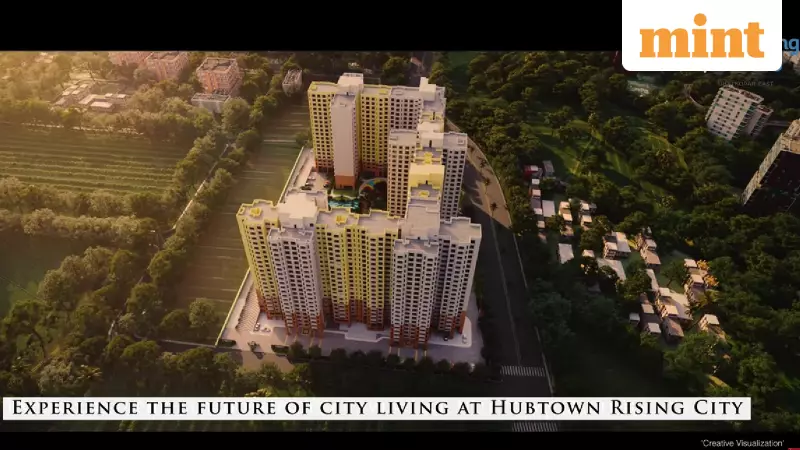
This evolving buyer mindset is clearly reflected in the traction for projects like Rising City in Ghatkopar East. Developed by Hubtown Pvt Ltd through Rare Township Pvt Ltd, the project is part of a comprehensive 128-acre township vision. The residential component itself is situated on a planned six-acre parcel within this larger framework.
This distinction is critical. The residential towers—rising to 19 storeys and offering 2, 2.5, and 3 BHK homes with carpet areas from 621 sq ft to 1,155 sq ft—are not isolated structures. They are designed as part of a pre-planned ecosystem where circulation, open areas, and shared infrastructure were accounted for from the outset.
Architectural planning led by Hafeez Contractor prioritizes functional internal layouts and natural light over external spectacle. Amenities, including walking tracks, play areas, fitness zones, indoor activity rooms, and a creche, are designed for repeated daily use, not as one-time showpieces.
Delivery Timelines and Financial Assurance Take Center Stage
For today's cautious buyer, confidence is built on visible progress and financial stability. Rising City addresses this through a clear, phased development plan. Towers A4 and A5 have already secured Occupancy Certificates and are ready for handover.
The remaining towers are under construction in stages. The current schedule targets possession for Towers A1 to A5 by December 2025, with Tower A6 planned for completion by December 2026. This staggered approach allows buyers to align purchases with their personal timelines.
Adding a significant layer of reassurance, the project is backed by the SWAMIH Investment Fund I, an alternative investment fund sponsored by the Government of India and managed by SBI Ventures Limited. This institutional involvement signals structured oversight and financial continuity, a key concern in the post-stalled-project era.

Furthermore, the project benefits from its setting in Ghatkopar East, a mature neighbourhood with existing educational institutions, healthcare facilities, work hubs, and retail centres. This reduces the buyer's dependence on future infrastructure promises and lowers the risk of daily inconvenience.
The renewed focus on areas like Ghatkopar East signals a broader market trend: the search for reliability. As Mumbai continues to expand, the homes that will retain value—both emotional and financial—are those that demonstrate a clear understanding of how people actually live, prioritizing preparedness over mere promise.