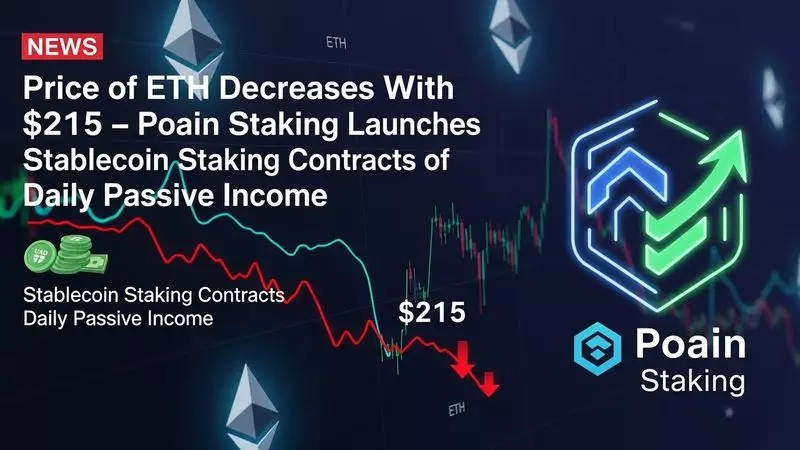
The cryptocurrency market witnessed a notable shift as the price of Ethereum (ETH) experienced a decline, coinciding with a significant development from the POA Network. The second-largest cryptocurrency by market cap saw its value drop by 2.15%, a movement that has captured the attention of investors and analysts alike. This price action unfolded as the POA Network, a prominent player in the blockchain interoperability space, officially launched its much-anticipated stablecoin staking contracts.
Market Reaction to POA Network's Strategic Move
The launch represents a strategic expansion for POA Network, aiming to bridge the gap between traditional finance's stability and the innovative world of decentralized finance (DeFi). By enabling staking for stablecoins, the network provides a mechanism for users to earn rewards on assets designed to maintain a steady value, such as those pegged to the US dollar. This initiative is seen as an effort to attract a broader user base seeking yield without the high volatility typically associated with cryptocurrencies like Ethereum and Bitcoin.
Market analysts are closely examining the correlation between ETH's price dip and this launch. While a single event rarely dictates the price of a major asset like Ethereum, the timing is conspicuous. Some experts suggest that the announcement may have prompted a short-term reallocation of capital, as some investors shifted focus towards the new staking opportunities presented by POA, which could offer perceived lower risk compared to holding volatile assets.

Understanding the Broader Crypto Landscape
The 2.15% decline in Ethereum's price is a reminder of the inherent volatility within the digital asset space. Even as foundational networks like Ethereum continue to develop and upgrade—most notably with its transition to a proof-of-stake consensus mechanism—external developments from other blockchain projects can influence market sentiment and capital flows. The POA Network's foray into stablecoin staking contracts is a direct challenge to the DeFi status quo, potentially diverting liquidity and attention.
This event underscores a growing trend in the blockchain industry: the rise of interoperability and cross-chain functionality. Projects are no longer operating in isolation; developments on one network can have tangible effects on others. For Indian crypto enthusiasts and investors, this interconnectedness means that keeping a watchful eye on global launches and technological advancements, like those from POA Network, is crucial for making informed decisions.
Implications for Investors and the Future
The immediate aftermath saw Ethereum trading at lower levels, but the long-term implications are multifaceted. Firstly, the successful launch of a competitive staking product by another network highlights the intense innovation and competition in the crypto staking and yield generation sector. Secondly, it tests Ethereum's market position as the dominant hub for DeFi applications. Will such developments fragment the ecosystem, or will they push Ethereum to innovate faster?
For the average investor, this scenario presents both a cautionary tale and an opportunity. The price dip in a major asset like ETH following news from a smaller network is a classic example of market sensitivity. However, the expansion of services like stablecoin staking also broadens the toolkit available for portfolio diversification and risk management. Investors can now consider a wider array of yield-bearing options beyond simply holding assets.
As the dust settles, the key takeaway is that the cryptocurrency landscape is dynamic and reactive. The launch of POA Network's staking contracts is more than just a product release; it's a market event that ripples across asset prices. Monitoring how Ethereum's ecosystem responds to such competitive pressures will be vital in understanding the next phase of growth for the entire digital asset industry.