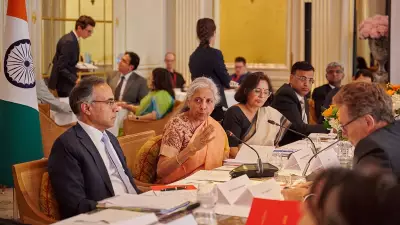
Finance Minister Nirmala Sitharaman announced on Wednesday that India is developing a comprehensive ecosystem to support 5,000 Global Capability Centres (GCCs) by 2030. The statement was made during a business summit in New Delhi, highlighting the country's rapid growth in this sector.
Current GCC Landscape in India
According to Sitharaman, on average, one new GCC is established in India every day. This pace underscores the country's attractiveness as a hub for global operations. The minister noted that GCCs in India currently employ over 1.6 million professionals, contributing significantly to the economy.
"India is building an ecosystem to support 5,000 GCCs by 2030," Sitharaman said, as reported by news agency PTI. She emphasized that the government is focusing on infrastructure, skilling, and policy reforms to sustain this growth.

Government Initiatives and Support
The finance minister outlined several initiatives to bolster the GCC ecosystem. These include the establishment of dedicated GCC parks in major cities, streamlined regulatory processes, and enhanced digital connectivity. The government is also working with industry bodies to create a talent pipeline through specialized training programs.
"Our goal is to make India the preferred destination for global capability centres, and we are taking concrete steps to achieve this," Sitharaman added. She cited the success of existing GCCs in sectors like banking, technology, and healthcare as evidence of India's potential.
Impact on Economy and Employment
The expansion of GCCs is expected to create millions of high-skilled jobs and drive innovation. According to a recent report by NASSCOM, GCCs in India contribute over $36 billion in revenue annually. The government's target of 5,000 GCCs by 2030 could double that figure, providing a significant boost to the economy.
Sitharaman also highlighted the role of GCCs in advancing India's digital transformation. "These centres are not just back-offices anymore; they are innovation hubs driving global research and development," she said.
Challenges and Future Roadmap
While the outlook is positive, challenges remain in areas like talent retention and infrastructure development. The finance minister acknowledged these issues and assured that the government is addressing them through public-private partnerships. She urged state governments to compete in offering the best facilities for GCCs.
"We are creating a competitive federalism where states can attract GCCs with their unique strengths," Sitharaman noted. The government plans to launch a dedicated portal to provide real-time information and support for companies setting up GCCs in India.