

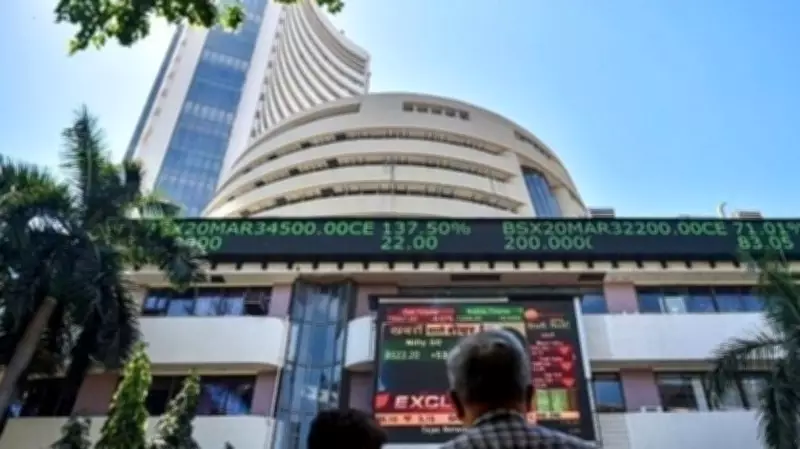
Indian Stock Markets Experience Sharp Volatility Following Strong Opening Session
The Indian stock markets displayed significant volatility on Wednesday, February 19, 2026, after beginning the trading session with firm gains. Early optimism quickly dissipated as key benchmark indices reversed direction, highlighting ongoing investor uncertainty in the financial landscape.
Benchmark Indices Pare Early Gains Amid Sectoral Pressure
Both the BSE Sensex and the NSE Nifty initially opened higher, reflecting positive sentiment from overnight global cues. However, this upward momentum proved short-lived as selling pressure intensified across multiple sectors. By mid-morning, the Sensex had declined by 131.07 points to settle at 83,603.18, while the Nifty dropped 30.70 points to 25,788.65.
Services and Consumer Durables Sectors Lead Market Decline
The downturn was primarily driven by significant losses in the services and consumer durables sectors. Analysts attribute this drag to several factors:

- Concerns over slowing consumer demand affecting durable goods companies.
- Profit-booking in service-oriented stocks following recent rallies.
- Broader economic indicators suggesting potential headwinds for these industries.
Market participants noted that while other sectors showed mixed performance, the pronounced weakness in these key areas contributed substantially to the overall market volatility. The rapid shift from gains to losses underscores the fragile nature of current market sentiment, where investors remain cautious about economic projections and corporate earnings outlooks.
Factors Contributing to Market Volatility
Several elements are influencing this volatile trading pattern:
- Global Economic Uncertainties: International market fluctuations and geopolitical tensions continue to impact investor confidence.
- Domestic Policy Developments: Recent government announcements and regulatory changes are being closely monitored for their potential effects on various sectors.
- Quarterly Earnings Season: Upcoming corporate results are creating anticipation and speculation, leading to preemptive adjustments in stock positions.
- Inflation and Interest Rate Concerns: Persistent worries about inflationary pressures and potential central bank responses are affecting market dynamics.
Financial experts emphasize that such volatility is not uncommon during periods of economic transition, but advise investors to maintain a diversified portfolio and focus on long-term fundamentals rather than short-term fluctuations. The trading session's outcome will be closely watched for indications of broader market trends in the coming weeks.






