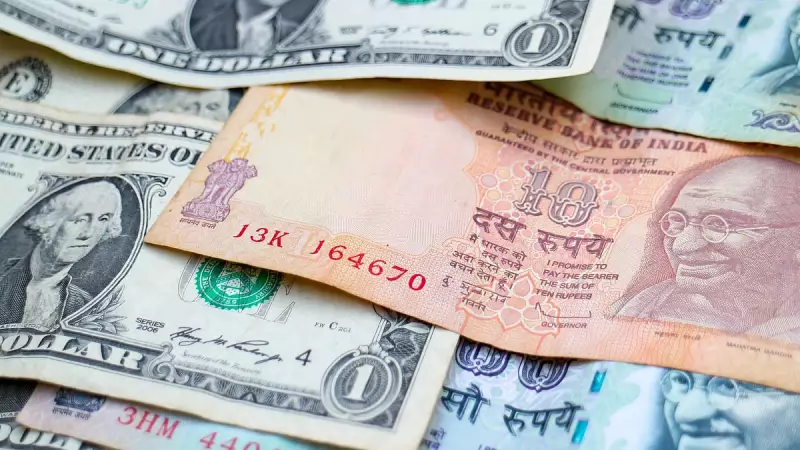
The Indian rupee tumbled to an unprecedented low against the US dollar on Thursday, marking a significant downturn for the domestic currency. The rupee closed at a record 90.78 against the US dollar, reflecting a sharp decline of 29 paise from its previous close. This session's weakness pushed the local unit past its previous all-time closing low, underscoring the mounting pressures on the emerging market currency.
Intraday Volatility and Key Drivers of the Fall
During the trading session, the rupee witnessed considerable volatility. It opened weak at 90.65 against the greenback on the interbank foreign exchange market and oscillated between an intraday high of 90.62 and a low of 90.80 before settling at the historic low of 90.78. The primary catalyst for this steep decline was a resurgent US dollar in the global markets. The dollar index, which measures the American currency against a basket of six major rivals, was trading higher, applying broad pressure on currencies like the rupee.
Simultaneously, foreign fund outflows exerted significant selling pressure on the rupee. Foreign Institutional Investors (FIIs) were net sellers in the capital markets, offloading shares worth a substantial amount. This exodus of foreign capital directly increased the demand for dollars, further weakening the rupee's position. Additionally, the relentless surge in global crude oil prices continued to haunt the Indian currency. As a major oil-importing nation, India's import bill escalates with higher oil prices, widening the trade deficit and creating more demand for dollars to pay for these imports.

Broader Market Context and RBI's Role
The rupee's plunge occurred amidst a bearish trend in the domestic equity markets. Benchmark indices, the Sensex and Nifty, also closed in the red, reflecting a risk-off sentiment among investors. This synchronized fall in both equity and currency markets highlighted the broader concerns over global economic conditions and their impact on emerging economies like India.
Market analysts pointed out that the Reserve Bank of India (RBI) likely intervened in the forex market to curb excessive volatility. However, the central bank's efforts were aimed at smoothing the rupee's descent rather than defending a specific level, given the overwhelming strength of the dollar globally. The rupee's performance was also influenced by expectations surrounding the US Federal Reserve's monetary policy, with investors anticipating a more hawkish stance that benefits the dollar.
Implications and Future Outlook
The record-low closing of the rupee has immediate implications for the Indian economy. A weaker rupee makes imports more expensive, potentially fueling imported inflation. Sectors heavily reliant on imported raw materials, such as electronics and chemicals, may face margin pressures. Conversely, it offers a competitive edge to export-oriented sectors like IT and pharmaceuticals, whose earnings in rupee terms get a boost.
Looking ahead, the trajectory of the rupee will hinge on several key factors:
- Global Dollar Strength: The monetary policy path of the US Federal Reserve.
- Crude Oil Prices: Any further spikes in Brent crude will continue to pressure the rupee.
- Foreign Investment Flows: The direction of FII money into Indian equities and debt.
- RBI's Forex Reserves: The central bank's capacity to manage volatility through its reserves.
Financial experts suggest that the rupee may face continued volatility in the near term. The combination of a strong dollar, elevated oil prices, and global risk aversion presents a challenging environment. Market participants will closely monitor the RBI's actions and any policy measures from the government to stabilize the currency and attract foreign capital.