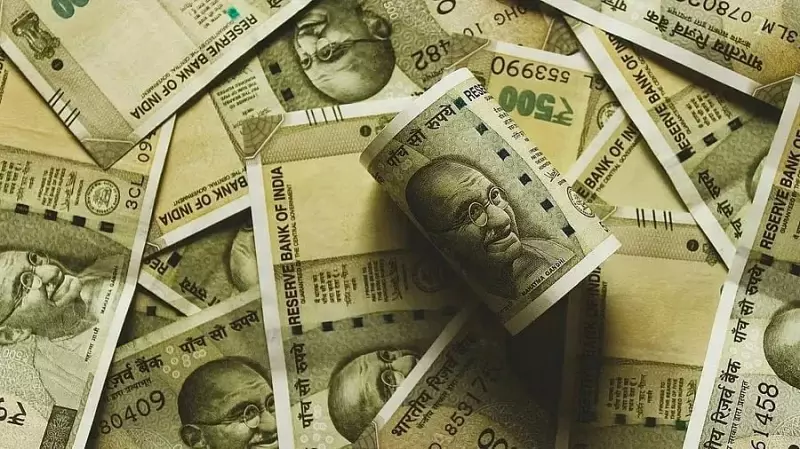
The Indian rupee exhibited minimal movement in early trading sessions on Tuesday, maintaining a tight range against the US dollar. The domestic currency commenced trading nearly unchanged, reflecting a cautious market sentiment amid mixed global and domestic cues.
Opening Figures and Trading Band
At the opening bell, the rupee was quoted at 83.51 against the US dollar, marking a marginal decline of 1 paisa from its previous close. Throughout the initial trading hours, the local unit navigated within an exceptionally narrow band. It witnessed a high of 83.50 and a low of 83.52 against the American currency, showcasing remarkable stability.
This follows Monday's performance where the rupee settled with a slight gain of 2 paise, closing at 83.50. The consistent trading pattern indicates a phase of consolidation for the currency, influenced by counterbalancing forces in the financial markets.

Key Factors Influencing the Rupee's Movement
Forex traders identified several pivotal elements shaping the rupee's trajectory. A significant supportive factor has been the robust inflow of foreign funds into Indian equities. Sustained foreign institutional investor (FII) interest provides underlying strength to the domestic currency by increasing dollar inflows.
Conversely, a major headwind stems from the strength of the US dollar index (DXY) in international markets. The dollar index, which measures the greenback against a basket of six major currencies, was trading higher, hovering near the 105.20 mark. A strong dollar typically pressures emerging market currencies like the rupee.
Market participants also noted the role of the Reserve Bank of India (RBI). The central bank's presence in the market is widely perceived as a stabilizing force, likely preventing excessive volatility and sharp depreciation of the rupee. Its interventions help maintain orderly market conditions.
Broader Market Context and Outlook
The stability in the forex market unfolded alongside positive movements in domestic equity benchmarks. Both the BSE Sensex and NSE Nifty 50 opened and traded in positive territory, suggesting a risk-on mood among domestic investors.
Globally, traders remained attentive to cues from the US Federal Reserve regarding the future path of interest rates. Any signals on the timing of rate cuts can cause significant fluctuations in currency markets. Additionally, the price of Brent crude futures, a critical import for India, was trading around $83.50 per barrel. Stable oil prices alleviate one of the major pressures on India's trade deficit and currency valuation.
Analysts suggest that the rupee is likely to continue trading in a range-bound manner in the near term. The balance between foreign capital inflows and a resilient US dollar, coupled with the RBI's vigilant approach, is expected to contain extreme moves. The market will closely watch upcoming domestic economic data and global geopolitical developments for fresh directional triggers.
In summary, the Indian rupee demonstrated resilience and stability, holding its ground against a strong US dollar. This equilibrium is attributed to supportive equity inflows and proactive central bank management, even as global factors present ongoing challenges.