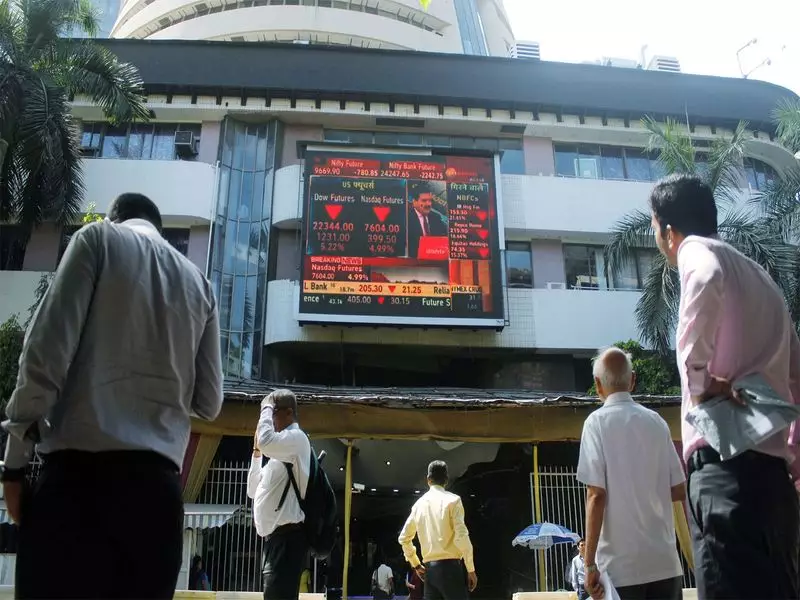
Indian equity benchmarks began Wednesday's trading session on a flat note, displaying a lack of clear direction as conflicting forces pulled the market in opposite directions. The key indices struggled for momentum right from the opening bell, reflecting investor caution in the face of global headwinds and domestic concerns.
Market Indices Show Muted Movement
The benchmark 30-share Sensex opened marginally higher, gaining 22.77 points to reach 72,643.43. In contrast, the broader Nifty50 started slightly lower, dipping 1.8 points to open at 22,055.05. This divergence at the open highlighted the selective and tentative nature of the buying interest. Market breadth was mixed, with some sectors like IT showing resilience while others, particularly those sensitive to currency fluctuations, faced pressure.
Analysts pointed out that the market is currently in a consolidation phase after a strong rally. The lack of fresh positive triggers, combined with some profit-booking at higher levels, is keeping the indices range-bound. Investors are closely monitoring corporate earnings, global crude oil prices, and the trajectory of interest rates both in India and the United States for future cues.

Double Whammy: Weak Rupee and FII Outflows
A significant factor weighing on market sentiment is the continued weakness of the Indian rupee against the US dollar. The local currency has been under pressure, trading near its record lows. A depreciating rupee increases the cost of imports, fuels inflation, and prompts foreign investors to reassess their returns from Indian assets when converted back to their home currencies.
Compounding this issue is the persistent selling activity by Foreign Institutional Investors (FIIs). Data from the National Securities Depository Limited (NSDL) shows FIIs were net sellers in the cash market on Tuesday, offloading shares worth hundreds of crores. This trend of foreign fund outflows has been a recurring theme in recent sessions, creating an overhang on large-cap stocks and limiting the upside for the major indices.
"The twin challenges of a weakening rupee and consistent FII selling are acting as a cap on the market's performance," explained a market expert. "Domestic institutional investors (DIIs) are providing support by being net buyers, but the selling pressure from foreign funds is neutralizing their impact to a large extent."
Sectoral Performance and Key Stocks
At the opening, sectoral indices presented a mixed picture. The Nifty IT index showed some strength, likely supported by the rupee depreciation which boosts the rupee revenue of export-oriented IT firms. However, sectors like banking and financial services, which have a heavy weightage in the indices, were subdued.
Among individual stocks, heavyweight constituents of the Sensex and Nifty such as Reliance Industries, HDFC Bank, and Infosys traded with minor changes. Broader markets, represented by the Nifty Midcap 100 and Smallcap 100 indices, also showed limited movement, indicating that the cautious sentiment was widespread across market capitalizations.
Expert Outlook and Investor Strategy
Market experts suggest that in the near term, the trajectory of the Indian stock market will depend heavily on external factors. The movement of the US dollar index and the US bond yields will influence FII behavior. Any signs of stability or strength returning to the rupee could provide immediate relief to the markets.
Domestically, all eyes are on the ongoing quarterly earnings season. Management commentary on future growth outlook and margins will be critical for stock-specific movements. Additionally, geopolitical developments and crude oil price volatility remain key risk factors that could trigger sudden swings.
For investors, experts recommend a stock-specific and sector-specific approach in this consolidating market. They advise focusing on companies with strong fundamentals, robust earnings visibility, and reasonable valuations. A staggered buying strategy during dips is considered prudent, rather than making large lump-sum investments at current levels.

In conclusion, the Indian stock market is navigating a complex environment marked by global uncertainty and domestic fiscal challenges. While the long-term growth story remains intact, short-term volatility driven by currency movements and foreign fund flows is expected to persist, demanding patience and selectivity from market participants.