

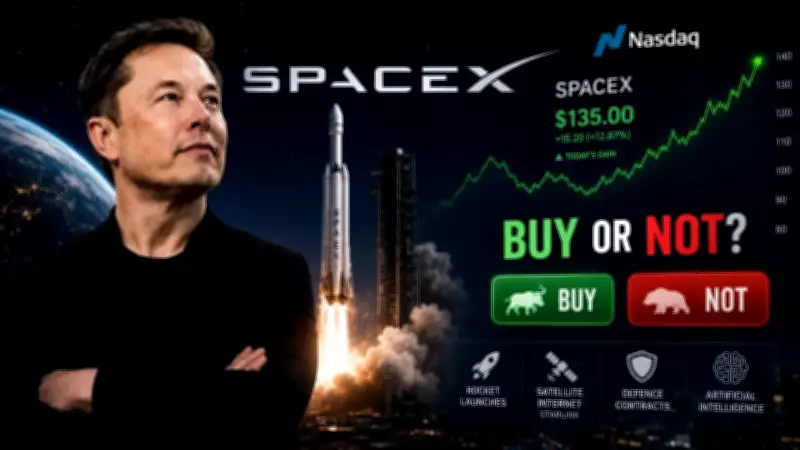
SpaceX, led by Elon Musk, is set to list on Nasdaq on Friday in what is being called the largest initial public offering (IPO) ever. The event is expected to make Musk the world's first trillionaire, and it has drawn overwhelming interest from investors globally. SpaceX operates across multiple high-growth sectors, including space launches, satellite broadband services, defense operations, and artificial intelligence.
Challenges for Indian Investors
For Indian investors, participating in the IPO was not a straightforward option. Unlike domestic public offerings, US IPOs do not offer a direct allocation route for Indian retail investors. As a result, those looking to invest can now only access the stock after its market debut through international investing platforms or via NSE IX in GIFT City. At the IPO price of $135 per share, SpaceX commands a market valuation of approximately $1.75 trillion, placing it among the most valuable publicly traded companies globally, despite not yet turning profitable.
Expert Opinions on SpaceX Stock
A key debate among investors is whether the stock is worth buying immediately after listing. Should Indian investors bet on SpaceX stock? For those seeking international diversification, the appeal is clear. SpaceX has established leadership in commercial launch services and satellite connectivity through Starlink. Additionally, its xAI venture provides exposure to the rapidly expanding artificial intelligence space, making the company one of the few publicly traded businesses with a footprint across several high-growth industries.

However, market experts are split on the issue. Some view SpaceX as a rare long-term opportunity, given its presence in sectors where listed investment options remain limited. Others argue that expectations have become excessively optimistic. The company generated revenue of $18.67 billion in 2025 while reporting a net loss of $4.94 billion.
Ishan Tanna's Perspective
Ishan Tanna, Senior Associate at Ashika Capital, told ET that SpaceX is a distinctive business backed by cutting-edge technology and several long-term growth opportunities. At the same time, he noted that the market valuation already reflects extremely high expectations about the company's future. According to Tanna, a valuation of $1.75 trillion suggests that investors are placing greater emphasis on the company's ability to deliver future growth than on its current financial performance. While he believes the stock could have a place as a limited diversification bet within a portfolio, he warned that aggressively buying after a highly enthusiastic market debut may expose investors to considerable valuation-related risks.
Niteen Dongare's View
Niteen Dongare, Director and CEO of Anand Rathi International Ventures IFSC, said the listing gives Indian investors access to a business model that has few comparable alternatives in global equity markets. He pointed out that SpaceX occupies a dominant position in commercial space launches and satellite connectivity through Starlink, offering investors exposure to industries that extend well beyond the traditional technology sector.
Sunny Agrawal's Caution
However, not everyone is convinced that SpaceX offers an attractive entry point at current valuations. Sunny Agrawal, Head of Fundamental Research at SBI Securities, is among those urging caution and believes investors should refrain from buying the stock after its market debut. Agrawal argued that the company's lack of profitability, combined with what he described as an extremely stretched valuation, makes the risk-reward equation unfavorable for new investors. A key concern is the extent to which future growth expectations have already been built into the stock price. Some analysts suggest getting exposure through global technology or space-focused funds that may eventually hold SpaceX, thereby reducing the risks associated with owning a single stock.
Conclusion
For Indian investors, that may be the most practical conclusion. (Disclaimer: Recommendations and views on the stock market, other asset classes, or personal finance management tips given by experts are their own. These opinions do not represent the views of The Times of India.)






