

Government Proposes Significant STT Increase on Futures and Options Trading
The Indian government has unveiled a proposal to substantially increase the Securities Transaction Tax (STT) on futures and options trading, a move aimed at curbing excessive speculative activity in the derivatives segment. The announcement triggered immediate market turmoil, with the benchmark Sensex experiencing a dramatic plunge of over 2,000 points before staging a partial recovery later in the trading session.
Details of the Proposed Tax Hike
In what represents a significant tightening of regulations for futures trading, the STT on the sale of securities futures will be raised from the current 0.02 percent to 0.05 percent of the traded price. This translates to a substantial increase in transaction costs for market participants.
For every Rs one lakh worth of futures sold, traders will now have to pay Rs 50 in STT, compared to the previous Rs 20. This represents a 150 percent increase in the tax burden on futures transactions, marking one of the most significant regulatory changes to the derivatives market in recent years.

Immediate Market Impact and Volatility
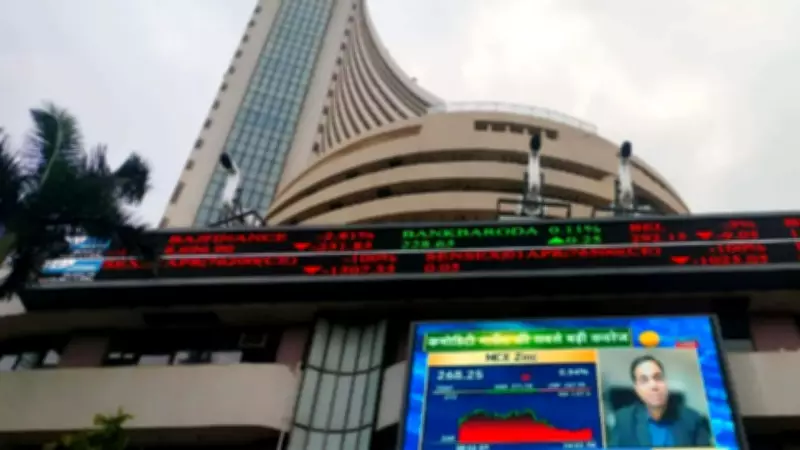
The announcement sent shockwaves through the financial markets, with the Sensex plunging by 2,259 points to 80,378 amid across-the-board selling pressure. While the index recovered partially later in the day, it still closed with substantial losses.
At approximately 12:30 pm IST, the Sensex was trading at 80,820.56, down by 1,449.22 points or 1.76 percent. By the end of the trading session, it had recovered somewhat but still remained down by 841 points.
The broader NSE Nifty Index mirrored this volatility, plummeting by 2.43 percent to 24,705.65 around 12:30 pm IST before recovering partially to 25,020, still down by 1.18 percent at approximately 12:45 pm IST.
Analyst Reactions and Historical Context
Market analysts expressed disappointment with the proposed tax hike. "The hike in STT on F&O has come as a disappointment. On the other hand, there is no relaxation in capital gains tax," noted one analyst, highlighting the dual impact on traders.
This move follows a previous STT increase in 2024, when the government raised the tax on sales of futures from 0.0125 percent to 0.02 percent of the traded price. The derivatives segment has witnessed exponential growth in trading volumes in recent years, but this expansion has been accompanied by significant losses for most participants.
Regulatory Background and Market Concerns
A SEBI study revealed alarming statistics about retail participation in the derivatives market, finding that close to 93 percent of individual traders in the equity futures and options segment incurred losses between FY2022 and FY2024. The aggregate loss exceeded Rs 1.8 lakh crore during this period, highlighting the risks associated with speculative trading.
In response to these concerns, the markets regulator has implemented several reforms to strengthen the derivatives market and restrain speculative trading. These measures have included:
- Recalibration of contract size for equity derivatives
- Rationalization of weekly index derivatives products
- Increase in tail risk coverage on options expiry days
Broader Impact Across Market Participants
The proposed STT increase is expected to have far-reaching consequences for various market participants:
High-frequency traders (HFTs) will be particularly affected, as they rely on executing numerous small-margin trades at high speeds. The higher transaction costs could significantly erode their already thin profit margins, potentially rendering several trading strategies unviable and leading to reduced high-frequency trading activity.
Retail traders will face substantially higher costs per transaction, which could dent overall profitability, especially for those operating with tight margins. While the increased cost burden may compel retail participants to scale back their use of leverage—thereby limiting potential returns—this reduction could also help temper excessive risk-taking and lower the likelihood of sharp losses.

Large institutional investors, despite having deeper financial resources, will not be immune to the impact. Higher transaction costs on futures and options positions could prompt institutions to recalibrate their trading strategies, potentially reducing trade frequency, consolidating positions, or increasing position sizes to spread costs more efficiently. Such adjustments could gradually alter liquidity patterns and trading behavior throughout the derivatives market.
The government's proposal represents a significant policy shift aimed at creating a more stable and sustainable derivatives market environment, though its immediate impact has been market turbulence and widespread concern among trading communities.





