

Wall Street Retreats as Middle East Tensions Fuel Investor Caution
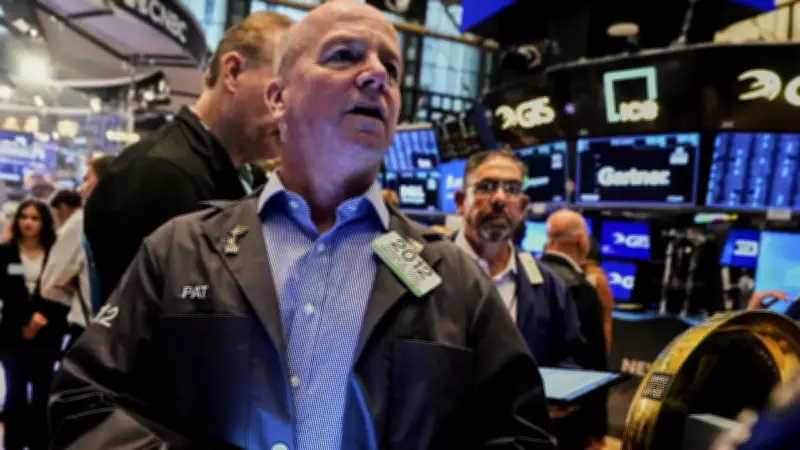
Wall Street's primary indices opened in negative territory on Thursday, reversing gains from the previous session, as investors adopted a cautious stance amid evolving developments in the Middle East and assessed prospects for de-escalation in the ongoing conflict. The market's downturn reflected broader global weakness, with crude oil prices surging back above the $100-per-barrel threshold as hopes for a ceasefire in the Iran war diminished.
Key Index Performance at Opening Bell
At the opening bell, the Dow Jones Industrial Average experienced a decline of 84.8 points, equivalent to 0.18%, settling at 46,344.64. The S&P 500 index fell by 36 points, representing a 0.55% drop, to reach 6,555.86. Meanwhile, the Nasdaq Composite suffered a more significant loss, dropping 236.7 points or 1.08%, closing at 21,693.17. Futures for the S&P 500 and Dow Jones Industrial Average had previously decreased by approximately 0.7% before the market opened, with Nasdaq futures down by 0.8%.
Oil Prices Surge Amid Conflict Uncertainty
Brent crude, the international benchmark for oil prices, rose sharply by 3.4% to $100.61 per barrel, rebounding from a trading level below $95 on Wednesday. The US benchmark crude also gained 3.2%, reaching $93.25 per barrel. This increase in oil prices provided modest support to energy sector stocks, with shares of major companies like ConocoPhillips and Valero Energy advancing by about 1%.

Geopolitical Developments and Market Impact
US President Donald Trump indicated that a deal to end the war was nearing completion, despite Tehran's dismissal of his proposed 15-point ceasefire plan. Iran outlined its own conditions through state television broadcasts, which included:
- A halt to the killing of its officials
- Guarantees against future conflict
- Reparations for damages
- Recognition of its sovereignty over the Strait of Hormuz
Iran has taken steps to formalize its control over this strategic waterway, through which approximately 20% of globally traded oil and natural gas typically passes. According to a Gulf Arab bloc official, Iran has begun imposing fees on ships for safe transit through the strait, while Washington prepares to deploy additional US troops to the region.
Global Market Performance
European markets also traded lower by midday, with Britain's FTSE 100 falling 1.3%, France's CAC 40 dropping 0.7%, and Germany's DAX declining 1.2%. In Asia, Japan's Nikkei 225 closed 0.3% lower at 53,603.65, while South Korea's Kospi plunged 3.2% to 5,460.46. Hong Kong's Hang Seng slipped 1.9% to 24,856.43, and the Shanghai Composite fell 1.1% to 3,889.08. Australia's S&P/ASX 200 edged down 0.1%, and Taiwan's Taiex traded 0.3% lower.
Commodities and Mining Sector Impact
In commodities trading, gold prices dropped significantly by 2.3% to $4,446 per ounce, while silver declined by 6.2% to $68 per ounce. This downturn in precious metals negatively affected mining stocks, with companies such as Newmont Corp. and Freeport-McMoRan slipping approximately 3%, as reported by AP.
The combination of geopolitical tensions, rising oil prices, and global market weakness created a challenging environment for investors, highlighting the interconnected nature of international conflicts and financial markets.






