

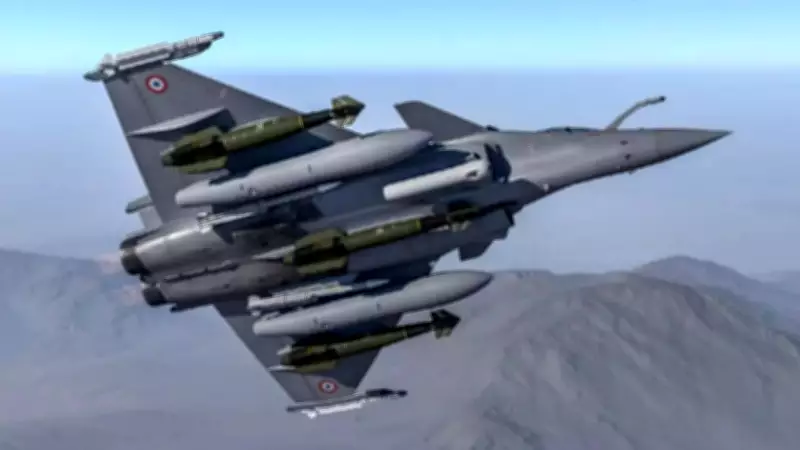
BEL and Safran Establish Joint Venture for HAMMER Weapon System in India
In a significant move to bolster domestic defence capabilities, Bharat Electronics Limited (BEL) has approved the signing of a Joint Venture Agreement with Safran Electronics & Defence of France. This partnership, formalized on Monday, establishes a 50:50 equity collaboration focused on the HAMMER weapon system project, marking a strategic step in India's push for greater indigenisation in defence manufacturing.
Board Approval and Operational Details
The approval was granted during BEL's board meeting, as confirmed in a stock exchange filing. The operationalisation of this joint venture is contingent upon receiving necessary regulatory and administrative approvals from both India and France. Under the agreement, BEL and Safran will incorporate a private limited company under the Companies Act, 2013, with the registered office and principal place of business to be located in Pune or another mutually agreed location.
Center of Excellence and End Users
The joint venture will operate a "Center of Excellence" designed to serve as a technology and teaming partner. Its primary functions will include the manufacturing, supply, maintenance, and repair of the Guidance Kit for the HAMMER weapon system. The key end users are set to be the Indian Air Force and the Indian Navy, with potential inclusion of other Indian users based on mutual agreement between the partners.

Financial and Governance Structure
The company will be incorporated with an initial authorised share capital of Rs 1,00,000, comprising 1,000 equity shares of Rs 100 each. This capital may be increased up to Rs 10,00,00,000 or any other amount depending on evolving business requirements. Governance will be managed by a board consisting of four directors, with two nominated by BEL and two by Safran. The Chairman will be appointed by these nominees and will not hold a casting vote, ensuring balanced decision-making.
Strategic Importance and Indigenisation
This initiative is expected to significantly strengthen India's technological capabilities in the production and lifecycle support of critical components for the HAMMER system. It aligns with the national objective of reducing dependency on foreign defence imports and fostering self-reliance in advanced weaponry.
HAMMER in Operation Sindoor: A Testament to Its Capabilities
The HAMMER weapon system gained prominence during Operation Sindoor on May 7, 2025, when the Indian Air Force deployed it in calibrated cross-border strikes against terror infrastructure in Pakistan and Pakistan-occupied Kashmir. This operation was launched in retaliation for the Pahalgam terrorist attack on April 22, which resulted in the tragic loss of 26 civilians.
Operational Deployment and Flexibility
During Operation Sindoor, the IAF utilized a layered mix of weaponry, including SCALP cruise missiles, HAMMER precision-guided bombs, and loitering munitions. HAMMER was specifically chosen for scenarios requiring flexibility and adaptability. Its modular design and multiple guidance options allowed for tailored strikes based on real-time assessments and target characteristics. The system enabled stand-off engagement, reducing the need for aircraft to fly directly over heavily defended areas, and its off-axis launch capability minimized exposure to air defence networks.
Layered Strike Doctrine
By pairing HAMMER with SCALP missiles, the IAF demonstrated a sophisticated layered strike doctrine. SCALP was used to target deep and hardened objectives, while HAMMER engaged medium-range sites that demanded precision and manoeuvrability, showcasing the system's versatility in modern combat scenarios.
Understanding HAMMER: Technology and Functionality
HAMMER, an acronym for Highly Agile Modular Munition Extended Range and officially designated AASM (Armement Air-Sol Modulaire), is a precision-guided air-to-ground stand-off weapon. It effectively bridges the gap between conventional bombs and cruise missiles, offering enhanced capabilities for modern warfare.

Core Components and Operation
Despite often being mischaracterized as a missile, HAMMER is fundamentally a guided bomb system. It consists of a standard unguided bomb fitted with modular guidance and propulsion kits, transforming it into a high-precision strike weapon. The system features two core components:
- Nose-Mounted Guidance Section: This determines navigation and targeting, combining inertial navigation and GPS for all-weather strikes, infrared imaging for fixed targets, or laser guidance for engaging moving targets.
- Tail-Mounted Range Extension Kit: Equipped with a solid-fuel rocket booster and manoeuvrable winglets, this kit increases stand-off range after release and allows for sharp turns and off-axis attacks, enabling aircraft to strike accurately while remaining outside heavily defended airspace.
Scalability and Applications
HAMMER kits can be attached to bombs weighing 125 kg, 250 kg, 500 kg, and 1,000 kg, including Mark 80 series bombs. This scalability makes it suitable for a wide spectrum of targets, from lightly protected structures to hardened bunkers. In operational settings, HAMMER offers modularity, manoeuvrability, and precision, making it ideal for scenarios where flexibility and controlled escalation are paramount.
This joint venture between BEL and Safran not only enhances India's defence manufacturing ecosystem but also underscores the strategic importance of international collaborations in advancing technological self-sufficiency. As the project moves forward, it is poised to contribute significantly to India's defence preparedness and industrial growth.





