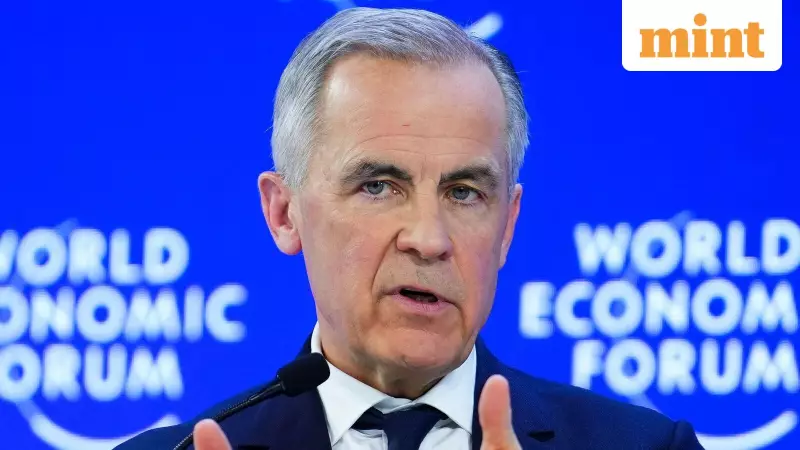
Canadian Prime Minister Mark Carney has firmly stated that Ottawa has no intention of pursuing a free trade agreement with China, directly countering recent warnings from US President Donald Trump. Trump threatened to impose a 100% tariff on all Canadian goods entering the United States if Canada makes a deal with China, escalating tensions between the two North American neighbors.
Carney's Stance on China Trade Relations
In a press briefing held in Ottawa on Sunday, Carney addressed the ongoing trade matters, emphasizing that Canada's focus with China has been on rectifying specific issues that have emerged over the past couple of years. He highlighted key areas of concern, including trade involving Chinese-made electric vehicles (EVs), agriculture, and fish products, underscoring a targeted approach rather than a broad free trade pact.
Commitments Under CUSMA
Carney stressed that Canada remains fully committed to its obligations under the Canada-US-Mexico Agreement (CUSMA). This trade pact requires member countries to provide advance notification if any party seeks to enter into a free trade agreement with a non-market economy, such as China. We respect our commitments, Carney affirmed, noting that CUSMA rules significantly limit the scope for deeper trade arrangements with Beijing without prior consultation with Washington and Mexico City.

Trump's Escalating Rhetoric on Social Media
The Canadian leader's comments came in response to Trump's heightened criticism, which he voiced on his Truth Social platform. In a series of posts, Trump claimed that China was successfully and completely taking over Canada, and he referred to Carney as Governor Carney, a derogatory term previously used against former Prime Minister Justin Trudeau. Trump warned that if Canada attempts to serve as a conduit for Chinese goods into the US, it would face severe consequences, including the destruction of businesses and social fabric.
Recent Canada-China EV Agreement
Adding to the strain is a recent bilateral agreement between Canada and China, which permits up to 49,000 Chinese EVs to enter the Canadian market at a reduced tariff rate of 6.1%. In exchange, China has agreed to lower tariffs on Canadian canola and other agricultural products. This deal has fueled further tensions, as Trump views it as a step towards deeper economic ties that could undermine US interests.
Strained Relations Post-Davos Speech
Relations between Trump and Carney have been particularly tense since Carney's speech at the World Economic Forum in Davos last week. Trump responded sharply, reminding Carney that Canada lives because of the United States, and cautioned him to consider this in future statements. This exchange highlights the ongoing diplomatic friction and the high stakes involved in North American trade dynamics.
Overall, Carney's rejection of a China free trade deal underscores Canada's adherence to CUSMA commitments and its cautious approach to international trade, even as it navigates pressure from the US and explores limited agreements with China.