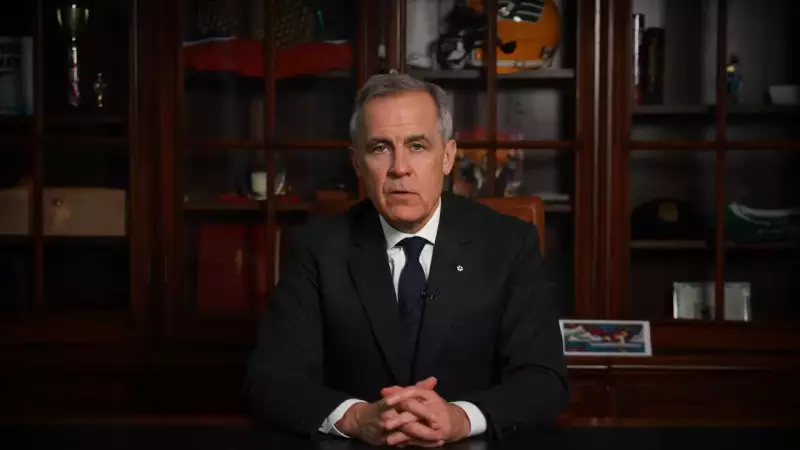
Canadian Prime Minister Mark Carney has called on citizens to rally behind domestic businesses and workers through a newly announced "Buy Canadian" policy. This appeal comes just hours after US President Donald Trump issued a stark warning, threatening to impose 100 percent tariffs on all Canadian goods if Ottawa moves forward with trade agreements involving China.
Carney's Call for Domestic Support in Video Address
In a video shared on his X account, Carney positioned the "Buy Canadian" initiative as a direct response to mounting economic pressures from international sources. He emphasized that with the economy facing external threats, Canadians are making a conscious choice to focus on elements within their control.
"You're choosing to put your hard-earned dollars behind Canadian businesses and Canadian workers," Carney stated. "Canada's new government is doing the same with our new Buy Canadian Policy."

Prioritizing Domestic Sourcing for Major Projects
The Prime Minister outlined that the government will prioritize domestic sourcing for significant national endeavors, including housing developments, infrastructure upgrades, and defense initiatives. Carney highlighted ambitious goals to construct millions of homes to enhance affordability, execute transformative economic projects, and acquire new military hardware to safeguard Canadian sovereignty.
He elaborated further, "To build big from Canadian material, Canadian steel, aluminum, lumber, with Canadian technology and Canadian workers... Buy Canadian, build Canadian and together we will build Canada strong."
Trump's Blunt Warning Over China Engagement
Carney's statement followed closely on the heels of Trump's provocative remarks on Truth Social, where he referred to Carney as "governor" and cautioned against closer economic ties between Canada and Beijing.
"If Governor Carney thinks he is going to make Canada a 'Drop Off Port' for China to send goods and products into the United States, he is sorely mistaken," Trump asserted. "If Canada makes a deal with China, it will immediately be hit with a 100% Tariff against all Canadian goods and products coming into the USA."
Escalating Rhetoric and Accusations
Trump escalated his criticism by claiming that China would "eat Canada alive" and accused Ottawa of undermining American interests. He also revisited previous grievances, criticizing Canada for opposing his proposed "Golden Dome" missile defense system over Greenland while simultaneously pursuing deeper economic relations with China.
Background: Carney's Recent China Visit and Agreements
This sharp exchange occurred in the aftermath of Carney's recent diplomatic visit to China, marking the first by a Canadian leader in nearly a decade. The trip aimed to rejuvenate economic engagement with Canada's second-largest trading partner after the United States.
Key outcomes from the visit included agreements to reduce tariffs on select Canadian agricultural exports and introduce quotas on Chinese electric vehicle imports, with potential for increased Chinese investment. Chinese President Xi Jinping welcomed the visit as a significant "turnaround" in bilateral relations.
Carney's Perspective on US Tariff Tensions
Speaking about the agreements earlier, Carney referenced ongoing tariff tensions with the United States, describing Canada's discussions with Beijing as more "predictable." He characterized the negotiations as "realistic and respectful," contrasting them with the volatile trade environment involving the US.
Heightened Trade Tensions and Domestic Focus
Trump's comments have further intensified trade frictions between Washington and Ottawa. Concurrently, Carney's government is signaling a reinforced emphasis on domestic manufacturing and supply chains, responding to an increasingly uncertain global trade landscape.
The "Buy Canadian" policy represents a strategic pivot towards economic self-reliance, even as diplomatic maneuvers with China continue to unfold. This dual approach underscores the complex balancing act facing Canadian policymakers amid escalating international trade pressures.