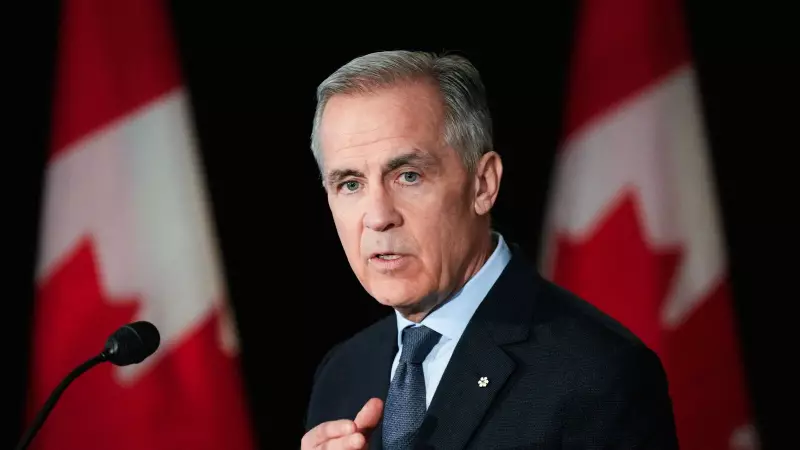
Mark Carney Advocates 'Buy Canadian' Strategy Amid Trump's Tariff Threats
In a significant response to escalating trade tensions, Canadian Prime Minister Mark Carney has publicly urged citizens to embrace a 'Buy Canadian' approach. This call to action comes directly after former US President Donald Trump threatened to impose 100% tariffs on Canadian goods, citing concerns over Ottawa's potential economic agreements with China.
Carney's Firm Stance on Domestic Focus
Prime Minister Carney, addressing the nation via a video post on social media platform X, emphasized that Canada must "focus on what we can control." He highlighted that the Canadian economy faces "threat from abroad," advocating for a strategic pivot where the country becomes its own "best customer."
"We can't control what other nations do. We can be our own best customers. We'll buy Canadian. We'll build Canadian. Together we will build stronger," Carney asserted. This message marks a potential shift in Canada's economic policy, prioritizing local businesses and reducing reliance on volatile international trade dynamics.

Trump's Aggressive Tariff Warning
The catalyst for Carney's response was a series of provocative statements from Donald Trump. On his Truth Social platform, Trump warned that if Canada proceeds with deepening trade ties with Beijing, the United States would implement a 100% tariff on all Canadian goods entering the US market.
"If Governor Carney thinks he is going to make Canada a 'Drop Off Port' for China to send goods and products into the United States, he is sorely mistaken," Trump wrote. He further escalated his criticism by claiming, "China will eat Canada alive, completely devour it, including the destruction of their businesses, social fabric, and general way of life."
Trump's remarks also referenced Canada's opposition to his proposed "Golden Dome" missile defence system over Greenland, accusing Ottawa of favoring economic engagement with China instead.
Background: Canada's Outreach to China
This diplomatic friction follows Carney's recent visit to Beijing, aimed at revitalizing economic cooperation with China, which is Canada's second-largest trading partner after the United States. The trip yielded several outcomes:
- An understanding to lower tariffs on specific Canadian agricultural exports.
- Introduction of quotas on Chinese electric vehicles entering the Canadian market.
- Potential for increased Chinese investment in Canada.
Speaking about the agreement, Carney described Canada's engagement with China as more "predictable" and characterized discussions as "realistic and respectful," subtly alluding to ongoing trade frictions with Washington.
Implications and Key Takeaways
The situation underscores several critical points in global trade and diplomacy:
- Emphasizing local consumption can serve as a strategic buffer to strengthen national economies during periods of international trade uncertainty.
- Political leadership plays a crucial role in shaping public sentiment and directing economic strategy through clear, decisive messaging.
- International trade relations significantly influence domestic policies, often prompting nations to reassess and realign their economic focus.
As transnational tensions, particularly in North American trade relations, continue to escalate, Carney's 'Buy Canadian' initiative represents a proactive effort to insulate the economy from external pressures while fostering domestic growth and resilience.