EU Leaders' Republic Day Visit Targets Conclusion of Trade Negotiations
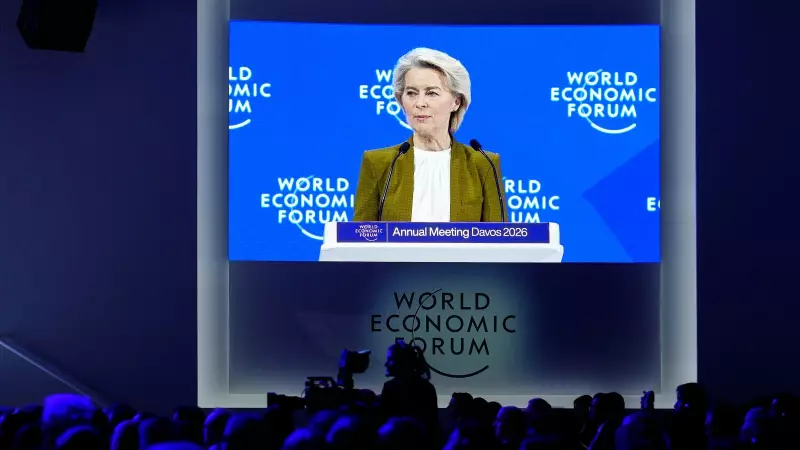
In a significant diplomatic development, European Commission President Ursula von der Leyen and European Council President Antonio Luís Santos da Costa will serve as chief guests at India's Republic Day celebrations next week. The high-profile visit underscores the deepening strategic partnership between India and the European Union, with both leaders scheduled to co-chair the 16th India-EU Summit the following day.
Trade Deal Negotiations Take Center Stage
According to an EU official speaking on Friday, the primary objective of this visit is to conclude ongoing trade negotiations between India and the European Union. While four chapters of the agreement remain unresolved, there is strong political momentum to finalize the talks during this diplomatic engagement.
"It is our objective to complete the negotiations. That's the first step. We're not talking about signatures in Delhi, but we're talking about the conclusion of the negotiations, and then both sides will go through their internal procedure to get us to the signature," the EU official emphasized, highlighting the urgency of narrowing remaining differences.

Strategic Importance of the Trade Agreement
The proposed trade agreement holds substantial strategic importance for both economies. The EU official noted that the pact would help diversify supply chains and reduce unwanted dependencies, particularly in critical sectors where both India and Europe seek to reduce reliance on single sources.
Specific areas of focus include developing joint industrial capacity in supply chains for:
- Active Pharmaceutical Ingredients (API)
- Solar equipment
- Hydrogen technology
- Machinery and advanced manufacturing
This collaboration addresses a key strategic concern for both India and Western nations: dependence on China for APIs and other high-tech products. Despite being the world's largest exporter of generic drugs, India sources the majority of pharmaceutical ingredients from China, with bilateral trade exceeding $112 billion in the last financial year.
Current Trade Landscape and Future Potential
The EU official provided context on the existing trade relationship, noting that goods trade between India and the EU has grown by nearly 90% over the past decade, even with higher tariffs on the Indian side during that period. However, India still accounts for only about 2-2.5% of the EU's total goods trade, compared to approximately 15% for China, indicating significant room for expansion.
Beyond the free trade agreement, both sides are exploring traditional measures to boost investment and business cooperation in targeted sectors. The official stressed that there is political will on both sides to expand the trajectory of relations beyond the FTA framework.
"We don't see eye to eye on everything, but we do share a core set of interests which include having a stable international order," the official remarked, adding that the summit would provide an opportunity to discuss Russia's ongoing conflict in Ukraine.
Broader Diplomatic Agenda
The summit agenda extends beyond trade to encompass several critical geopolitical and connectivity initiatives:

- Ukraine Conflict: President Costa is expected to convey to Indian leadership that the Russia-Ukraine war represents not only an existential threat to Europe but also challenges the rules-based international order with consequences extending to the Indo-Pacific region. The EU acknowledges India's relationship with Russia and hopes New Delhi will leverage its influence toward peace efforts.
- Mobility Framework: India and the EU are poised to launch a new cooperation framework on mobility covering students, researchers, seasoned workers, and highly skilled professionals, aligned with European labor market needs. Implementation decisions will remain with individual EU member states.
- IMEC Corridor: The summit is expected to inject momentum into preparatory work for the India-Middle East-Europe Economic Corridor (IMEC), announced during the 2023 G20 Summit in New Delhi. While progress has been impacted by Middle East developments, working groups have been formed and feasibility studies are ongoing, with both India and the EU remaining committed to advancing this strategic connectivity initiative.
The IMEC corridor represents a transformative infrastructure project designed to stimulate economic development through enhanced connectivity between Asia, the Arabian Gulf, and Europe. Its eastern leg would transport container traffic from India's western ports to the UAE, followed by high-speed freight railway across the Arabian peninsula to Haifa, Israel. The western leg would then ship cargo to Greek and Italian ports for distribution across Europe via established rail networks.
This comprehensive diplomatic engagement during Republic Day celebrations signals a new chapter in India-EU relations, combining economic partnership with strategic cooperation across multiple domains.