

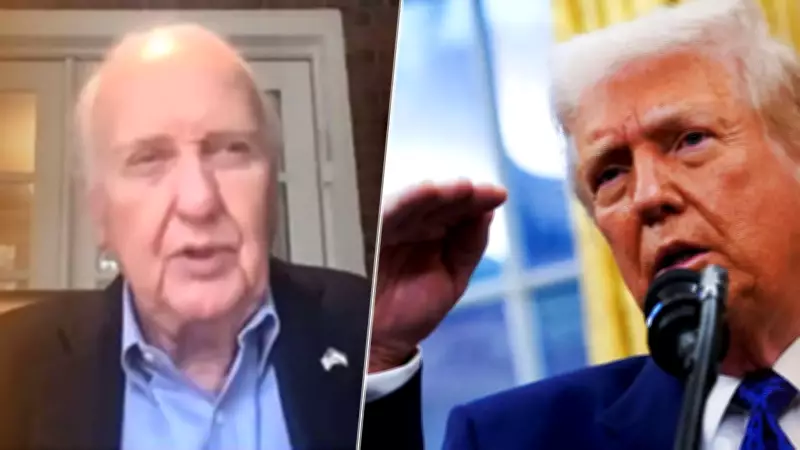
Former US Official Applauds India's Steady Trade Negotiation Strategy
In a significant endorsement of India's diplomatic approach, former US commerce official Raymond Vickery has publicly defended India's trade negotiation strategy, highlighting how the nation successfully navigated the turbulent waters of international commerce during a period of global uncertainty.
India's Methodical Approach Versus Trump's Chaotic Tactics
Raymond Vickery, who served as a top official in the US Department of Commerce, has drawn a sharp contrast between India's rational, long-term trade strategy and what he describes as President Donald Trump's disruptive approach to international commerce. According to Vickery, India demonstrated exceptional diplomatic skill by resisting pressure politics and maintaining a steady course despite external pressures.
"India performed better than most countries in handling trade negotiations," Vickery stated, emphasizing that the nation's refusal to engage in reactive diplomacy allowed it to protect its economic interests while building sustainable trade relationships.

Criticism of Trump's Trade Methodology
Vickery was particularly critical of President Trump's negotiation style, which he characterized as unpredictable and damaging to long-term trade relationships. The former official pointed to several specific issues:
- Sudden tariff threats that created market uncertainty
- Trade policy announcements made through social media platforms
- Pressure tactics that undermined traditional diplomatic channels
- Unrealistic demands that disregarded established trade frameworks
"This approach fundamentally harms durable trade relationships," Vickery argued, suggesting that Trump's methods prioritized short-term political gains over sustainable economic partnerships.
Clarifying Misconceptions About India's Trade Positions
Vickery specifically addressed several misconceptions that circulated during the trade negotiations between India and the United States. Contrary to claims made through various channels, Vickery clarified that:
- India did not agree to implement zero tariffs on US goods
- India maintained its position on Russian oil imports despite pressure
- The nation worked systematically to stabilize trade ties without surrendering core economic interests
- India's approach focused on building credibility rather than reacting to chaos
"India's strategy was about maintaining sovereignty while engaging constructively," Vickery explained, noting that the country's measured approach allowed it to navigate complex geopolitical realities without compromising its strategic autonomy.
The Framework for Sustainable Trade Relationships
As the India-US trade framework continues to develop, Vickery's comments highlight the importance of predictable, transparent negotiation processes. His analysis suggests that India's approach—characterized by patience, consistency, and a focus on long-term objectives—provides a model for how nations can engage in trade diplomacy during periods of international uncertainty.
The former official's remarks come at a time when global trade relationships are being reevaluated, with many nations seeking approaches that balance economic interests with strategic autonomy. India's demonstrated ability to maintain this balance while engaging with a major economic partner like the United States offers valuable insights for international trade diplomacy in the twenty-first century.






