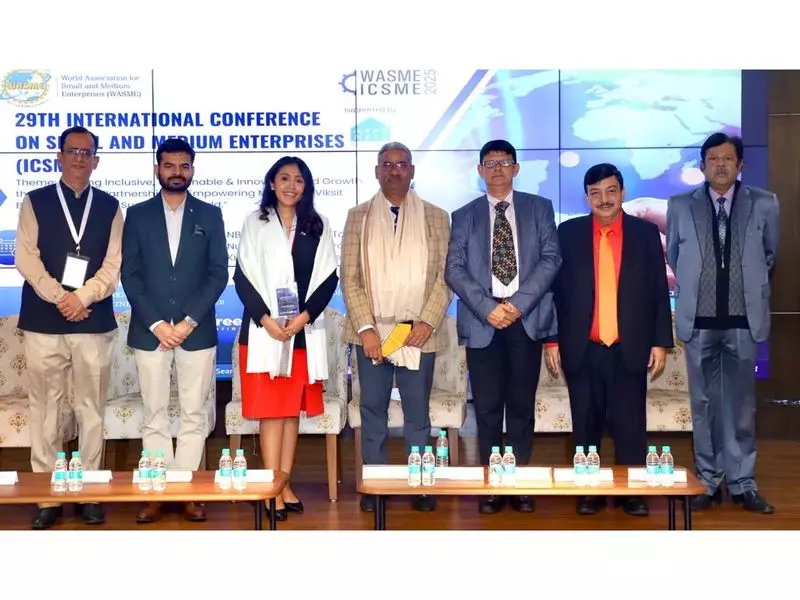
The national capital recently transformed into a global hub for economic strategists and thought leaders. The International Conference on Sustainable Management and Entrepreneurship (ICSME) 2025 convened in New Delhi, bringing together the world's foremost architects of growth to deliberate on a dual agenda: propelling India towards its Viksit Bharat (Developed India) vision by 2047 and forging a blueprint for a resilient and sustainable global economy.
A Confluence of Global Minds in the Heart of India
The conference, held from February 10 to 12, 2025, saw an impressive gathering of policymakers, industry titans, academicians, and innovators from across the globe. The central theme revolved around harnessing sustainable practices and entrepreneurial innovation as the twin engines for long-term, inclusive growth. Discussions were not limited to theoretical frameworks but focused on actionable strategies and collaborative partnerships.
Prominent figures who graced the event included global business leaders, Nobel laureates in economics, and senior representatives from international financial institutions. The Indian perspective was strongly represented by key ministers, NITI Aayog officials, and captains of Indian industry, creating a rich dialogue between domestic ambitions and global expertise.

Pillars of the Viksit Bharat Roadmap
A significant portion of the discourse was dedicated to deconstructing the Viksit Bharat 2047 goal. Experts outlined several critical pillars necessary for this transformation:
- Technology-Led Inclusive Development: Emphasizing the role of digital public infrastructure, AI, and green tech in bridging urban-rural divides and boosting productivity across sectors.
- Sustainable Industrialization: Charting a course for India to become a manufacturing powerhouse while adhering to net-zero commitments and circular economy principles.
- Entrepreneurship & MSME Empowerment: Identifying policies and funding mechanisms to strengthen the backbone of the Indian economy—its micro, small, and medium enterprises—and foster a nationwide culture of innovation.
- Human Capital Development: Aligning education and skill development with the future needs of a developed economy, ensuring the demographic dividend is fully realized.
The consensus was that India's development journey offers a unique model for the world, one that balances rapid economic growth with social equity and environmental stewardship.
Reimagining the Global Economic Architecture
Beyond India's national agenda, ICSME 2025 served as a platform to address pressing challenges facing the world economy. The conference acknowledged the vulnerabilities exposed by recent global crises—from pandemics to geopolitical tensions and climate change. In response, participants proposed a reimagined economic architecture built on:
- Resilient Supply Chains: Promoting diversification and strategic autonomy through trusted partnerships, with India poised to play a key role as a reliable and scalable alternative.
- Green Financing: Mobilizing trillions of dollars in capital for climate adaptation and mitigation projects, with innovative instruments to attract private investment.
- Global South Cooperation: Enhancing knowledge sharing, technology transfer, and trade linkages among emerging economies to ensure the sustainable growth agenda is truly inclusive.
The dialogue underscored that the goals of Viksit Bharat and a sustainable global economy are deeply interconnected. India's success in its development quest, powered by clean energy and sustainable practices, would significantly contribute to global stability and climate goals.

From Dialogue to Action: The Outcomes of ICSME 2025
The conference concluded with a strong focus on tangible outcomes. Several memoranda of understanding (MoUs) were signed between Indian and international institutions for joint research, technology co-development, and startup incubation. A key takeaway was the announcement of a proposed Global Alliance for Sustainable Entrepreneurship, a network aimed at mentoring green startups and sharing best practices.
For India, the insights gained are expected to directly inform policy fine-tuning and mission-mode projects under the Viksit Bharat banner. The event solidified New Delhi's position as a crucial venue for shaping the future of the global economy. The convergence of the world's architects of growth in India sent a powerful signal: the path to a prosperous and sustainable future will be significantly influenced by the ideas and actions stemming from this pivotal summit.