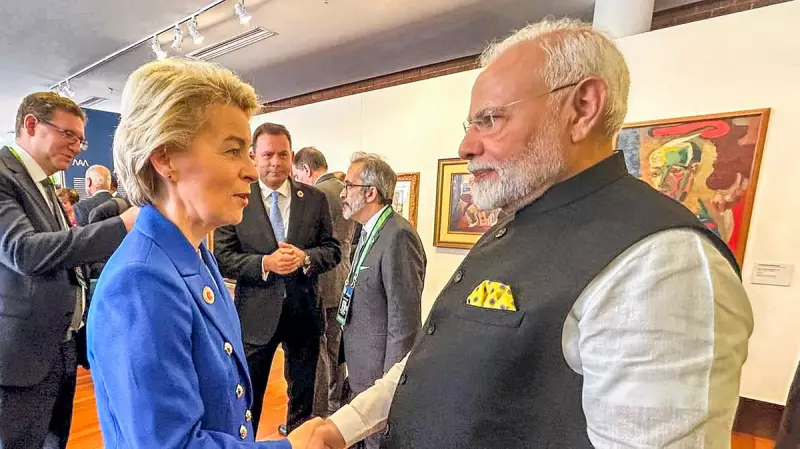
Historic Breakthrough: India and EU Finalize Free Trade Agreement After Two Decades of Negotiations
In a landmark development for international trade, India and the European Union have successfully concluded negotiations for a comprehensive Free Trade Agreement (FTA) after nearly twenty years of discussions. This monumental achievement marks a significant milestone in bilateral relations between the world's largest democracy and one of its most important trading blocs.
Paving the Way for Enhanced Trade and Economic Cooperation
The successful conclusion of FTA negotiations paves the way for substantial reductions in tariffs across various sectors, creating new opportunities for businesses on both sides. The agreement is expected to:
- Boost bilateral trade by eliminating or reducing import duties on numerous products
- Enhance market access for Indian and European companies across multiple industries
- Create a more predictable trade environment with clear rules and regulations
- Foster greater economic integration between India and the 27-member European Union
Implementation Timeline and Ministerial Announcement
Commerce and Industry Minister Piyush Goyal has provided crucial details about the implementation timeline for this historic agreement. According to the minister's announcement, the India-EU Free Trade Agreement is likely to be implemented by the end of 2026, following the completion of necessary legal and administrative procedures.

This timeline allows businesses on both sides to prepare for the new trading environment while governments work on finalizing the technical aspects of the agreement. The implementation phase will involve:
- Final legal scrubbing and translation of the agreement text
- Domestic approval processes in both India and EU member states
- Establishment of implementation mechanisms and monitoring committees
- Gradual phasing in of tariff reductions as per the agreed schedule
Strategic Significance and Economic Impact
The conclusion of FTA negotiations represents a strategic breakthrough in India-EU relations that has been in the making since discussions began in the early 2000s. This agreement comes at a crucial time when both economies are seeking to diversify their trade partnerships and strengthen supply chain resilience.
The FTA is expected to have far-reaching economic implications, potentially transforming trade patterns between India and Europe. Key sectors that stand to benefit include:
- Manufacturing and industrial goods
- Agricultural products and processed foods
- Services including IT, financial, and professional services
- Pharmaceuticals and healthcare products
As both parties move toward implementation, businesses and policymakers are preparing for a new era of enhanced economic cooperation between India and the European Union.