

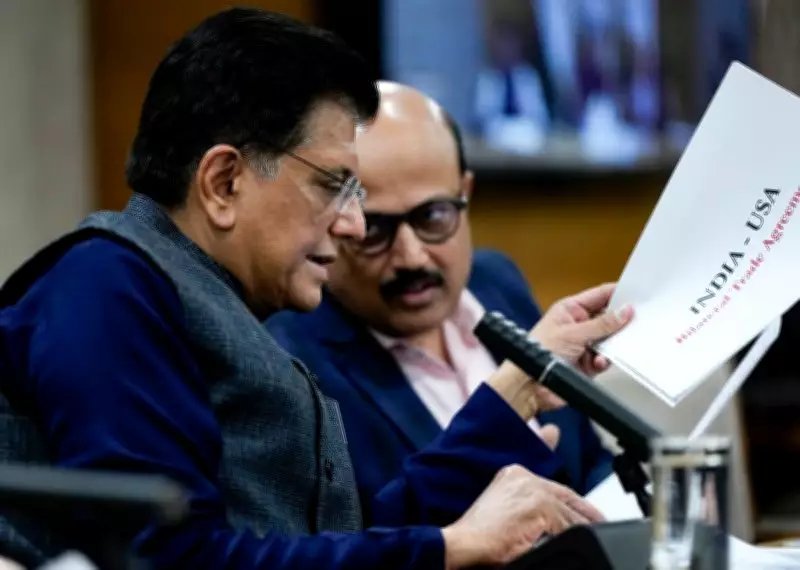
India's Markets Remain Closed to Genetically Modified Crops and Staple Foods, Says Commerce Minister
Union Commerce and Industry Minister Piyush Goyal has firmly stated that Indian markets will continue to remain closed to genetically modified crops, meats, dairy products, poultry, and major staple crops such as wheat, rice, maize, and soyabean. This declaration was made during a press conference at Vanijya Bhawan in New Delhi, where Goyal addressed the recently announced India-US trade deal, emphasizing that the agreement does not harm the interests of Indian farmers.
Protecting Sensitive Sectors
Goyal highlighted that the Opposition's claims regarding the trade deal have been fully exposed, as the agreement grants no concessions on sectors that are sensitive to India. Specifically, Indian markets for millets like jowar, bajra, and amaranth, as well as fruits such as bananas, strawberries, cherries, citrus fruits, green peas, kabuli chana, moong, and oilseeds, will not be opened to American exporters. Additionally, no concessions have been granted to the US in areas including animal feed, groundnut, honey, malt and malt extracts, non-alcoholic beverages, flowers and meals, essential oils, and tobacco.
Zero-Duty Exports and Duty Reductions
On the positive side, Goyal outlined that several Indian exports to the US will now benefit from zero duty. This includes gems and diamonds, generic pharmaceuticals, smartphones, spices, tea, coffee, coconut, venerable wax, Areca nuts, cashew nuts, Brazil nuts, and fruits like guava, avocado, bananas, mangoes, kiwis, papaya, and mushrooms. Other zero-duty product exports will encompass aircraft parts, machine parts, coins, platinum products, clocks, chandeliers, precious metals, and various other sectors. Furthermore, duty reductions in leather, footwear, sports goods, home decor, textiles, and apparel segments, especially silk, are expected to benefit labour-intensive sectors in India.

US Import Duty Relief and Market Openings
The US will receive import duty relief in specific sectors where India has import reliance, such as distilled green soluble products required for poultry, wines, spirits, and alcoholic beverages. Medical equipment, including diagnostics and drugs for cancers, paediatrics, heart, and neurological disorders, will also attract duty relief to enable cheaper imports for the Indian population. Additionally, the cosmetics sector and US computer products will benefit from zero duty. Goyal clarified that Indian markets have been opened only in areas with import reliance and growth potential, such as energy, nuclear power, and IT product sectors.
Waiver of Punitive Tariffs and Economic Impact
In a significant development, the 25 per cent punitive tariffs imposed on India by the US for purchasing Russian oil have been waived. An 18 per cent reduction will be notified through an executive order soon. Once the trade agreement is implemented by March, nearly USD 44 billion worth of Indian exports to the US will become duty-free, providing a substantial boost to the Indian economy and enhancing trade relations between the two nations.






