

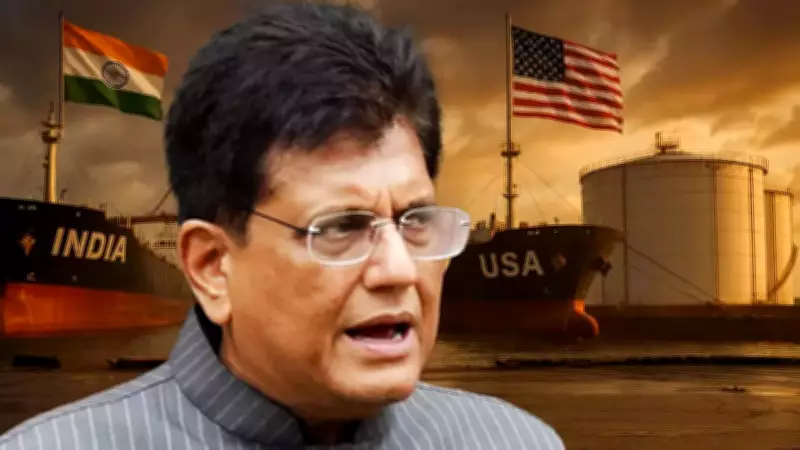
India-US Trade Deal Faces Potential Rebalancing Amid Evolving Tariff Landscape
Commerce and Industry Minister Piyush Goyal has emphasized that India will vigilantly protect its economic interests in the face of shifting global trade dynamics, particularly concerning tariffs. He indicated that the proposed trade agreement with the United States could be adjusted or rebalanced if circumstances demand, highlighting the fluid nature of international commerce.
Uncertain Global Environment and US Policy Shifts
Goyal's remarks gain significance against a backdrop of recent developments in US trade policy. The US Supreme Court recently ruled that the Donald Trump administration's reciprocal tariffs are illegal, a decision that has added complexity to trade relations. Subsequently, Trump signed an executive order to impose a 10% global tariff on America's trading partners, with potential increases to 15% in the near future.
"It's an evolving situation. The Trump administration has made some comments, and they have other tools at their disposal. Next week, they could raise tariffs to 15%. Various dialogues are ongoing. I have stated that if circumstances change, the deal will be rebalanced," Goyal explained during a CNN-News 18 event.

High-Level Discussions and Mutual Understanding
The minister's comments come just a day after he met with US Commerce Secretary Howard Lutnick in Delhi, underscoring the ongoing diplomatic engagement between the two nations. Goyal pointed out that the possibility of revising the agreement is already acknowledged in the India-US joint statement, which explicitly mentions that the deal could be rebalanced should conditions alter.
"India continues to remain in active discussions with the United States as negotiations progress. We are closely monitoring developments regarding potential tariff measures from Washington, ensuring our national interests are safeguarded," Goyal affirmed.
Protecting Key Sectors and Agricultural Interests
In response to concerns from domestic stakeholders, particularly in agriculture and dairy, Goyal reassured that sensitive areas have been carefully protected in the proposed trade pact. He outlined specific exemptions and safeguards:
- Dairy, maize, soybean, and poultry are exempt from the US trade deal.
- No genetically modified (GM) foods will be allowed into India under this arrangement.
- The interests of farmers and the dairy sector have been preserved.
"We have ensured that key farm-related sectors remain outside the scope of this agreement. The deal is designed to protect our agricultural community and maintain food security standards," Goyal stated.
Strategic Wait-and-Watch Approach
Adopting a cautious stance, Goyal emphasized that India will adopt a wait-and-watch strategy regarding US tariff actions. "On US tariffs, we will observe developments closely and take necessary steps to ensure India's best interests are protected. The Trump administration has multiple policy options, including the recent 10% tariff move, and we are prepared to respond accordingly," he added.
This approach reflects India's commitment to navigating the unpredictable global trade environment while securing favorable terms that align with its economic priorities and domestic concerns.






