

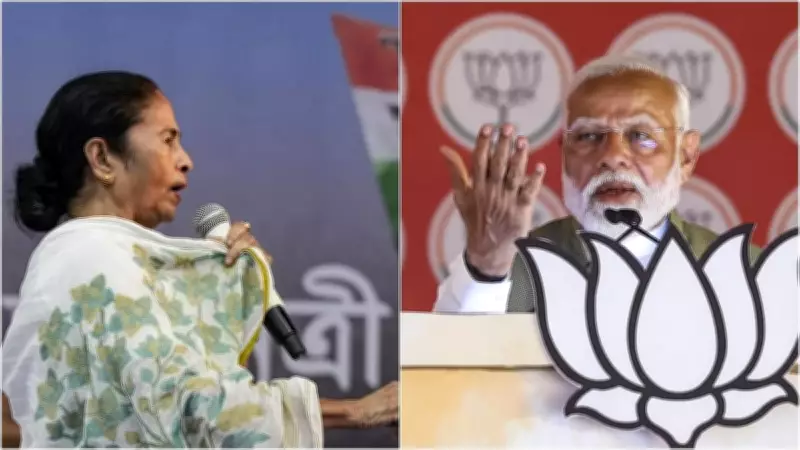
West Bengal 2026 Elections: Campaigning Concludes Amid Political Firestorm
Campaigning for the first phase of the highly anticipated West Bengal Assembly Elections 2026 officially drew to a close on Monday, April 21, 2026. The final hours were marked by a sharp and intense verbal clash between the state's two major political forces, the ruling Trinamool Congress (TMC) and the opposition Bharatiya Janata Party (BJP).
Alleged Remarks by Amit Shah Spark Controversy
The immediate trigger for the heated exchange was a statement attributed to Union Home Minister Amit Shah. The TMC leadership publicly accused Shah of making what they described as a derogatory 'taunt' directed at West Bengal Chief Minister and TMC supremo Mamata Banerjee. While the exact wording of the alleged comment was not fully disclosed in official reports, TMC spokespersons characterized it as disrespectful and aimed at undermining Banerjee's leadership and the dignity of the state.
The BJP has not issued an immediate, detailed rebuttal to the specific allegation, but party representatives on the ground dismissed the TMC's claims as a last-minute attempt to sway voter sentiment. They argued that the TMC was fabricating controversy to divert attention from governance issues and its own electoral challenges.

Escalating Rhetoric in a High-Stakes Battle
This incident underscores the fiercely competitive and personal nature of the political battle in West Bengal. The 2026 elections are seen as a critical test for both parties. For the TMC, it is about retaining power and proving its dominance in state politics. For the BJP, the goal is to build upon its significant gains from previous elections and potentially unseat the incumbent government.
The closing of the campaign for the first phase sets the stage for what analysts predict will be a tightly contested and volatile polling process. The exchange over Shah's alleged remarks is likely to resonate in the constituencies going to the polls in this initial round, potentially influencing undecided voters.
What Happens Next?
With campaigning now suspended, the focus shifts entirely to the electorate. Key aspects to watch include:
- Voter turnout in the first phase constituencies.
- Whether the controversy impacts voting patterns, especially in swing seats.
- The response from the Election Commission regarding any potential code of conduct violations arising from the heated exchanges.
- The strategies of both parties as they prepare for the subsequent phases of the election.
The political temperature in West Bengal remains exceptionally high, and the outcome of this first phase will be closely scrutinized as a bellwether for the rest of the electoral battle. All eyes are now on the voters as they prepare to cast their ballots.






