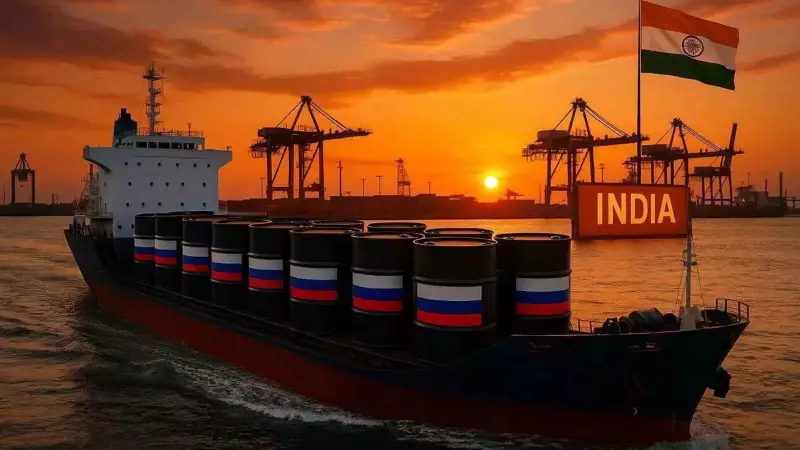
India's Strategic Shift in Crude Oil Sourcing
India has undergone a significant transformation in its crude oil procurement strategy, deliberately reducing its reliance on Russian barrels while simultaneously increasing shipments from Middle Eastern suppliers. Although Moscow continues to maintain a presence in New Delhi's energy inflows, the volumes have noticeably declined primarily due to heightened compliance risks and geopolitical pressures.
Data Reveals Clear Import Pattern Changes
Recent data from the analytics firm Kpler provides compelling evidence of this strategic realignment. During the first three weeks of January 2026, India imported approximately 1.1 million barrels per day of Russian crude. This figure represents a decrease from the December 2025 average of 1.21 million barrels per day and falls substantially below the levels exceeding 2 million barrels per day witnessed during mid-2025.
Sumit Ritolia, lead research analyst for refining and modeling at Kpler, explained this trend to PTI, stating, "India's crude buying in January 2026 shows a clear shift toward lower-risk and more reliable supply, with Middle East barrels rising while Russian crude flows remain present but more selective and compliance-driven."

Middle Eastern Suppliers Regain Prominence
With nearly 90 percent of its crude oil requirements met through imports, India is increasingly turning back to its traditional and more stable partners in the Middle East. This pivot marks a notable change from the previous heavy dependence on discounted Russian oil.
According to Kpler's detailed analysis, Iraq has emerged as a key beneficiary of this shift. The country is now supplying volumes almost equivalent to Russia, increasing from an average of 904,000 barrels per day in December 2025. Similarly, Saudi Arabia's exports to India have risen significantly to 924,000 barrels per day this month, compared to 710,000 barrels per day in December and a low of 539,000 barrels per day recorded in April 2025.
Ritolia further elaborated on this development, noting, "India has increased crude imports from the Middle East over the last 2 months, while Russian volumes have declined as sanctions and compliance pressure have intensified. This reflects a mix of changing economics and rising execution complexity around Russian crude, including shipping, insurance, payment pathways, and compliance screening."
Operational Stability Drives Refiner Decisions
Indian refiners are actively ramping up their purchases from Middle Eastern sources to ensure smoother deliveries and minimize operational disruptions. This strategic move helps maintain stability at refinery operations by significantly reducing supply chain challenges and logistical complications. The preference for more predictable supply routes underscores the industry's focus on long-term operational reliability over short-term cost advantages.
The Russian Crude Rollercoaster in India
The relationship between India and Russian crude has experienced dramatic fluctuations. Following Russia's invasion of Ukraine in 2022, Moscow rapidly emerged as India's top crude supplier. Indian refiners capitalized on heavily discounted Russian oil, causing imports to skyrocket from less than one percent of India's total crude imports to nearly forty percent at their peak.
However, this trend has recently reversed due to escalating compliance risks, particularly after the United States imposed sanctions on Russian suppliers. The implementation of American sanctions on major entities like Rosneft and Lukoil, along with their majority-owned subsidiaries, which came into force on November 21, prompted several Indian refiners to temporarily halt Russian crude imports. Notable companies affected include Reliance Industries, Hindustan Petroleum Corporation Ltd, HPCL-Mittal Energy, and Mangalore Refinery and Petrochemicals.
Future Outlook for Russian Oil in India
Despite the current slowdown, industry experts anticipate that Russian crude will continue to be part of India's diversified import portfolio. Ritolia emphasized that the recent decline reflects temporary compliance hurdles rather than a complete strategic abandonment of Russian oil.

"India will likely keep buying Russian crude in early 2026, but at a slightly lower level than the record highs seen in 2023-2025. The pullback looks more like a short-term disruption from compliance issues rather than India moving away from Russia completely. It's just a near term realignment, nothing else in my view. Russian crude is economical and remains a driver for refinery margins," he stated.
According to Ritolia's projections, India's Russian crude imports are expected to average around 1.2 million barrels per day in January 2026, with volumes for the January–March quarter forecasted between 1.3 and 1.5 million barrels per day.
Current Market Dynamics and Pricing
Several Indian companies continue to engage with Russian oil under revised frameworks. Rosneft-backed Nayara Energy maintains substantial reliance on Russian crude, especially after European Union sanctions limited alternative supply options. Meanwhile, major public sector undertakings like Indian Oil Corporation and Bharat Petroleum Corporation Ltd are procuring Russian oil exclusively from non-sanctioned entities. There are also indications that Reliance Industries may resume purchases from such approved suppliers.
Refinery economics remain a decisive factor in procurement decisions. Russian crude continues to attract buyers due to its competitive pricing advantage. The Urals crude grade is currently trading at a wider discount, approximately $5 to $7 per barrel below Oman and Dubai benchmarks on a delivered basis to India. This represents a significant increase from the $2 to $4 per barrel discount observed before late November, making Urals about $4 to $5 per barrel cheaper than previous levels.
Ritolia highlighted this economic incentive, explaining that the attractive pricing helps support refinery margins in scenarios where compliance risks can be effectively managed. This delicate balance between economic benefit and regulatory compliance will likely shape India's crude sourcing strategy in the coming months as the global energy landscape continues to evolve.