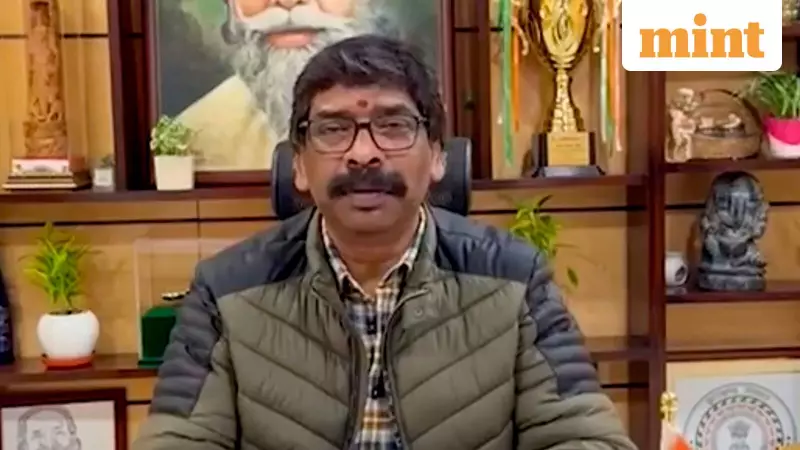
Jharkhold Government Explores Strategic Retail Partnership with Lulu Group at Davos Forum
The Jharkhand government has initiated significant discussions with the global retail giant Lulu Group during the World Economic Forum annual meeting in Davos, focusing on expanding market access for the state's agricultural and forest-based products. This strategic move aims to create new opportunities for local farmers and women-led producer groups by integrating them into organized retail supply chains.
High-Level Meeting Between CM Hemant Soren and Lulu Group Leadership
Chief Minister Hemant Soren personally met with Yusuff Ali, the Founder and Managing Director of Lulu Group, on the sidelines of the prestigious Davos summit. The interaction centered on exploring concrete pathways to incorporate Jharkhand's diverse range of products into the retailer's extensive domestic and international distribution networks. Officials present at the meeting emphasized the potential for structured engagement that could transform the state's agricultural economy.
Focus on Agricultural and Forest-Based Product Sourcing
According to officials familiar with the discussions, Lulu Group has expressed genuine interest in sourcing select agricultural and forest-based products that are cultivated or processed within Jharkhand. The retail conglomerate has indicated that this interest is contingent upon thorough assessments of product quality, production scale, and supply consistency. The proposed collaboration is expected to benefit multiple stakeholders across the state's rural economy.

- Farmers engaged in agricultural production
- Women-led Self-Help Groups (SHGs) involved in processing and value addition
- Communities dependent on forest produce-based livelihoods
Global Retail Network and Market Alignment
Lulu Group operates an extensive network of retail outlets spanning multiple Indian states and international markets including West Asia, Southeast Asia, Europe, and North America. Officials noted that products from Jharkhand could potentially align with the Group's existing value chains, provided they meet specific regulatory and operational requirements. This alignment represents a significant opportunity for Jharkhand's producers to access premium markets both domestically and globally.
Capacity Building and Infrastructure Development Initiatives
During the productive meeting, the retail giant conveyed its willingness to explore capacity-building initiatives within Jharkhand. These potential interventions could include:
- Strengthening aggregation mechanisms for small producers
- Improving quality assurance processes and standards
- Enhancing supply-chain readiness to meet large-scale retail requirements
Officials emphasized that such technical support would be critical for ensuring reliable sourcing arrangements and compliance with international market norms. The focus would be on creating sustainable systems that benefit both producers and retailers.
Next Steps: Ground Assessment and Feasibility Studies
As part of the proposed next steps, a high-level delegation from Lulu Group is expected to visit Jharkhand for comprehensive on-ground assessments. This visit will focus on evaluating:
- Production capacity across different agricultural and forest-based sectors
- Existing aggregation infrastructure and logistics capabilities
- Potential for value addition and processing facilities
The field visit is expected to help identify specific product categories and evaluate the feasibility of sustained sourcing arrangements that could benefit both parties in the long term.
Strategic Positioning Within Global Supply Ecosystems
The Jharkhand government has indicated its intention to position the state as a reliable sourcing partner within Lulu Group's broader supply ecosystem. Officials stated that the focus would be on creating structured engagement models with farmer collectives, SHGs, and forest produce groups to ensure traceability, scale, and adherence to quality benchmarks. This approach aligns with the state's broader economic development goals.

Part of Broader Agricultural Development Strategy
The Davos discussions form part of Jharkhand's wider efforts to attract private-sector participation in agriculture and allied sectors while strengthening market linkages for local producers. In recent years, the state has undertaken several initiatives to promote value addition in agriculture and minor forest produce, alongside efforts to strengthen producer organizations and improve post-harvest infrastructure.
Exploratory Nature and Future Prospects
Officials clarified that no formal agreement has been reached at this preliminary stage, and the discussions remain exploratory in nature. Further deliberations are expected following the proposed field visit and subsequent technical assessments. The state government remains optimistic about the potential for creating meaningful partnerships that could transform the agricultural economy and provide sustainable livelihoods for rural communities.
This development represents a significant step in Jharkhand's efforts to integrate its agricultural and forest-based products into global value chains while creating sustainable economic opportunities for its rural population.