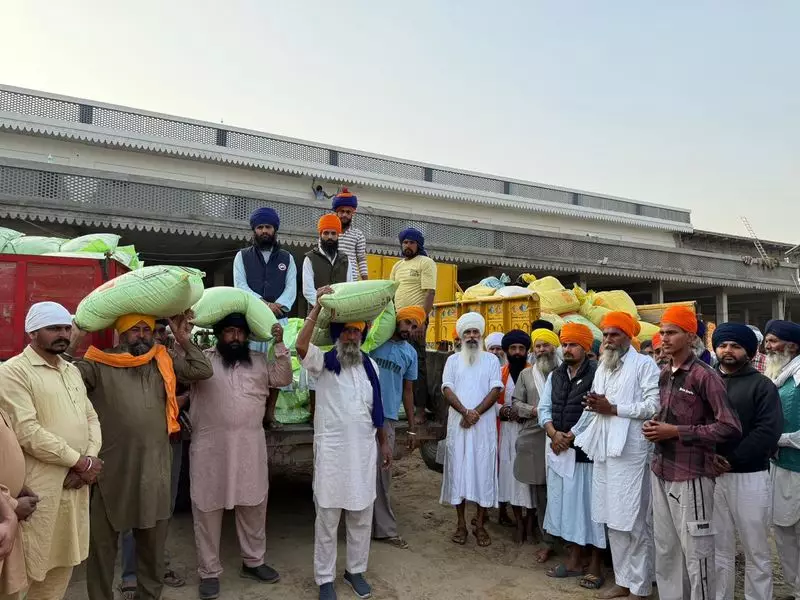
In a remarkable display of community solidarity, the Kar Seva sect has stepped forward to support farmers devastated by recent floods in the Sarhali region of Tarn Taran district. The religious organization distributed essential agricultural supplies to help cultivators recover from significant crop damage caused by overflowing canal waters.
Immediate Relief for Agricultural Crisis
The relief initiative saw Kar Seva members distribute seed packets and fertilizer to numerous affected farming families. This timely assistance comes as farmers face the daunting task of replanting their fields after floodwaters destroyed their standing crops. The distribution drive specifically targeted those cultivators whose livelihoods were most severely impacted by the natural disaster.
Community leaders from the sect personally oversaw the distribution process, ensuring that help reached those genuinely in need. The initiative focused on providing immediate, practical support to enable farmers to resume agricultural activities without further delay. Many recipients expressed gratitude for the organization's intervention during this challenging period.

Addressing Long-Term Recovery Needs
Beyond immediate relief, the Kar Seva sect's efforts represent a crucial intervention in preventing long-term agricultural distress in the region. The distributed supplies included appropriate seeds for the current planting season, giving farmers a fighting chance to recover their losses. The organization recognized that without such support, many farming families might face extended financial hardship.
The flooding had caused extensive damage to ready-to-harvest crops, dealing a severe blow to farmers who had invested significant resources and labor into their fields. By providing seeds and fertilizer, the Kar Seva sect has effectively shortened the recovery timeline for affected agriculturists. This community-driven approach demonstrates how local organizations can effectively complement government relief efforts.
Community Response and Future Implications
Farmers receiving the assistance described the initiative as a lifeline during their time of need. Many had feared they would miss the current planting window entirely, which would have resulted in complete loss of income for the coming season. The Kar Seva sect's understanding of agricultural timelines and needs proved crucial in designing an effective relief program.
This distribution drive highlights the importance of community-based organizations in disaster response and recovery. While government assistance programs often take time to reach beneficiaries, local groups can mobilize quickly to address immediate needs. The Kar Seva sect's deep roots in the community enabled them to identify and assist the most vulnerable farmers efficiently.
The successful execution of this relief effort sets a positive precedent for community-led disaster response in rural agricultural regions. It demonstrates how religious and social organizations can play a vital role in supporting farmers through climate-induced challenges and natural disasters.