

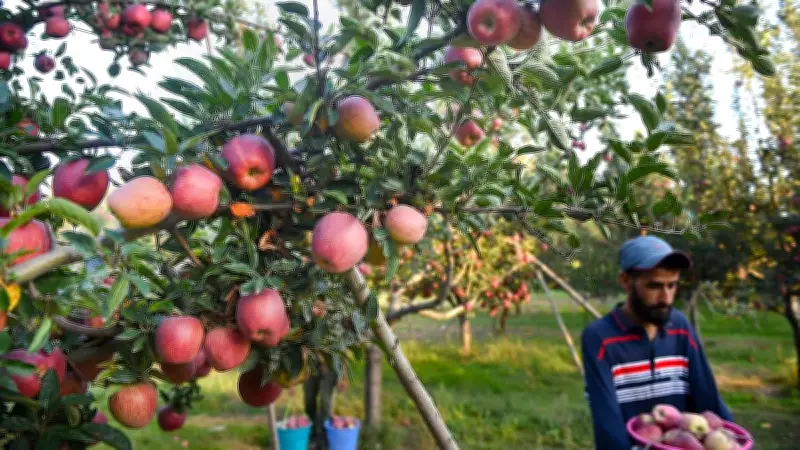
India-US Trade Deal Raises Alarms for Kashmir's Apple Farmers
The recent developments in the India-US trade agreement have sent ripples of concern through the picturesque valleys of Jammu and Kashmir. Apple growers in the region are voicing strong apprehensions about potential threats to their livelihoods, stemming from new tariff relaxations that could undermine a critical agricultural sector.
Impact on a Vital Economic Pillar
The apple industry in Jammu and Kashmir is not merely a crop; it is a cornerstone of the rural economy, sustaining millions of families across the region and other hill states like Himachal Pradesh. This sector provides employment, supports local businesses, and contributes significantly to the socio-economic fabric of these areas. The fear among growers is that increased imports of apples from the United States, facilitated by reduced tariffs, could flood the domestic market, driving down prices and making it difficult for local producers to compete.
This situation highlights a delicate balance between international trade agreements and domestic agricultural sustainability. While trade deals aim to foster economic growth and bilateral relations, they must also consider the vulnerabilities of key sectors that rely heavily on local production. In Kashmir, where apples are a primary source of income for many rural households, any disruption could have far-reaching consequences.

Voices from the Ground
Farmers and industry representatives have been quick to flag these concerns, emphasizing that the sector's resilience is already tested by various challenges, including climate change and infrastructural issues. The prospect of competing with imported apples, which may benefit from economies of scale and advanced farming techniques, adds another layer of uncertainty. "Our livelihoods are at stake," one grower noted, reflecting the anxiety pervading the community.
The trade deal's implications extend beyond mere economics; they touch on the very survival of traditional farming practices and rural way of life in these hill states. As negotiations continue, stakeholders are calling for protective measures, such as:
- Implementing safeguards to prevent market flooding
- Providing support for local farmers to enhance competitiveness
- Ensuring fair trade practices that do not disadvantage domestic producers
Broader Context and Future Outlook
This issue underscores the complex interplay between global trade policies and local economies. While India seeks to strengthen ties with the United States through such agreements, it must also safeguard its agricultural sectors that are vital for food security and rural employment. The case of Kashmir's apple growers serves as a poignant reminder of the need for balanced approaches in trade diplomacy.
Looking ahead, the resolution of this concern will likely involve ongoing dialogue between government bodies, trade representatives, and farming communities. Ensuring that the benefits of international trade do not come at the expense of vulnerable sectors will be crucial for sustainable development in regions like Jammu and Kashmir.






