

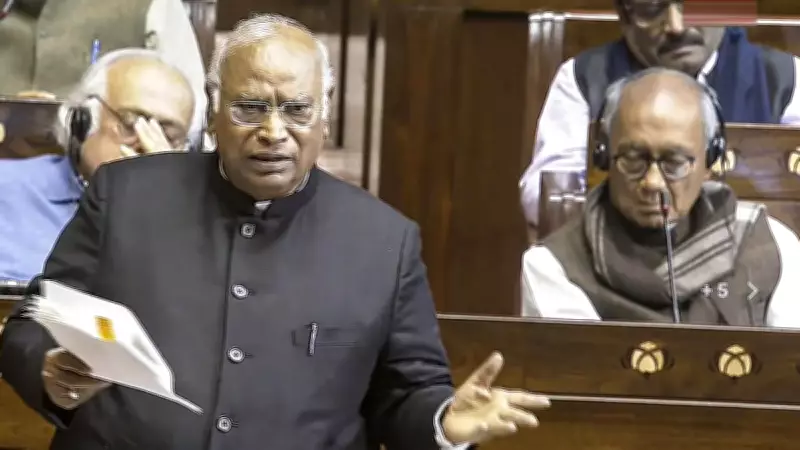
Congress Leader Mallikarjun Kharge Raises Alarm Over Potential US Trade Agreement Impact on Indian Agriculture
Congress President Mallikarjun Kharge has issued a stern warning regarding ongoing trade negotiations between India and the United States, asserting that any forthcoming trade deal could severely disadvantage Indian farmers and undermine the nation's agricultural sector. His remarks highlight growing political scrutiny over international trade policies and their domestic ramifications.
Concerns Over Market Access and Subsidy Disparities
Kharge emphasized that a trade agreement with the US might compel India to open its markets to heavily subsidized American agricultural products, such as dairy, poultry, and grains. This influx could create unfair competition for local farmers who operate with minimal government support and smaller economies of scale. The disparity in agricultural subsidies between the two nations is a critical point of contention, with US farmers benefiting from substantial federal aid that Indian counterparts lack.
Historical context reveals that previous trade pacts have sometimes led to market distortions in developing economies, and Kharge fears a similar outcome. He pointed out that Indian farmers, already grappling with challenges like climate change, debt, and fluctuating prices, might face additional pressure from cheaper imports, potentially threatening their livelihoods and food security.

Call for Government Action and Farmer-Centric Policies
In his statement, Kharge urged the Indian government to adopt a cautious approach in trade talks, prioritizing the protection of farmers' interests. He advocated for robust safeguards, including tariff barriers and support mechanisms, to shield the agricultural community from adverse effects. "Any trade deal must not compromise the welfare of our farmers, who are the backbone of India's economy," he remarked, stressing the need for transparency and inclusive consultations with stakeholders.
The Congress leader's comments come amid broader debates on trade liberalization and its impact on rural economies. Experts note that while trade agreements can boost exports and economic growth, they often require careful balancing to prevent harm to vulnerable sectors. Kharge's intervention underscores the political dimensions of trade policy, with opposition parties closely monitoring negotiations that could affect key voter bases.
Broader Implications for India-US Relations and Domestic Politics
This issue touches on multiple facets of India's engagement with the global economy. On one hand, strengthening trade ties with the US could enhance bilateral relations and open opportunities in other sectors like technology and manufacturing. On the other hand, domestic concerns about agriculture highlight the complexities of aligning international agreements with local needs.
As discussions progress, the government faces the dual challenge of advancing economic diplomacy while addressing political opposition and farmer advocacy groups. Kharge's warning serves as a reminder that trade deals are not merely economic instruments but also have significant socio-political repercussions, particularly in an agrarian nation like India where millions depend on farming for their sustenance.






