

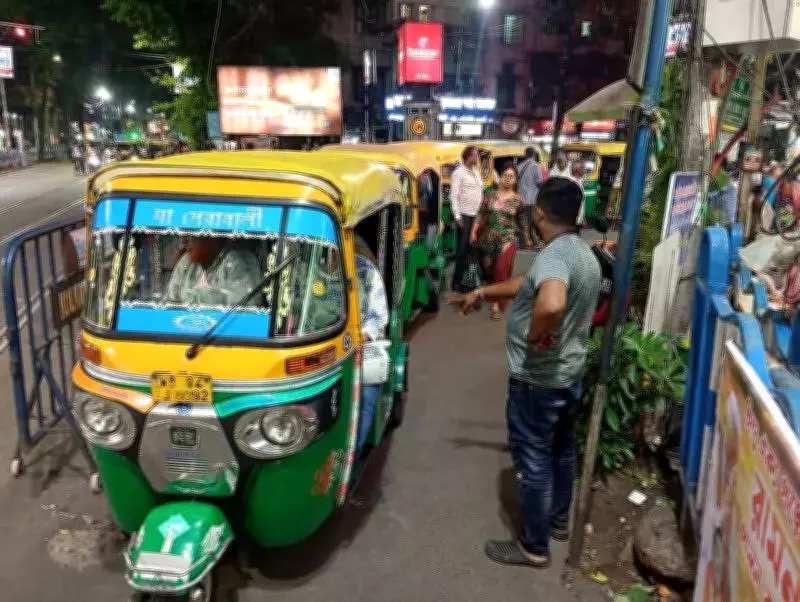
Kolkata's Last-Mile Connectivity Crisis Worsens as Auto Shortage Hits Night Commuters
Last-mile connectivity across Kolkata is facing a growing and severe crisis, particularly in the late evening hours, as a sharp and alarming decline in auto availability leaves countless commuters stranded and struggling to get home. Autos have traditionally acted as the indispensable backbone of last-mile connectivity, especially with the expansion of the Metro network, and their reduced presence on roads is now exposing critical and dangerous gaps in urban mobility that threaten daily life.
Fuel Crisis Drives Auto Shortage
At the heart of this disruptive situation lies an ongoing and persistent LPG fuel crisis, which auto operators say has severely impacted their ability to stay on the roads, especially during non-peak hours. Since 2008, an overwhelming 99% of the city's auto fleet has been running on auto-LPG, making them highly vulnerable to fuel supply issues. The shutdown of informal "kata gas" refuelling setups has compounded the problem dramatically, pushing operators to depend solely on costlier fuel from official pumps, further straining their operations.
"In the afternoon and late night, there are fewer passengers, and fuel costs are high. So many of us avoid those hours," explained an auto operator on the Ruby–Baghajatin route, highlighting the economic pressures. Swapan Tarafdar, a Taratala-Jadavpur route committee member, added, "Beyond office hours, 30%–40% of autos queue up at fuel pumps. This has reduced availability at night significantly."

Commuters Bear the Brunt with Longer Waits and Higher Costs
The impact is being felt acutely across key routes throughout the city. On the Tollygunge–Behala and Chowrasta–Sakherbazar–Haridevpur corridors, evening wait times have skyrocketed from 10-15 minutes to over 25 minutes after 8 pm, causing frustration and inconvenience. At Behala Chowrasta, waiting time for autos has tripled — from five minutes last month to nearly 15 minutes now, a clear indicator of the worsening situation.
"This is despite fares increasing by Rs 2 per stage," said Arka Banerjee, a Behala resident, pointing to the financial burden on passengers. App-based buses are stepping in as an alternative, but fares vary widely, from Rs 20 to Rs 40, depending on demand and the lack of other options, making travel unpredictable and expensive for many.
Metro Connectivity and Public Transport Gaps Exposed
Studies suggest that nearly 60% of metro passengers rely on autos for quick and convenient access to stations, underscoring their vital role in the city's transport ecosystem. Over the decades, a network of auto routes has evolved, particularly on stretches perpendicular to metro lines — from Garia to Dakshineswar. However, with reduced auto frequency, many metro commuters are being forced to switch to overcrowded buses.
On the Hazra–Kidderpore route, for instance, the auto shortage has pushed numerous metro commuters to switch to buses via Rabindra Sadan. "We are losing passengers, and this could permanently affect the route," lamented Md Samsad, an auto operator on the route, expressing concerns about long-term viability. Ujjala Sen from Shakuntala Park shared her ordeal: "Buses are overcrowded and we often have to stand on the footboard," highlighting the safety risks and discomfort.
Government Inaction and Shifting Commuter Patterns
Two government bus routes, S-31 and D-10, that could have mitigated the problem do not operate beyond office hours, leaving a glaring gap in public transport during critical evening times. This lack of extended service exacerbates the auto shortage, forcing commuters to seek other means. As a result, residents in areas like Mukundapur, Ruby, Anandapur, Kalikapur, and Santoshpur are increasingly turning to e-rickshaws and app cabs, though these options are often less affordable or reliable.
Operators warn that services may continue to remain curtailed unless the LPG supply stabilises, urging immediate action from authorities. The crisis not only disrupts daily commutes but also threatens the economic stability of auto drivers and the broader urban mobility framework in Kolkata.






